
Editorial: Stay the Course
OPINION: The United States wine market has changed forever, and companies cannot use same old playbook, said Erin Kirschenmann at the New Zealand Wine 2026 Wine Business Forum in August.




 increase font size
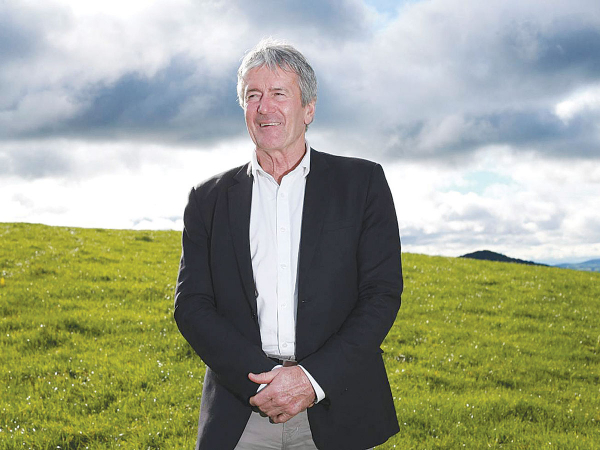 Agriculture and Trade Minister Damien O'Connor.
Agriculture and Trade Minister Damien O'Connor recently spoke at the Auckland Trade and Economic Policy School emphasising the importance of trade in the Covid era. Here are excerpts from his speech:
We are a global exporter, based at the bottom of the world. Imports and exports are our lifeblood – essential to our quality of life and our wellbeing.
Prior to the pandemic, about half of all New Zealand jobs came from the tradeable sector. Firms in the tradeable sector are 54% more productive; they employ more New Zealanders when they start exporting; and they pay more compared to firms in the non-tradeable sector.
The pandemic has also brought into stark relief just how essential imports are to New Zealand’s economic success and wellbeing. Imports of COVID-19 testing kits and PPE; and imports as inputs in to our own production processes are critical. New Zealand businesses operate as part of complex international supply chains, and the risk that a loss of air connectivity posed to our people, and our economy, during COVID-19 underscores how vital trade is to New Zealand.
But throughout this pandemic, our trade has held up remarkably well. Merchandise exports have largely kept pace with, or exceeded, last year’s, which is incredible during one of the biggest recessions the global economy has seen.
And just as we have seen exports lead us through the worst of this crisis, it’s my intention that exports will lead our recovery from it.
Our successful response to COVID-19 provides New Zealand with a unique opportunity to position ourselves globally as a safe and secure place to trade with, to invest in, and eventually, to visit again.
That’s why we’ve developed our Trade Recovery Strategy and our Trade for All Agenda, to seize this opportunity, accelerate New Zealand’s economic recovery, and lay the foundations for a better future.
Global Headwinds
But make no mistake, New Zealand faces a very challenging global trade landscape today. Even before the COVID-19 pandemic, New Zealand faced significant headwinds in global trade.
The World Trade Organisation, and its system of trade rules which puts small countries like ours on an even footing with global powers, has been under growing pressure on a number of fronts.
Protectionism and strategic competition, most notably between China and the US, has threatened the stability of international trade. The escalating tariff disputes between the US and China caused trade to fall sharply, with global ramifications.
As a small, export-oriented economy, it is hard to overstate the importance to New Zealand of a trading system underpinned by rules rather than economic influence – or an economic ‘might is right’ attitude.
The COVID-19 Pandemic
COVID-19 has unfortunately exacerbated many of the international challenges that we already faced.
COVID-19 responses around the globe have disappointingly been accompanied by a sharp increase in trade distortions – most commonly increases in subsidies. These make it harder for New Zealand to compete fairly.
We have seen the effect of these distortions in global trade flows. Initial estimates for the second quarter of 2020 – when the virus and lockdowns spread around the world – indicated a year‑on‑year drop of around 18.5% in the volume of global merchandise trade.
New Zealand GDP contracted by 2.0%in the June 2020 year. This was a much better economic performance than many expected back in February and March. Indeed, since June we’ve seen our economic performance continue to outstrip expectations, with measures such as the Treasury’s New Zealand Activity Index showing economic activity levels in October higher than the same time last year.
However, given recent second waves of COVID-19 in many parts of the world, Treasury now expects the global impacts of COVID-19 to weigh on us for longer, and is forecasting a contraction of 0.5% in 2021.
OPINION: The United States wine market has changed forever, and companies cannot use same old playbook, said Erin Kirschenmann at the New Zealand Wine 2026 Wine Business Forum in August.

Chinese beef trade quotas and a looming suspension of Brazilian beef imports into the European Union are expected to reshape global beef trade flows over the remainder of 2026, with implications for New Zealand exporters, according to Rabobank's Q3 Global Beef Quarterly report.
China remains New Zealand’s biggest market, taking $23 billion of our exports, but it’s no longer a commodity story, says Prime Minister Christopher Luxon.
A miserable budget that didn’t deliver much for anyone.
According to new research, industry leaders have ranked world-class biodiversity as the number one priority for the 16th year in a row.


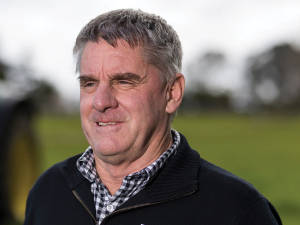
Federated Farmers has welcomed new rural policies released by ACT, saying they align closely with its own election priorities.

Rural Contractors NZ says proposed changes to land transport rules for agricultural vehicles are a welcome response by the Government to out of date regulations which have seen members hit with huge fines.
Alliance is calling for final applications for its 2027 Graduate Programme, with applications closing on Sunday 25 October.
Decades piloting planes has ensured vet and farmer David Hayes is focused on safety. So, after a serious accident while welding on farm, he is sharing his experience so others can learn from it.
Canterbury milk processor, Synlait Milk has confirmed Leon Fung as its chief executive officer.
OPINION: Making it easier to collect rainwater and use it to grow crops and livestock is a no brainer.


OPINION: It seems Canterbury processor Synlait is still in the doldrums.
OPINION: Get offside with New Zealand First leader Winston Peters at your own peril.




