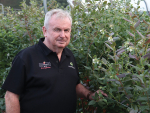
Blueberries Could Be NZ's Next $150m Horticultural Export
Blueberries have the potential to become a major horticultural export, earning up to $150 million within the next three to five years.



 increase font size
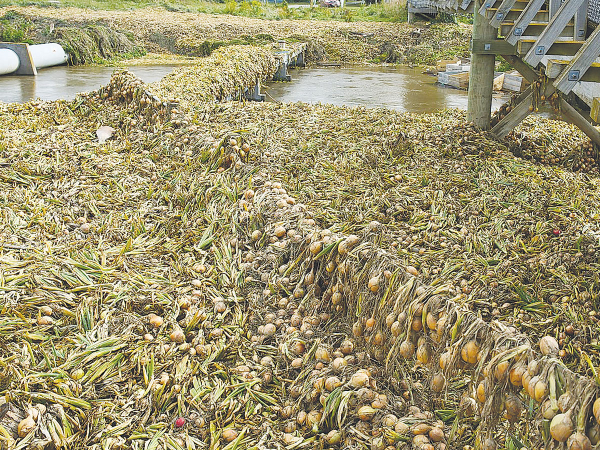 Onions are among the debris in and around Karamu Stream, near Whakatu a rural community in Hastings. Photographer Mark Sudfelt, owner of Peak Video, Hawke’s Bay took the photo after Cyclone Gabrielle ripped through the region. The onions came from a large field several hundred metres upstream. Photo: Mark Sudfelt.
The cost of Cyclone Gabrielle will run into the billions of dollars over the coming years
HortNZ chair Barry O’Neil says just taking into account the crop losses and the cost of re-establishing orchards and commercial growing land this year alone, the figure of $1 billion is being bandied about. He also warns it won’t be a one-off hit, with losses being felt for several years to come.
O’Neil told Hort News that it’s too early to put a figure on what the cyclone may cost NZ in terms of lost export earnings. However, he points out that NZ still produces very high quality fruit and vegetables and will continue to do that.
“There is no need to for overseas markets to be concerned that this won’t continue.”
O’Neil says for the past few weeks, the priority has been ensuring that people are safe and now the emphasis is on recovery. He says while the initial government grant of $2,000 to help clean up land is great, the reality is that it will cost many orchardists more like $40,000 to get their orchards cleaned up before they can even think about replanting again.
“Groups are currently being established to work through the various options,” he told Hort News. “MPI have done a tremendous job and I really appreciate the efforts of the Prime Minister, and Ministers of Finance and Agriculture and others for engaging and fronting up to growers, finding out for themselves what is going on.”
O’Neil says he looks forward to working with the Government to go to the next step, which is the re-establishment of orchards and how they can be financially supported. He says many of the banks are holding mortgages on orchards and it’s unlikely they will be able to do much.
O’Neil points to the option of government making finance available in the form of a suspensory loan or some short term financial arrangement to get growers back on track.
The labour to help with the cleanup and harvest doesn’t appear to be a major problem.
“The fact that government has relaxed some of the immigration laws has helped. People with diggers and bobcats are coming to Hawke’s Bay to help and this is very heartening.”
While the focus has to a large degree been on apples, O’Neil says vegetable crops have been very badly hit with the kumara crop practically wiped out in Dargaville. Crops such as squash and onions are facing the same fate.
He says hopefully these growers will be able to bounce back in the next 12 months by being able to work the silt back into the soil.
“If they are supported by the banks they will be able to operate in a reasonable short period of time because they don’t have to wait six years like an apple grower has to.”
O’Neil believes that, overall, kiwifruit probably suffered more from the October frost than Cyclone Gabrielle. He really feels for the Ngai Tukairangi Trust whose big orchard near Hastings has been devastated by Gabrielle.
O’Neil told Hort News that, in the case of kiwifruit, if the present vines managed to survive, it will be possible to graft new stock on to these and it may take only two or three years for those growers to get a commercial crop.
In the meantime, he says everyone in the hort sector is chipping in and those who can are helping their fellow growers.
“It all now all hinges on getting the help to restoring the industry to its former self.”
Blueberries have the potential to become a major horticultural export, earning up to $150 million within the next three to five years.

New Zealand needs to make sure that it continues to focus on its own food security, according to HortNZ board member and blueberry grower Dermott Malley.
According to a progress report on the Aotearoa Horticulture Action Plan (AHAP), New Zealand's horticulture sector is making real progress on the big issues facing growers.
Horticulture New Zealand’s Board has welcomed the re-election of grower-elected directors Alistair Petrie and Doug Brown.
Horticulture NZ says the funding boost to improve state highway resilience will support growers and strengthen the transport links they rely on to get produce to market.



OPINION: As the general election approaches, political parties are churning out policies in the hope of attracting more votes.

An LIC bull, Tronnoco AR Sadio-ET S3F, bred by Tony and Keri O'Connor of Tronnoco Farming Co Ltd near Timaru, has won the 2026 Mahoe Trophy.
With forecasters advising El Niño conditions will develop through winter and strengthen into spring and summer, Ballance Agri-Nutrients is encouraging farmers and growers to think ahead about nutrient planning and be prepared to work around challenging weather conditions.
In the past, much has been made of the concept of farm to fork, but an Australian expert in food science and marketing with experience in the dairy industry, Dr Angeline Achariya, says the reverse of this slogan is critical to win modern day consumers.
Efficiency is the big one because it tracks back into what is done on farm.
A four year trial has reaffirmed that mixing plantain into dairy pastures can help reduce nitrogen losses to freshwater while maintaining milk production and profitability, say researchers.



OPINION: The same mainstream media muppets that brought you Jacindamania in 2017 have been flat out pimping for the Opportunities…
OPINION: Your old mate reckons the atrocious way farmers in the UK are treated by their lords and masters in…