
Late start but strong season ahead for New Zealand strawberries
Despite a late and unfavourable start, this year’s strawberry crop is expected to be bountiful for producer and consumer alike.



 increase font size
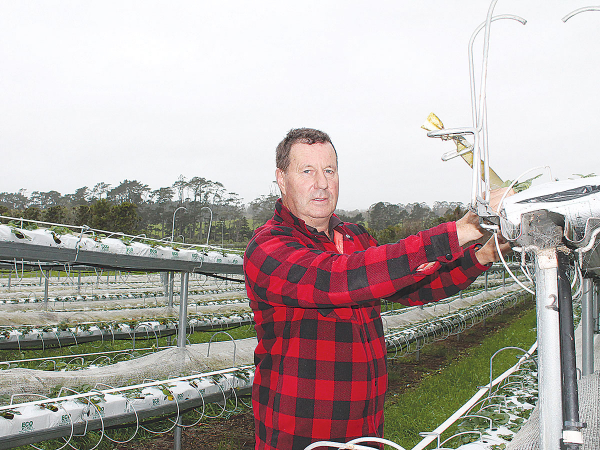 Strawberry Growers NZ chairman Anthony Rakich says the past two years have been a tough time for the industry.
Whether overseas casual workers arrive in time to make a difference for this year’s strawberry season is the big question, says Strawberry Growers NZ’s (SGNZ) chairman Anthony Rakich.
The past two years have been difficult with no visitors, no new RSE workers allowed in and those that were here were getting tired.
“Things are changing now. We are going to get backpackers in, we will get tourists in, the RSE’s are coming back,” he told Hort News.
Whether there will be enough in time "will be interesting", Rakich says.
Some under cover growers are already picking and the season will be well under way next month (October).
“I am personally concerned there is plenty of other work for people and I can only offer parttime work. I don’t have full-time employment for them,” he says.
Rakich believes many smaller growers will be in the same boat. He already knows he has lost good workers from last year as the best ones are snapped up by full-time employers.
“I rely on local workers, really the people who have been with me for a long time that keep coming back,” he explains. “Usually they find other family members, other people they know who want to work. That has always been how I’ve got workers. But things are changing.”
Rakich says the RSE scheme is not feasible for smaller growers. But for the wider industry, SGNZ is talking with HortNZ about the RSE scheme, having the cap lifted so there are more coming in early enough.
SGNZ has about 180 members. The industry has shrunk a little. Rakich says there’s about 11.5 million plants this year as compared to 12-12.5 million in the last couple of years.
“We haven’t quite got all the numbers in yet. We have come back a bit, lost a few growers. A few growers this year have cut back because of labour. They probably had problems last year getting labour.
“I don’t want to see it drop any more. At least maybe stay there or increase a little bit. But you’ve still got to sell your fruit and you still have to pick it.”
Rakich sees the industry moving more towards under cover but it will take time.
Growers that grow under cover, most of whom also do hydroponics, can extend their season – some go to May or even June. They will be finishing picking as they plant for the new season.
Those growing in the ground have to prepare their soil which can mean pulling out plants as early as January in case of a wet March or April.
So Rakich says more growers are growing under tunnels and he sees it as the future of the industry. He says the only problem is the cost of setting up.
“That initial capital expense is huge. So, for a big grower to change everything over… it could be millions of dollars. They have got to work out whether it is worth it.”
Rakich believes it’s the way to go but it will take a while to change over.
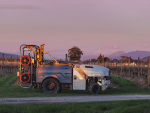
The big talk overseas is mechanical pickers, he says. A number of different companies are developing robots to pick strawberries, but there’s still some issues. Speed is one and they have to pick ripe fruit.
“It will happen, because there’s a lot of companies investing money to do it because the labour problem is a worldwide thing.”
Homeward Bound
Rakich says exports are not a huge part of the NZ strawberry industry now.
“Covid, transport, rising costs etc have had an effect so the amount exported is certainly down. That of course puts more pressure on the local market,” he told Hort News.
“The last few years with Covid have been tough. There has not been much export and there’s been a lot of fruit on the local market at times.”
He believes it will take a while for exports to come back.
“Our industry body has been trying to get access to Vietnam. We have been working that for three years. There’s a good market there,” Rakich adds.
“But there’s a process to go through with MPI and with their equivalent in Vietnam and hopefully we will have our documents ready to go to Vietnam soon. That will open up a new market.”
NZ strawberries are exported to about 18 other countries according to SGNZ’s website but the main markets are in Asia.
Despite a late and unfavourable start, this year’s strawberry crop is expected to be bountiful for producer and consumer alike.
Three generations of Anthony Rakich’s family have been growing strawberries in West Auckland, using the traditional methods for at least 90 years.
It will take between six to eight months for commercial growers in the Horowhenua region to fully recover from the disastrous heavy rains that hit the region in the weeks leading up to Christmas.
Food prices were up 1.3% in July 2021 compared with June 2021, say Statistics NZ.
Fruit and vegetable prices increased almost 9% in the year ending December 2020, boosting overall food price inflation to 2.9%, Stats NZ announced today.



Federated Farmers has welcomed new rural policies released by ACT, saying they align closely with its own election priorities.

Rural Contractors NZ says proposed changes to land transport rules for agricultural vehicles are a welcome response by the Government to out of date regulations which have seen members hit with huge fines.
Alliance is calling for final applications for its 2027 Graduate Programme, with applications closing on Sunday 25 October.
Decades piloting planes has ensured vet and farmer David Hayes is focused on safety. So, after a serious accident while welding on farm, he is sharing his experience so others can learn from it.
Canterbury milk processor, Synlait Milk has confirmed Leon Fung as its chief executive officer.
OPINION: Making it easier to collect rainwater and use it to grow crops and livestock is a no brainer.


OPINION: The same mainstream media muppets that brought you Jacindamania in 2017 have been flat out pimping for the Opportunities…
OPINION: Your old mate reckons the atrocious way farmers in the UK are treated by their lords and masters in…




