Friday, 26 March 2021 15:55

Blowing life into apple harvest

Written by  Mark Daniel
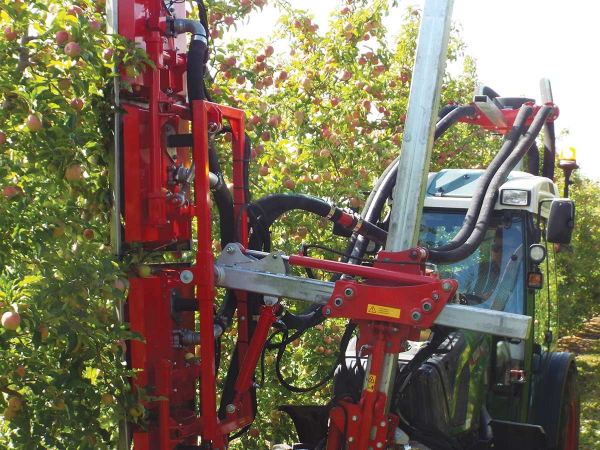
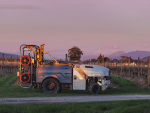
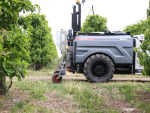
The ERO Impulse pneumatic defoliator delivers a pulsed flow of compressed air to shred and remove the green leaf material from apples during the ripening stages. The ERO Impulse pneumatic defoliator delivers a pulsed flow of compressed air to shred and remove the green leaf material from apples during the ripening stages.

Probably better known in the viticulture sector, Tractor Repairs and Spares (TRS) is now expanding into the horticulture area - with a focus on apple - after purchasing the FMR business in late 2020.

At a recent demo day in the Hawke's Bay, TRS showcased a New Zealand-designed and manufactured machine, with the aim of increasing the quantity of premium quality, pickable apples, while reducing labour costs.

The ERO Impulse pneumatic defoliator uses tried-and-tested key componetry from a German manufacturer.

The machine delivers a pulsed flow of compressed air to shred and remove the green leaf material from apples during the ripening stages.

By allowing more light to penetrate the crop canopy, the onset of ripening is brought forward, while the vibrancy of colour is also markedly improved.

"There are also major production gains, given that in a typical season, orchardists will typically 'pick' the orchard three times to take fruit as they ripen," explains TRS's Chris Clifford. "Using the pneumatic defoliator results in major colouring changes in 10 to 14 days and usually reduces the picking passes to just two events."

The system comprises a front linkage mounted tool carrier/tower that can move through four different axes. This in turn carries a selectable configuration of twin-rotor distribution heads that direct the air flow into the crop canopy. Depending on the orchard layout, the rotor heads can be stacked vertically to deal with a taller wall of fruit, or 2D formats, or in tandem to operate in more conventional 3D layouts.

A rear-mounted, heavy-duty compressor sends air forwards to the distributor heads, where in the first instance it enters a manifold/gallery. This creates a "pulsed" effect as the rotating nozzles pass by.

The machine is said to be easily adjustable to change air pressure or rotor speed to suit the crop being managed. The unit normally passes through the orchard at a forward speed of 1-2km/h, with a typical horsepower requirement of around 100hp.

TRS notes that the development stages showed that a "pulsed air flow" is required to shred the leaf material, as a constant flow of air will just "bend" leaves away from the air flow, from where they will quickly return to their original growing position once the machine has passed.

The modular design of the system tower on the front linkage means that it is also capable of carrying the ERO/Binger OBS Orchard Trimmer, thus saving the capital costs of two separate machines, while facilitating overall canopy management.

www.tractorrepairs.co.nz

More like this

New CLAAS Swath Turner Fixes Twin-Rotor's Blind Spot

Twin rotor swathers have become the ‘go-to’ for forming swaths to feed hungry harvesters and balers, however, the design layout often means that crop located between the two rotors is not picked up, turned over or incorporated into the swath formed for subsequent harvesting.

Motueka Farm Machinery Sold as Sturgeons Retire After 44 Years

Close to the Abel Tasman and Kahurangi National Parks, Motueka is known for apples, pear and kiwifruit orchards, alongside specialised crops such as hops. Indeed, that specialisation, saw the area being the New Zealand centre of the tobacco growing, until the early 1980s.

Can-Am Unveils 2027 SSV, ATV Range With New Defender HD10

Can-Am has introduced its 2027 range of side-by-side vehicles (SSV) and all-terrain vehicles (ATV), including the industry leading Defender, the Maverick R and the hugely capable Outlander ATV, incorporating a host of advancements designed to deliver an exceptional riding experience.

Featured

Southland Farmers Face Wet Weather Toll, Support Available

Farmers across parts of Southland and South Otago are continuing to deal with difficult conditions after a prolonged run of wet weather, with pressure building around feed supply, stock management, pasture damage, farm infrastructure and everyday workloads.

How Wearable Tech Powers This 1,850-Cow Dairy Farm

For Canterbury dairy farmers Sian Meijer and Rick Wobben, wearable technology has become one of their most valuable on-farm tools - helping manage 1850 cows across an expansive, high-performing dairy operation while improving efficiency, mating outcomes and day-to-day decision making.

New Dairy Welfare Code Released, Takes Effect 2027

The first major update to the Dairy Cattle Code of Welfare in more than a decade has been released, marking what DairyNZ describes as an important step in ensuring animal welfare standards continue to evolve alongside scientific evidence and on-farm realities.

National

Machinery & Products

» Latest Print Issues Online

The Hound

'LinkedIn Greens'

OPINION: The same mainstream media muppets that brought you Jacindamania in 2017 have been flat out pimping for the Opportunities…

UK Warning

OPINION: Your old mate reckons the atrocious way farmers in the UK are treated by their lords and masters in…

» eNewsletter

Subscribe to our weekly newsletter