
Blue River Dairy eyes new markets after China success
Sheep infant nutrition maker Blue River Dairy is hoping to use its success in China as a springboard into other markets in future.




 increase font size
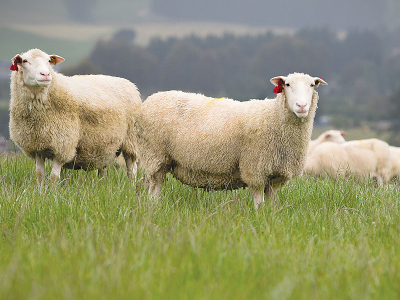 More farmers are enquiring about sheep milk, says Spring Sheep Milk Co.
Good growth in the sheep milking industry during the 2018-19 financial year signals this is a good time for farmers to get involved, says Spring Sheep Milk Co, who will be at Fieldays this week.
The firm’s producer business manager, Thomas Macdonald, says international demand for New Zealand sheep milk products is strong. And more farmers are inquiring about converting their dairy farms to sheep milk, he says.
“Heading into our fifth dairy season we are noticing a lot more interest in the industry,” says Macdonald. “Last year, I might have received around one inquiry a month from a farmer looking at options, but those inquiries are now coming in thick and fast.”
Macdonald says with Spring Sheep being demand-led they will only bring in more suppliers when the demand is there, which is now.
“We have 4000 sheep being milked. But strong customer demand means we are now looking to grow sheep numbers by bringing in new supplier farmers.”
Most milk demand is from Asia where consumers want alternative milks and nutrition products, Macdonald says. Growth in this market is on Spring Sheep’s agenda.
“Last year, we saw our productivity double thanks to new genetic lines imported from Europe.”
Previously, NZ-bred ewes were producing 120L each per season, but the new, high-performing genetic lines have the potential to increase production to 600L per ewe per season.
“Most farming systems need about 250-450L per ewe per season to achieve a good return. So the improved productivity we’re seeing presents a good opportunity for farmers considering a conversion to sheep dairy farming.”
The company has two farms, one near Cambridge and one in Reporoa, near Rotorua. It has just finished its first season successfully running three farm system trials: full grazing outdoor, hybrid indoor outdoor grazing and large scale hybrid models.
Milk from its farms is then processed at Melody Dairies’ spray drier at Waikato Innovation Park in Hamilton.
Macdonald says dairy farmers in Waikato region, being within the two-hour travel zone for processing, are ideal future suppliers.
“Waikato region is rich dairy country, and the pastoral farming practices and core skillset of dairy farming found there is easily transferred to sheep milk.
“The optimal sheep milking system in NZ requires the use of high-performance genetics, combined with a farming system that uses our pastoral advantage. We now have those genetics available, and we’re looking to work with passionate, skilled dairy farmers with high-quality land.”
Macdonald says the growth in the industry is encouraging for farmers who are looking at sheep milk as a viable, high-return farming option.
“As a value-added product, sheep milk isn’t at the mercy of fluctuating market prices so the farmgate price remains stable,” he says.
There are several positive environmental impacts for farms converting from cow dairy to sheep milk.
“Converting to sheep milk doesn’t require any land use intensification, and there’s a positive impact on water use and nitrogen leaching,” he says.
“We partnered with AgResearch to do nitrogen leaching trials on our farms, with results showing a 30% reduction in N-leaching compared to an equivalent stocked bovine operation.”
Macdonald says the strong demand for sheep milk products from the market, combined with four seasons of operational experience on Spring Sheep’s farm group, paints a positive picture for the sheep milk industry.
• To find out more on purchasing dairy sheep and supplier contracts, visit Spring Sheep Milk Co at the 2019 National Agricultural Fieldays at Mystery Creek, 12-15 June, at stand J22.
Sheep infant nutrition maker Blue River Dairy is hoping to use its success in China as a springboard into other markets in future.
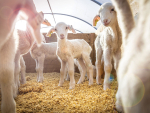
Sheep milk processor Maui Milk is on track to record average ewe production of 500 litres by 2030, says outgoing chief executive Greg Hamill.
Joe Catherwood has been a client of PGG Wrightson Wool throughout his farming career.
Christchurch people are too conservative in their tastes, says a Canterbury sheep milking pioneer who has stopped producing bottled sheep milk because of modest sales, Covid, and his own advancing years.
A Waikato family among the first to enter the commercial dairy sheep industry is starting to see the rewards of their hard work as they come to the end of their second season.


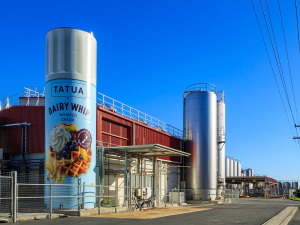
Waikato milk processor Tatua has again declared a record milk payout to farmer shareholders, leaving other processors in the dust.
A Labour-led Government won’t be bringing back the controversial freshwater rules of 2020.
National’s much-touted free trade deal with India featured in the Rural Issues Debate at Mystery Creek, Hamilton on Wednesday night.
New Zealand's 2026-27 freshwater fishing season has opened, with anglers encouraged to head to rivers and lakes over the coming days as conditions look favourable across much of the country.
Central Otago District Council (CODC) has voted against a plan to spread treated sewage sludge from Cromwell and Alexandra on farmland near Lauder, a decision Federated Farmers says reflects strong opposition from rural residents.
Pāmu has released its FY26 Integrated Annual Report, reporting a Net Operating Profit of $113 million, more than double the $49 million recorded in FY25.





OPINION: The same mainstream media muppets that brought you Jacindamania in 2017 have been flat out pimping for the Opportunities…
OPINION: Your old mate reckons the atrocious way farmers in the UK are treated by their lords and masters in…




