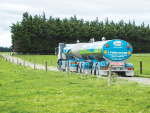
Fonterra FY26 Results: $9.69 Milk Price, $3.4bn Profit
Fonterra has unveiled its annual results for the 2026 financial year, posting $27 billion in revenue and close to $20 billion returned to New Zealand farmer owners and unit holders.




 increase font size
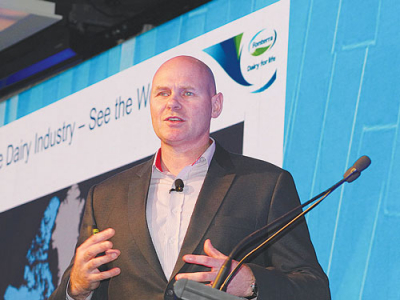 Mark Piper.
Fonterra has been asking its staff how it could do things differently and how it could disrupt itself, says Mark Piper, the co-op’s director of group R&D.
While Fonterra is a young company, New Zealand has been dairy farming for 100 years, he says.
“It is quite hard for us to get our heads around how we may choose to disrupt ourselves, how we may choose to completely change the way we do things,” Piper told an Export NZ conference.
“We are asking our own staff internally ‘what do you think we could do differently; how do you think it would work?’ ” he says. “Rather than run it through the usual process they are taking the questions out and incubating them.
“We are saying ‘we will give you some time, a little bit of start-up capital, then you come back and give us a value proposition and you pitch it to us as you would pitch it to a venture capital board’.
“That is helping us engage and develop our own staff. It has been running for 15 months with about 189 ideas submitted into it.” A couple of those ideas are already in train and have had a positive return within three months.
Describing the process, Piper says they first get all the ideas in and then a panel narrows them down and picks the best ones. They have seen about 15 teams come to a disrupt ‘hackathon’ session. They give them coaches to work with, refine their ideas and get market input.
They pitch to another panel which narrows the field down to about four ideas. They spend three months, again working with coaches. After three months they pitch again and say ‘here’s what it looks like, here’s the customer base, please back our idea’.
Piper says they are at the stage of a second pitch battle held recently, from which some ideas will go to the Business as Usual areas and some will continue to be incubated.
Some will say they need more work, and staff are free to keep working on it as part of their day job and can bring the idea back once it has been further developed.
“Some of the ideas we don’t have to incubate at all; we have said “that’s a good idea; put it in tomorrow’. To some we say ‘they are great ideas but we can’t invest in all of them’, so we narrow it down to ‘what do we think will have the biggest impact fiscally and also for our customer?’
“It has been a fun process to be involved in.”
Though the R&D people are typically introvert and reflective thinkers, they are expected to be the brains of innovation; so Piper told his team he wanted them to submit the most ideas and they did.
The big joy of being a global company is the diversity of the people, he says.
People aged 21-60 have taken part in this programme, with eight languages spoken, 27 nationalities and almost an equal gender mix.
“It has been good for encouraging the diversity we have.”
Piper’s advice to business is that you need to know who or what is going to disrupt you and you should look at disrupting yourself.
“That is one of the hardest things, especially if you’ve got you own business and you’ve built it up and you are super proud of it; how do you disrupt yourself? How do you take the ego and pride out of it a bit, take a step across and say ‘that was a fantastic product and I’m glad I did it?’
“But this is where the world is moving to, how do we move with it?”
Fonterra has unveiled its annual results for the 2026 financial year, posting $27 billion in revenue and close to $20 billion returned to New Zealand farmer owners and unit holders.
Fonterra Co-operative Group has confirmed the independently assessed candidates standing for election to its board in 2026.
Fonterra has revised its Farmgate Milk Price forecast for the 2026/27 season, lifting the midpoint and narrowing the range on the back of improving global dairy commodity prices.
Outgoing Fonterra Co-operative Council chair John Stevenson says that it has been a privilege to represent the co-op's farmer shareholders.
OPINION: It seems Canterbury processor Synlait is still in the doldrums.


Federated Farmers says it welcomes Labour's commitment to reviewing the Sharemilking Agreements Act, calling on other major parties to do the same.
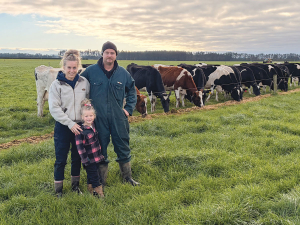
For Canterbury dairy farmers Sian Meijer and Rick Wobben, wearable technology has become one of their most valuable on-farm tools - helping manage 1850 cows across an expansive, high-performing dairy operation while improving efficiency, mating outcomes and day-to-day decision making.
Fonterra has unveiled its annual results for the 2026 financial year, posting $27 billion in revenue and close to $20 billion returned to New Zealand farmer owners and unit holders.
The first major update to the Dairy Cattle Code of Welfare in more than a decade has been released, marking what DairyNZ describes as an important step in ensuring animal welfare standards continue to evolve alongside scientific evidence and on-farm realities.
Ravensdown shareholders have elected Jane Montgomery and Kate Acland to the Ravensdown Board for three-year terms, following a closely contested director election.
Federated Farmers says new legislation replacing the Resource Management Act will cut red tape, unlock investment and help grow New Zealand's export-led economy, after the Planning Bill and Natural Environment Bill passed their third reading in Parliament yesterday.




OPINION: The same mainstream media muppets that brought you Jacindamania in 2017 have been flat out pimping for the Opportunities…
OPINION: Your old mate reckons the atrocious way farmers in the UK are treated by their lords and masters in…




