Fonterra Cuts 2026/27 Milk Price Forecast to $9.25
Fonterra has reduced its forecast 2026/27 Farmgate Milk Price.




 increase font size
 Fonterra is predicting decline in milk volume.
In the last couple of weeks we have seen a welcome recovery in the Global Dairy Trade price index, albeit on reduced volumes for this time of year.
Certainly across the Tasman, bank and other industry analysts have rushed to revise up forecasts to about $5kgMS for the current season.
Fonterra has said it now expects its milk collections for the full year 2014-15 to fall 3.3%, due to the early herd drying-off by producers hit by lack of grazing and stored feed, made worse by the prevailing low milk price. However, in its latest review the Fonterra board stayed put on its $4.70kgMS payout. So who’s right?
Firstly, it’s debatable whether the New Zealand production downturn will be too bad for the industry as a whole. A fall of that order in the full year output would mean a huge decline in milk output over the late-season months – in the order of 18% for February-May. In our latest Global Dairy Directions analysis, we are less bearish on the production decline than Fonterra for the wider New Zealand industry; we think it’s more likely that output ends 2014-15 in line with the previous year after the first half of the season saw 5.4% more milksolids collected. Even in a normal season, at least 62% of New Zealand output is collected before January, so a high proportion of this season’s production is already in the vat and sold.
Nevertheless, many analysts and commentators have credited the drought effect as the primary reason we’ve seen a lift in GDT auction prices at recent events. The deliberate reduction in product availability for the GDT auction probably has a bit to do with that trend as well. In a supply chain sector that has limited transparency in stocks either side of trading, a sentiment of ‘fear of missing out’ has been stoked by the considerable talking up of the drought effect. (Interestingly Fonterra has now added to the volumes on offer for the remaining three GDT auctions of the season.)
But let’s put the range of possible outcomes for milk availability into perspective.
When you add up the late season milk effect of the slower New Zealand output – either resulting in a flat full season outcome or even a 3% decline result across the industry for 2014-15 – the volume impact is still smaller than the estimated increased availability in milk from northern hemisphere giants EU and the US.
Milk output growth is expected to slow in the EU and US, largely thanks to lower farmgate milk prices, and will continue to do so in the first half of 2015. However, there are also weaknesses in internal demand for dairy products – for cheese in the case of EU and fluid milk in the case of US. Even small changes in consumption and production within these major dairy producing and consuming regions can release a significant amount of milk into exportable products that may in turn hit global trade. Based on our Global Dairy Directions analysis, the net effect of the interplay between production and consumption within these two dairy juggernauts is – by our reckoning – higher milk availability compared to last year. As this chart shows, the increase in milk availability from the US and EU outweighs even the more pessimistic scenario for New Zealand production loss over the first half of 2015.
So the global dairy market’s supply-side issues won’t be completely resolved by the drought conditions in New Zealand. At least, not while EU and US are heading into a seasonal production peak with domestic consumption not keeping pace with milk output. So it’s not surprising that at their review meeting last month, Fonterra’s board decided to stick with their payout forecast, despite the recent improvements in GDT index results.
Based on our analysis, a sustained recovery in international prices is still some way off, and will require either a further slowdown in northern hemisphere milk production and/or improved demand –
either from importing countries or from the US and EU.
• Joanne Bills is a director of Freshagenda, a food market analyst in Victoria.
Fonterra has reduced its forecast 2026/27 Farmgate Milk Price.
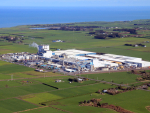
Fonterra's Whareroa site took home the prestigious Directors Award at the co-op's 'Oscars of Manufacturing', while Clandeboye led the way with multiple wins at this year's Best Site Cup.
After 25 years it is the right time to step away, says Colin Glass, the retiring chief executive of New Zealand's largest private corporate dairying company, Dairy Holdings.
Fonterra is strengthening its foodservice presence in China with the launch of a new cream for professional bakeries at Bakery China 2026 in Shanghai.
OPINION: To a chorus of crying greenies, and not a minute too soon, the Government has moved to put the courts back in their place through proposed amendments to the Climate Change Response Act 2002, intending to limit climate litigation claims such as Smith v Fonterra, in the interests of providing greater certainty for vital industry.


Fonterra has reduced its forecast 2026/27 Farmgate Milk Price.
New Zealand dairy farmers are set to be the first in the world to receive access to a new digital physical milk pricing tool that enables them to fix the price for their physical milk.
State farmer Pāmu is opening its farm gates this summer in an effort to give the rural sector the opportunity to see how large-scale, multi-system farming is delivering productivity and profitability across New Zealand.
A five-year study has found that the cost of reducing emissions without technology may be significant and unsustainable for Northland dairy farmers.
DairyNZ says Waikato farmers need certainty on Plan Change 1, but they say that certainty must be matched with practical, workable rules and a clear transition that doesn't get ahead of the new resource management system currently under review.
While the Government has moved quickly to make commercial hauliers' lot easier during the current fuel crisis, they appear to be stuck in the creep box when it comes to the agricultural industry.




OPINION: Central Hawke's Bay farmer Mark Warren recently told the Hawke's Bay Times it's time for a conversation about allowing…
OPINION: A nation that relies as heavily as NZ does on functional global shipping lanes will have to do its…