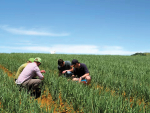
Keep What Works Working: NZ's New Resistance Campaign
New Zealand growers have always adapted to changing conditions, but one challenge is steadily gaining ground across the horticulture sector: resistance.




 increase font size
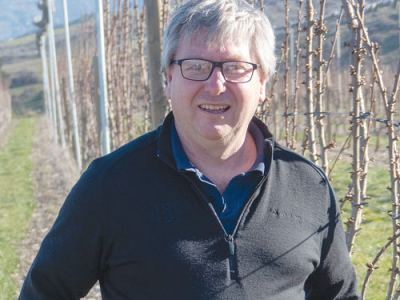 Summerfruit NZ chairman and general manager of the 45South cherry orchards Tim Jones.
A new 12ha cherry orchard now being set up by Cromwell’s 45 South is a vote of confidence in the future of Central Otago’s cherry industry.
45 South owns or manages at least 150ha of cherry orchards in the Cromwell area, producing 30-40% of New Zealand’s export cherries.
Now it is planting a new 12ha block on the slopes above Lowburn on Lake Dunstan.
General manager Tim Jones, who is also the Summerfruit NZ board chairman, says the industry is expanding hugely, particularly in Central Otago.
The district already has 850ha of cherries and Jones expects that to double in the next three years with new investment coming in and orchards being planted.
Wearing his Summerfruit NZ hat, however, Jones acknowledges that the industry has questions it must ask itself.
“Where is the expertise? Where are the people? Where are the houses in Cromwell?” he told Rural News.
“You can’t rent a house in Cromwell now, so if we need to double the number of staff where are the seasonal workers going to come from?
“All those sorts of things need asking, let alone is the market big enough to handle it?
“As much as I think it’s great to see the industry expand, I just hope it’s happening sensibly, and people have done their due diligence to be market-led.”
NZ’s two biggest markets for cherries are China and Taiwan, with Vietnam, Malaysia, Thailand, Singapore and Korea also important.
“But whether we can rely on them to take double the amount of fruit in five years, I’m not sure,” says Jones.
The biggest competitor is Chile, which is planting about 2000ha a year and comes into the market at the same time as NZ and at a much lower cost of production.
Jones says NZ serves the high-end gift market as its point of difference.
“Is that high-end gift market enough to double or triple the amount that’s coming out of this country?”
However, 45 South still sees room for expansion.
“The key is that you understand the market, understand the quality of the fruit that you’ve got to grow – which is really high-end.
“It’s quite a niche market and you pack it in what the consumer is looking for. Ten years ago, we packed all our cherries in 5kg boxes; it was easy.
“Now it’s down to 400g and 1kg boxes, so we’ve got big volumes having to go into really small vessels.”
The cherries are all chilled and packaged locally, to satisfy the Chinese demand for food safety.
“Consumers need to know the fruit is the real thing and hasn’t been tampered with or substituted along the supply chain.”
Jones says the Chinese consumer is happy to pay a premium “if they’ve got the right quality, the right size, and the right flavour”.
New Zealand growers have always adapted to changing conditions, but one challenge is steadily gaining ground across the horticulture sector: resistance.

Dean Smith has been in the role of CEO of Summerfruit NZ for about four months, having succeeded Kate Hellstrom at the end of September.
New Zealand cherry exports may be headed for a record year in terms of volume, says Summerfruit NZ chief executive Dean Smith.
It has been another mixed season for the country's summerfruit growers.
New Zealand cherry producer Southern Fruits International expects to send up to 340 tonnes of luxury cherries to the global market this summer - just over double that of the volume sent last year.

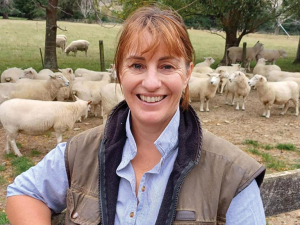
B+LNZ's Wormwise veterinarian Mary Bowron has won the Best Sheep and Beef Vet of the Year Award in recognition of her outstanding contribution to New Zealand’s sheep and beef sector.
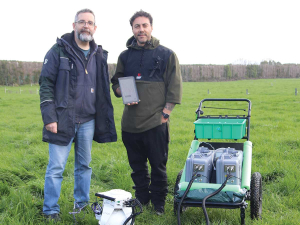
Researchers at Massey University are using a special piece of scientific equipment to improve the measurement of greenhouse gas emissions from pasture soils.
More signs of a booming kiwifruit sector.
OPINION: David Seymour and James Meager's plan to make it easier for farmers and orchardists to operate drones can best be described a 'courageous' move.
New Zealand wool is reaching new heights as air filtration companies move away from synthetic products to biodegradable alternatives.
Opuha Dam's ability to protect South Canterbury communities from major flooding has taken a significant step forward, with Opuha Water Limited (OWL) successfully commissioning a new outlet valve capable of releasing record volumes of water from the dam ahead of a weather event.




OPINION: The same mainstream media muppets that brought you Jacindamania in 2017 have been flat out pimping for the Opportunities…
OPINION: Your old mate reckons the atrocious way farmers in the UK are treated by their lords and masters in…