
Bremworth reintroduces solution-dyed nylon while backing wool carpets
Carpet maker Bremworth is reinstating solution-dyed nylon (SDN) into its product mix but says wool carpets remain central to its brand.




 increase font size
 Bremworth chief executive Greg Smith says like the wool industry, the meat sector faces challenges from synthetics.
NZ carpet maker Bremworth has bet its future on a growing consumer shift to sustainability with its move to drop synthetics and only use 100% wool in its products.
Chief executive Greg Smith told the Red Meat Sector Conference, held in Christchurch earlier this month, that like the wool industry, the meat sector faced challenges from synthetics. However, he believes this is an opportunity that the NZ meat sector should relish and take head on.
"You could argue that today meat finds itself in the same place as the wool industry did a couple of decades ago with the arrival of plant based products," he added. "However, you need to get in the ring and fight your corner."
Smith says Bremworth is doing this with its decision to move away from synthetic and only use 100% wool.
He explained how the development of synthetic fibres took over from wool as the major carpet component and has led to the current dire state of the NZ strong wool industry.
"We were absolutely getting crushed and sales had been in decline for 10 years."
In 2020, Bremworth, which has manufacturing facilities in Napier, Whanganui and Papatoetoe, adopted a new strategy that saw it shift to use only 100% NZ wool fibres for the production of wool carpets.
Smith says the emergence of environmentally-aware consumers meant a major opportunity arose for the carpet maker.
"Consumers are waking up to the fact that plastic-based products are a problem and that plastic doesn't go away and it does not break down. As a result, it pollutes our waterways and oceans and gets into the food chain."
Smith says this opened up a massive opportunity for Bremworth, despite the fact that around 95% of all soft flooring coverings in NZ are synthetic.
"We saw that plastic was becoming a problem and there was a new consumer emerging called a LoHaS," he explained. "This stands for Lifestyle of Health and Sustainability."
Smith says this new consumer is concerned about looking after themselves and their family's wellbeing, and is interested in brands that care about the planet and are transparent.
"It is really important, no matter where you are or what place you find yourself in now, do not be afraid to start and go after this consumer," he added. "What I have seen in the last five years has only seen this category of consumer grow."
Smith urged the NZ meat sector to "disrupt or be disrupted" and praised it for moves to things such as Net Carbon Zero beef and low carbon produce.
"It doesn't really matter where you sit on the whole climate thing and even if you think it's ridiculous; It's not actually what we think, it's what the consumer thinks and what government will do about it."
Smith believes carbon is a global trend that industries need to pay attention to, but more work was needed around carbon accountancy.
"I don't think the way we are accounting for carbon is correct."
However, he does believe consumers are willing to pay a premium for wool and other products produced with a net carbon zero footprint.
Smith believes that a lot of farms in New Zealand are probably already at net zero and there should be more marketing of this fact.
Walking The Talk
Greg Smith says the biggest threat to Bremworth's 100% wool strategy is supply.
He explained that, because the because the price of strong wool had been so bad for so long, farmers had moved out of the sector to focus on trees or adopted self-shedding breeds like Wiltshires.
He says Bremworth is in the process of developing long term contracts for wool growers in an effort to offer more stability and confidence in the future of the NZ strong wool sector.
Smith explained that Bremworth's purpose was 3 Ps: people, planet and profit.
"Profit is incredibly important and sustainability has to pay. We can't make meaningful change unless we generate profits out of it."
Carpet maker Bremworth is reinstating solution-dyed nylon (SDN) into its product mix but says wool carpets remain central to its brand.
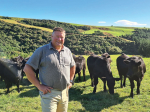
Premium wool carpet maker Bremworth is being sold to the world's largest flooring company.
A 50% tariff slapped by the US on goods from India last month has opened an opportunity for New Zealand wool carpets exports to North America.
Listed carpet manufacturer, Bremworth is undertaking a $6 million expansion at its Napier plant more than two years after the site was heavily damaged by Cyclone Gabrielle.
State-owned social housing provider Kainga Ora is switching to wool carpet for its new homes.


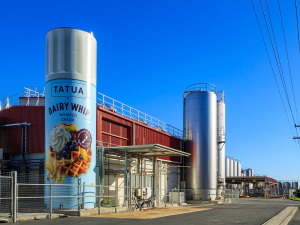
Waikato milk processor Tatua has again declared a record milk payout to farmer shareholders, leaving other processors in the dust.
A Labour-led Government won’t be bringing back the controversial freshwater rules of 2020.
National’s much-touted free trade deal with India featured in the Rural Issues Debate at Mystery Creek, Hamilton on Wednesday night.
New Zealand's 2026-27 freshwater fishing season has opened, with anglers encouraged to head to rivers and lakes over the coming days as conditions look favourable across much of the country.
Central Otago District Council (CODC) has voted against a plan to spread treated sewage sludge from Cromwell and Alexandra on farmland near Lauder, a decision Federated Farmers says reflects strong opposition from rural residents.
Pāmu has released its FY26 Integrated Annual Report, reporting a Net Operating Profit of $113 million, more than double the $49 million recorded in FY25.





OPINION: The same mainstream media muppets that brought you Jacindamania in 2017 have been flat out pimping for the Opportunities…
OPINION: Your old mate reckons the atrocious way farmers in the UK are treated by their lords and masters in…




