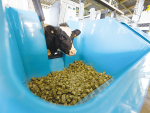
Climate-friendly cows closer
Dairy farmers are one step closer to breeding cow with lower methane emissions, offering an innovative way to reduce the nation's agricultural carbon footprint without compromising farm productivity.




 increase font size
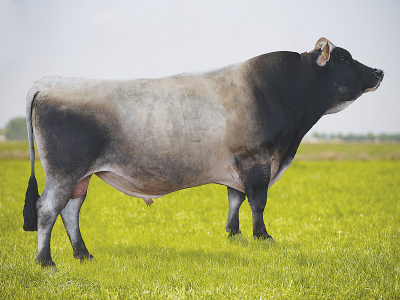 CRV has marketed Connacht in its InSire team for a couple of years now.
Herd improvement company CRV Ambreed claims its 2019 bulls offer farmers great options.
Breeding programme manager Aaron Parker says the bulls include daughter-proven and young genomic InSire bulls.
“We’re a future focused company, always planning at least five years ahead,” Parker says.
“We made a long-term commitment to breed sires that would produce healthy and efficient daughters. Our efforts have truly paid off and dairy farmers will ultimately reap the benefits by having better genetics to breed better cows.”
Product manager Peter van Elzakker stresses that sustainable dairy farming cannot be achieved by index alone, and says more farmers are looking for genetic solutions to meet the current and future demands they face in the environment, herd efficiency and animal welfare.
He recommends farmers look more broadly than production figures and choose the right genetics to achieve their overall breeding goals.
“Facial eczema tolerance, for instance, is extremely important for animal welfare, and reducing urinary nitrogren levels via LowN Sires is a great option to use for increasing environmental sustainability,” he said.
Parker points out that this year’s graduate bulls and the 2019 bulls overall have surpassed CRV’s expectations.
“Our selection process is extremely rigorous. Each year we usually choose the best 10 to 12 bulls from a pool of about 120 bulls that have come to the end of the four-year breeding programme and have herd testing and TOP information,” he says.
Parker says breeding for improved health and efficiency works.
“Analysis of herd records shows that a sire with an excellence rating (5% or more) on the Better Life Health index will have progeny with lower somatic cell count and higher conception rates. If they have an excellence rating on the Better Life Efficiency index, they will have progeny producing more milk solids and lasting longer in the herd,” he said.
Dairy farmers are one step closer to breeding cow with lower methane emissions, offering an innovative way to reduce the nation's agricultural carbon footprint without compromising farm productivity.
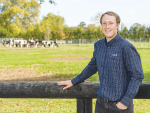
CRV has produced the first homozygous polled bull to make New Zealand’s prestigious Ranking of Active Sires (RAS) list, demonstrating the strides the company is making in breeding top-quality polled bulls.
As Mycoplasma bovis (M. bovis) resurfaces in Canterbury, CRV is reassuring dairy farmers it has rigorous production processes and health testing programmes in place within its supply chain.
A Canterbury Hereford stud specialising in providing beef genetics for the dairy industry is claiming a major breakthrough in breeding for more environmentally friendly animals, with reduced urinary nitrogen emissions.
Some dairy farmers could be missing out on up to 160 kgMS of production because they are not herd testing.


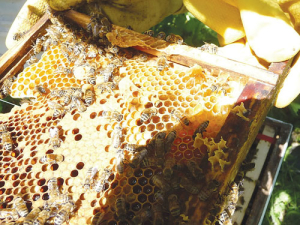
New Plymouth-based Manuka honey exporter Egmont Honey has completed its acquisition of Taihape beekeeping business Tweeddale's Honey, with settlement finalised on Friday, 18 September.

Westpac NZ is calling on farmers and growers to start preparing now for the possibility of a dry summer, as likely El Niño conditions raise the risk of drought across parts of the country.
Fonterra Co-operative Group has confirmed the independently assessed candidates standing for election to its board in 2026.
Fonterra has revised its Farmgate Milk Price forecast for the 2026/27 season, lifting the midpoint and narrowing the range on the back of improving global dairy commodity prices.
New Zealand's citrus growers were challenged to build their future on the value embedded in their fruit rather than the volume they produce, at Citrus New Zealand's annual gathering in Gisborne on 17 September.
Leading John Deere technicians and apprentices from New Zealand and Australians were recognised at the recent sixth annual JD Technician of the Year Awards, held in Brisbane.




OPINION: The same mainstream media muppets that brought you Jacindamania in 2017 have been flat out pimping for the Opportunities…
OPINION: Your old mate reckons the atrocious way farmers in the UK are treated by their lords and masters in…




