
Johne's test could be a major saver
Auckland-based biotechnology company Pictor Limited says it has been developing an accurate and affordable multiplexed diagnostic test for Johne's disease.




 increase font size
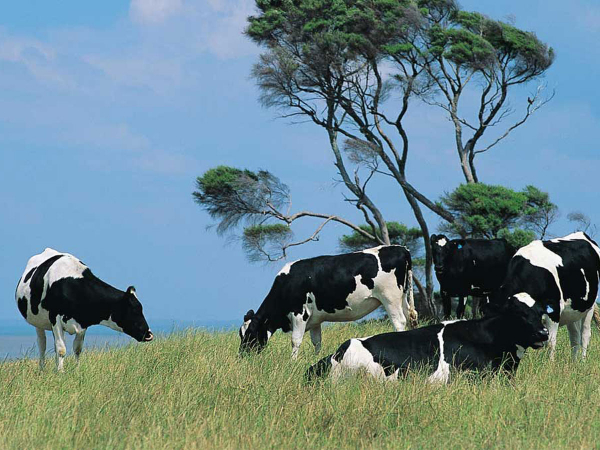 A new test for Johne's disease is said to be more rapid and sensitive in detecting the infectious agent in Johne's disease.
A promising new test for Johne’s disease in dairy cattle has been developed at the Institute for Global Food Security (IGFS) and School of Biological Sciences at Queen’s University Belfast.
The new test is said to be both more rapid and sensitive in detecting the infectious agent (MAP) of Johne’s in veterinary specimens.
It is showing greater detection capability than the milk-ELISA test that is currently used. Crucially, it detects live infectious agent, not just antibodies against MAP as are detected by milk-ELISA.
In a recent study, the new test was able to detect more infected animals by milk testing than milk-ELISA, so could potentially facilitate control of Johne’s faster.
As well as bovine milk, the new test can also be applied to faeces and blood from livestock.
The test was developed by Professor Irene Grant and her post-doctoral researcher Dr Antonio Foddai at IGFS and their research was published in the open-access journal Applied Microbiology and Biotechnology. They hope to now move to the applied stage of the science with further development and validation of their test for MAP infection at farm level.
“As farmers will know, Johne’s disease is an endemic animal health issue worldwide, particularly in dairy herds,” Prof Grant says.
“It is certainly present in Northern Ireland dairy herds, but the true prevalence of Johne’s in the local context is not accurately known.”
Grant is hopeful the new test will offer more accurate, rapid and quantitative results.
“This will therefore help farmers and vets make more informed decisions about the infection status of animals in order to control the disease more effectively within herds,” she adds.
“I also hope it will generate more accurate data on the prevalence of Johne’s within Northern Ireland and therefore build a better picture of this animal-health problem.”
Auckland-based biotechnology company Pictor Limited says it has been developing an accurate and affordable multiplexed diagnostic test for Johne's disease.
Johne's Disease is a chronic, contagious and sometimes fatal infection of cattle, sheep, deer and goats.
The same technology used to detect Covid-19 in wastewater is now being used to help dairy farmers manage Johne's disease in their herd.
The technology used to detect Covid-19 in wastewater is now being used to help dairy farmers manage Johne’s disease in their herd.
A test to detect Johne's Disease and pregnancy from a single milk sample in cattle is being developed.


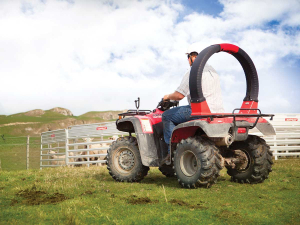
When Northland leather worker Vernon Suckling started making horse saddles 50 years ago, quad bikes and side-by-side vehicles were unheard of.

Alliance Group has confirmed that eligible farmer-shareholders who supply and continue to back the business will receive up to $20 million later this year, following the strategic investment partnership with Dawn Meats.
With a general election under five weeks away, Rural News is asking major political parties about their policies and positions on key issues facing the primary sector. We will run their responses to each question over the next four weeks. The ACT Party and the Greens didn't respond in time.
The red meat sector is in great heart.
Dr Scott Champion, Foundation for Arable Research chief executive, says that everyone in the supply chain had a role to play in driving the sector's long-term success.
Entries opened on Monday, 5 October 2026 for the 2027 New Zealand Dairy Industry Awards (NZDIA), which organisers describe as the nation's biggest celebration of excellence in the dairy sector.





OPINION: The same mainstream media muppets that brought you Jacindamania in 2017 have been flat out pimping for the Opportunities…
OPINION: Your old mate reckons the atrocious way farmers in the UK are treated by their lords and masters in…




