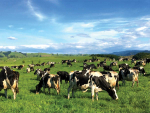
DairyNZ's Tracy Brown Flags El Nino Risk for Dairy Farms
Most dairy regions around the country have had a pretty good season so far says Tracy Brown.




 increase font size
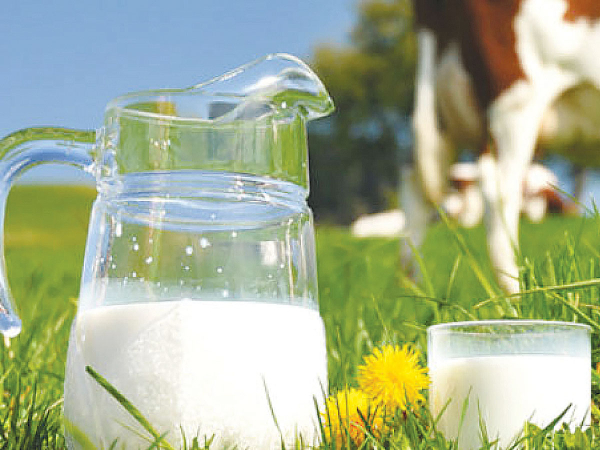 ASB now believes New Zealand dairy farmers will get a record $10.25/ kgMS for their milk this season.
A significant rise in Global Dairy Trade (GDT) auction last week has prompted one bank to lift its forecast milk price for the season to above Fonterra's mid-point.
ASB now believes New Zealand dairy farmers will get a record $10.25/kgMS for their milk this season.
The bank's senior economist, Chris Tennent-Brown notes that they have been cautious about the price outlook over December and early January, but recent development have made them more confident.
"Accordingly, we've lifted our forecast for the current season to $10.25/kgMS," he says.
A strong GDT auction last week, where whole milk prices rose significantly across all the key contracts, has been a catalyst for them to nudge their 2024-25 milk price forecast from slightly below the mid-point of Fonterra's $9.50-$10.50 forecast range, to above that $10 midpoint.
The 5% lift in whole milk powder prices, puts it at its highest average price on the platform since June 2022.
Tennent-Brown cautions that there's another four months left this season and prices could still move.
"Although the peak period of production is behind us, there's still a lot of moving parts that can influence where the milk price ends up," says Tennent-Brown.
"Production over the season to date is up 3.7% on the same period a year earlier, but the coming months' production still typically account for over 1/3 of the overall volume for the season.
"There is still a lot of products to sell, and the usual uncertainty about how strong production growth can be over the months ahead.
"A lot of regions could do with a drink, as NIWA's soil moisture deficit charts have been showing." Tennent-Brown says forecast rain last week in some parts of the North Island would have welcomed by farmers.
Another factor that could help the milk price this season is the low NZ dollar.
Tennent-Brown says the bulk of the foreign exchange (FX) hedging for this season should be done, by their estimates at a rate about 1c lower than last year.
He adds that the low NZD can help this year's milk price at the margin but can be a bigger help for the next season if the weakness continues and is captured as they expect within Fonterra's FX hedging.
"A sub 0.6000 rate is possible for the 2025-26 season," he says.
NZX dairy analyst Rosalind Crickett notes that last week's GDT auction saw North Asia returning to the platform with a greater buying presence accounting for 38% of volume.
"Interestingly as well, Europe doubled its product purchases on the last time - the recent outbreak of limited Food and Mouth Disease (FMD) coupled with ongoing Bluetongue Virus (BTV) could well be the driver here," she says.
Most dairy regions around the country have had a pretty good season so far says Tracy Brown.
Milk powder prices are keeping farmgate prices up, helping processors offset the dip in milk fat prices.
OPINION: With 10,500 dairy farms, New Zealand continues to punch above its weight around the world.
A milk glut around the world shows no sign of easing, putting downward pressure on farmgate milk prices for the next few months.
Fonterra has reduced its forecast 2026/27 Farmgate Milk Price.


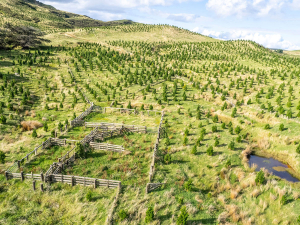
The New Zealand Institute of Forestry (NZIF) says unnecessary changes to New Zealand’s Emissions Trading Scheme (NZ ETS) will seriously erode investor confidence and result in significant reductions in forest planting rates.

For the first time in a quarter of a century, Federated Farmers has something positive to say about the Labour Party’s climate change policy leading into a general election.
A warning for New Zealand seed and grain companies – be prepared for an exodus of farmers from the arable sector.
Now in its fourth year, the 2026 Fencing Industry Awards, formed part of the proceedings of the FCANZ Conference, held in Nelson during August.
DairyNZ deputy chair Cameron Henderson has been re-appointed unopposed for another term.
OPINION: The stats speak for themselves.


OPINION: The same mainstream media muppets that brought you Jacindamania in 2017 have been flat out pimping for the Opportunities…
OPINION: Your old mate reckons the atrocious way farmers in the UK are treated by their lords and masters in…




