
India FTA Removes 33% Tariff on NZ Sheepmeat
New Zealand’s red meat sector has welcomed the India-New Zealand Free Trade Agreement taking effect, which removes India’s 33% tariff on New Zealand sheepmeat.




 increase font size
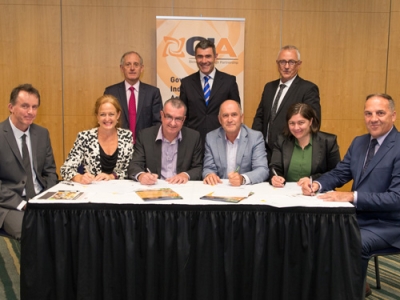 From left to right: David Teulon (B3), Jen Scoular (NZ Avocado), Allan Pollard (Pipfruit NZ), Barry O'Neill (KVH), Rebecca Fisher (NZ Citrus Growers Inc), Andrew Coleman (MPI). Top row: Martyn Dunne (MPI), Minister for Primary Industries, Hon Nathan Guy, Philip Manson (NZ Wine Growers).
An operational agreement to reduce the damaging impacts of a fruit fly incursion has been signed by a number of horticulture industry groups.
Fruit Fly Council chairman, Philip Manson says that the council is pleased to have finalised the agreement after months of negotiations amongst the parties. "This means the horticulture sector and the Ministry for Primary Industries can work together to manage and help reduce the impacts of fruit fly on the sector," says Mr Manson.
"Fruit flies are one of the biggest biosecurity threats facing horticulture. A fruit fly incursion could cost the horticulture industry up to $2.1 billion (calculated as the annual value of first point of sales). Eighty percent of this value is represented by signatories to the agreement, who will be partners in joint decision making under Government Industry Agreement (GIA) for readiness and response."
This is the first such agreement under GIA. It sets out the operational requirements for readiness and response activities and cost-sharing arrangements between Government and affected industries.
"By working together under GIA, Government and affected industries can achieve far greater outcomes than working in isolation. The agreement clearly sets out the roles and responsibilities of all the parties, and how joint activities will be funded between all the parties," says Mr Manson.
The agreement was signed by the parties at the B3 – Better Border Biosecurity Conference with the Minister for Primary Industries, Nathan Guy. Other attendees included representatives of the signing industry groups, the Ministry for Primary Industries (MPI) and the GIA Secretariat.
Initial signatories to the operational agreement are Pipfruit NZ, Kiwifruit Vine Health, New Zealand Avocado Growers Association Inc, New Zealand Citrus Growers Inc and the Ministry for Primary Industries.
For more information or to view a copy of the agreement summary, visit www.gia.org.nz.
New Zealand’s red meat sector has welcomed the India-New Zealand Free Trade Agreement taking effect, which removes India’s 33% tariff on New Zealand sheepmeat.

New Zealand's role is not to compete with Indian growers, according to NZ Apples and Pears.
The red meat sector is in great heart.
Testing confirms H5 bird flu in a single northern giant petrel, found dead on a remote Cape Palliser beach in the Wairarapa, says Dr Mary van Andel, the Ministry for Primary Industries' (MPI) Chief Veterinary Officer.
The apple sector is working with the Government to unlock access to two key markets that could bring millions in revenue for apple growers.


Federated Farmers has welcomed new rural policies released by ACT, saying they align closely with its own election priorities.

Rural Contractors NZ says proposed changes to land transport rules for agricultural vehicles are a welcome response by the Government to out of date regulations which have seen members hit with huge fines.
Alliance is calling for final applications for its 2027 Graduate Programme, with applications closing on Sunday 25 October.
Decades piloting planes has ensured vet and farmer David Hayes is focused on safety. So, after a serious accident while welding on farm, he is sharing his experience so others can learn from it.
Canterbury milk processor, Synlait Milk has confirmed Leon Fung as its chief executive officer.
OPINION: Making it easier to collect rainwater and use it to grow crops and livestock is a no brainer.




OPINION: The same mainstream media muppets that brought you Jacindamania in 2017 have been flat out pimping for the Opportunities…
OPINION: Your old mate reckons the atrocious way farmers in the UK are treated by their lords and masters in…




