Kiwifruit Growers Prepare for El Niño, Stay Optimistic
Kiwifruit growers are watchful but remain optimistic as concerns around the potential effects of the El Niño weather pattern this season.




 increase font size
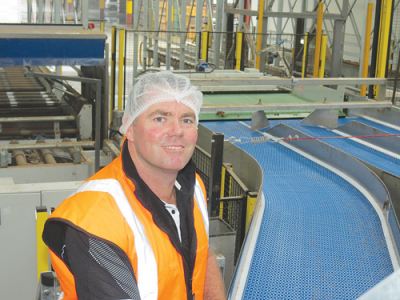 Eastpack’s Toby Potter says science and innovation are making a massive difference to the kiwifruit industry.
A massive $50 million spend on new infrastructure and technology by one of the country’s largest kiwifruit packhouses is an example of the rising efficiencies in the industry seen as the shining light of the primary sector.
Peter Burke visited EastPack, near Te Puke, to see what the money has bought...
Not long ago kiwifruit packhouses were full of people grading fruit pretty much manually.
While people still do some of this work, a new generation is now on site: engineers, technicians, IT whizzkids -- oozing innovation and peering into the future. Smart cameras and robots, hitched to computers, have edged out some manual tasks.
Packhouses and all elements of the supply chain are rapidly embracing science and innovation as kiwifruit volumes surge. In 2016, New Zealand produced 117 million trays and total sales for the season were up 21% on the previous season to $1.9 billion. They predict it will keep rising.
EastPack’s business development manager Toby Potter says the company spent the money to deal with the rise in fruit volumes coming on the back of the Psa recovery and the growth of Zespri’s Sungold category.
“As the volume of SunGold started to ramp up we needed to increase packing and coolstore capacity to look after the fruit,” he told Rural News.
“More recently, we have refreshed cool-chain infrastructure at most of our seven sites – things like pre-coolers and new coolstore technology to further improve fruit quality. Packing seasons and shipping periods are getting longer and more complex so we need to keep the fruit in good nick for consumers.”
Some technology at EastPack is mind blowing, for example, a system to handle fruit more gently when it enters the grading phase at the packhouse. That’s when the fruit meets even more technology – InVision camera grading that processes multiple images of each piece of fruit to identify cosmetic defects.
In many cases, 80% of fruit is sent straight to class 1 packaging without being graded by a person. Grading staff are used to grade the small percentage of fruit that is close to grade margins. To keep the technology honest, fruit is regularly sampled and assessed by quality control staff.
EastPack also uses innovative, non-invasive, near-infrared (NIR) grading technology to test internal fruit properties by projecting halogens onto fruit and measuring reflected light. NIR technology can measure internal fruit characteristics – dry matter, brix and colour and pressure in real time at high speed.
“There are many purposes for this technology. One is to increase productivity so it allows us to pack more fruit per hour, which means more of our growers are able to pick their fruit at the best time,” Potter explains.
“Then there is the opportunity to recover as much class one fruit as possible. This year, the NIR system allowed us to recover 340,000 trays of Gold which otherwise would not have made Zespri dry matter requirements. This made a lot of growers very happy.”
And the technology can go up yet another stage.
“It also allows us to set parameters for long storage. So we can set an optimum brix parameter and all the fruit within the optimum brix range will go onto one pallet for long storage, and the outliers would go onto another for earlier shipping. So the technology allows us to improve storage outcomes for growers.”
Grower experience manager at EastPack, Janette Montgomery, has worked at the Te Puke facility for many years. She has seen the transition from semi-manual to high-tech.
The days of a largely manual job in a packhouse have gone, she says.
“That’s why we’re attracting a lot of graduates from university. With automation technology we require more and more technicians and information systems people. It’s high-level stuff, which requires very smart people.”
EastPack provides technical support for 850 growers who sometimes have challenges on their orchards and need technical support.
Potter says science and innovation are making a massive difference to the industry all along the supply chain, from growing to post-harvest and through to markets.
“Developing a depth of skilled people to drive innovation and clever thinking is the key to ongoing growth in the industry.”
Jobs of the future for everyone
Hannah Carter is a young person who has made good in kiwifruit since joining EastPack in 2010 with a background in logistics and supply.
Since her school days Carter always wanted to be a manager but was not sure in what industry. She has worked her way up through the company and is now in packhouse management.
“I don’t think young people realise what opportunities there are in the kiwifruit industry,” she told Rural News.
“There are many opportunities in lots of different areas – growing, post-harvest, inventory and marketing. People don’t realise there is more to the industry than picking fruit off the vine. There are a lot of opportunities for young people to extend their careers.”
Carter says she likes the kiwifruit industry and the challenges it offers and is now looking to work in the supply area of the business.
EastPack business development manager Toby Potter says a big challenge for the industry is breaking down the notion that jobs in horticulture and the primary sector are only for people who want to roll up their sleeves and get their hands dirty.
“The industry is great for people who want to roll up their sleeves, but you don’t always have to get your hands dirty because there is such a diverse range of roles in the industry,” he explains. “There is a shortage of young people coming through with diverse skills. What that means for the average young person is they could have a really bright career if they have skills and a good attitude.”
Potter says he’d like to see horticulture and agriculture much more integrated into education. That doesn’t necessarily require getting more people to study horticulture or agriculture.
“We mean it would be nice to see more horticultural themes or topics introduced into other mainstream studies,” he explains.
“For example, in studying science you could do it in a kiwifruit context and in working through maths or statistical problems you could apply that in a context relevant to the region you live in or the part of the economy you are associated with.”
Kiwifruit growers are watchful but remain optimistic as concerns around the potential effects of the El Niño weather pattern this season.
Where any worker in the kiwifruit industry is mistreated, we expect the authorities to take action.
More signs of a booming kiwifruit sector.
After delivering a strong financial year, rural trader PGG Wrightson says the coming months will depend on customer confidence and weather.
New Zealand growers have always adapted to changing conditions, but one challenge is steadily gaining ground across the horticulture sector: resistance.


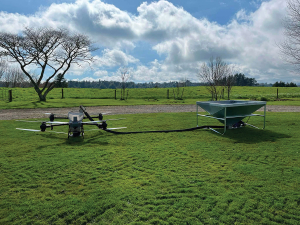
Agricultural drone operators say that a government decision to allow lower-risk drone work without certification won’t lower standards but drive innovation and efficiency.
Farmgate lamb prices are down by 8%, beef cattle by 4.5% and farm expenditure up by 4.2%.
Kiwifruit growers are watchful but remain optimistic as concerns around the potential effects of the El Niño weather pattern this season.
Almond hulls sourced from Australian orchards may have the potential to help New Zealand cows reduce emissions, boost milk yield and lower input costs.
Striking a balance between meeting the needs of industry to speed up approval time for products but on the other hand ensuring that risks are properly assessed.

OPINION: The same mainstream media muppets that brought you Jacindamania in 2017 have been flat out pimping for the Opportunities…
OPINION: Your old mate reckons the atrocious way farmers in the UK are treated by their lords and masters in…