Fonterra FY26 Results: $9.69 Milk Price, $3.4bn Profit
Fonterra has unveiled its annual results for the 2026 financial year, posting $27 billion in revenue and close to $20 billion returned to New Zealand farmer owners and unit holders.




 increase font size
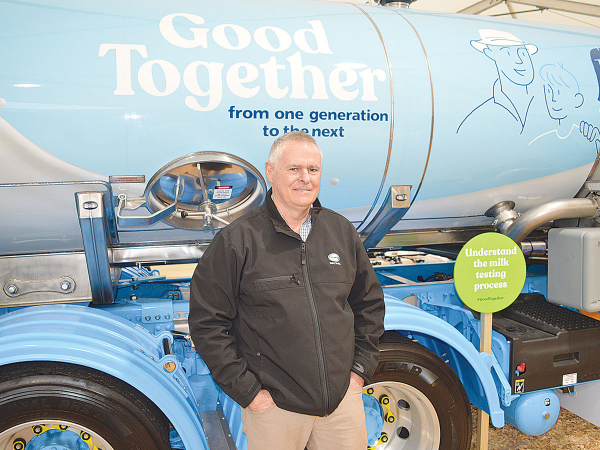 Fonterra chair Peter McBride claims there’s been a change in the Government’s attitude towards the farming sector.
Fonterra chairman Peter McBride claims there’s been a change in the Government’s attitude towards the farming sector.
He says four years ago the relationship was “non-existent”.
“I think there has been a change in attitude. Relations with the Government has been as good as it has ever been,” McBride told the Northland Dairy Development Trust online conference last week.
During a question-and-answer session, McBride was asked if the agriculture sector’s economic contribution during the Covid pandemic was recognised and had changed the view in Wellington.
“They understand the issues, the tension and potential impact on overseas earnings and how important agriculture is.”
Speaking on greenhouse gas emissions and water quality legislation pondered by the Government, he says the farming sector is being challenged by the speed of travel.
The cooperative has been told by its sustainability advisory board to expect sustainability issues to travel faster, not slower.
McBride notes that it’s not necessarily the Government that is driving changes.
“It is corporations, consumers; it’s a global issue that’s coming at us like a steam train.”
At the end of the day, what matters is how the sector adopts and responds to changes, he adds.
McBride says while he understands there’s angst around, he doesn’t believe the push for emissions legislation is unique to NZ.
“From an emissions perspective, I don’t think it’s out of whack with where the global trend is.
“I think you can say we are laggards in that regard.”
McBride says the water quality issue is different, driven by philosophy and going beyond consumer expectations in some regards.
“I think the emissions one is a different story. From an emissions perspective, our objective is to turn the perceived threat into opportunity.
“It is how we adopt and how we change; doing nothing is not an option.”
Meanwhile, Fonterra has again lifted its 2021/22 forecast Farmgate Milk Price range to $9.30 - $9.90 per kgMS, up from $8.90 - $9.50 per kgMS.
This now sees the midpoint of the range, which farmers are paid increase by 40 cents to $9.60 per kgMS.
Fonterra chief executive Miles Hurrell says the lift in the forecast reflects the increase in global dairy prices since the co-op’s last milk price update in January and good ongoing global demand for dairy.
Fonterra has unveiled its annual results for the 2026 financial year, posting $27 billion in revenue and close to $20 billion returned to New Zealand farmer owners and unit holders.
Fonterra Co-operative Group has confirmed the independently assessed candidates standing for election to its board in 2026.
Fonterra has revised its Farmgate Milk Price forecast for the 2026/27 season, lifting the midpoint and narrowing the range on the back of improving global dairy commodity prices.
Outgoing Fonterra Co-operative Council chair John Stevenson says that it has been a privilege to represent the co-op's farmer shareholders.
OPINION: It seems Canterbury processor Synlait is still in the doldrums.


Farmers across parts of Southland and South Otago are continuing to deal with difficult conditions after a prolonged run of wet weather, with pressure building around feed supply, stock management, pasture damage, farm infrastructure and everyday workloads.

Federated Farmers says it welcomes Labour's commitment to reviewing the Sharemilking Agreements Act, calling on other major parties to do the same.
For Canterbury dairy farmers Sian Meijer and Rick Wobben, wearable technology has become one of their most valuable on-farm tools - helping manage 1850 cows across an expansive, high-performing dairy operation while improving efficiency, mating outcomes and day-to-day decision making.
Fonterra has unveiled its annual results for the 2026 financial year, posting $27 billion in revenue and close to $20 billion returned to New Zealand farmer owners and unit holders.
The first major update to the Dairy Cattle Code of Welfare in more than a decade has been released, marking what DairyNZ describes as an important step in ensuring animal welfare standards continue to evolve alongside scientific evidence and on-farm realities.
Ravensdown shareholders have elected Jane Montgomery and Kate Acland to the Ravensdown Board for three-year terms, following a closely contested director election.




OPINION: The same mainstream media muppets that brought you Jacindamania in 2017 have been flat out pimping for the Opportunities…
OPINION: Your old mate reckons the atrocious way farmers in the UK are treated by their lords and masters in…




