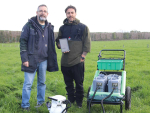
Massey Uses Portable Analyser to Measure Pasture Soil GHGs
Researchers at Massey University are using a special piece of scientific equipment to improve the measurement of greenhouse gas emissions from pasture soils.




 increase font size
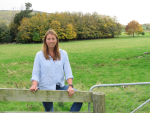
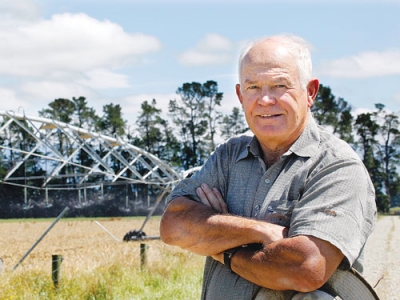 Peter Kemp (pictured) wants all policy and rule makers in local and central government to properly understand farm systems and how they are run.
An agricultural academic wants all policy and rule makers in local and central government to properly understand farm systems and how they are run.
Professor Peter Kemp, who heads the Institute of Agriculture & Environment at Massey University, says many don't understand. He finds this intriguing given that a lot of farmers have made the effort to understand policy, for example Federated Farmers, which understands policy and feeds that out to its farmer members.
"But it's inconsistent the other way. While some regional council policymakers understand farming well, others don't understand farming in the true systems approach," Kemp told Rural News. "They are focused on nutrient management or compliance, without fully engaging with how a farm system has to be run and managed.
"I am not making excuses for farmers; I just think that to get to and fro you need the policymakers in tune with what can and can't be done on a farm – as much as you need it the other way around."
Kemp says, in some cases, people in government offices are philosophically driven, which is a fine thing but sometimes they let themselves down because they don't fully understand whole farming systems. He's not saying 'let farmers off', but believes there needs to be practical policy solutions.
"A classic case was the cattle in the lake in Canterbury recently, which got a lot of press," Kemp adds.
"It brought home to me that the farmer involved did have the lake fenced and knew it wasn't a good idea to let the cattle in the lake. But on the day he chose to look after the cattle more than look after the lake. Personally, I think [the farmers] got it wrong. But the challenge is [for policymakers] to understand what it's like to be in that position."
Kemp believes the need is to get information out there rather than always use a big stick to embarrass someone who has made a mistake.
He says it's important that the rural community makes an effort to educate policymakers, many of whom want the world to become more sustainable, which everyone agrees with to a certain degree. But these people need to accept the reality of some situations, such as greenhouse gas emissions, which can't be solved because there isn't a technological answer.
"A lot of that knowledge comes with time. It's not something you learn quickly, it's a picture that builds up over time understanding ecosystems and farm systems. It's probably an ongoing education thing and it's fair to say we are not overly good at that in NZ," he says.
Researchers at Massey University are using a special piece of scientific equipment to improve the measurement of greenhouse gas emissions from pasture soils.

Interest in agritech and production animal systems has prompted Massey University's School of Agriculture and the Environment to new majors to its popular animal science degree.
Four years since it was first detected in New Zealand, researchers and growers now know much more about management of maize pest fall armyworm (FAW).
The industry is crying out for graduates with agricultural related degrees.
Generative AI in the workplace, trials in the field, and industry-relevant research took centre stage at this year’s Grape Days events in Central Otago, Hawke’s Bay and Marlborough.


Converting a longstanding cropping farm to dairy was the only way to ensure the land stayed in the family long term, says new dairy farmer Rod May.
As the election heats up, Organics Aotearoa New Zealand (OANZ) has launched its election scorecard designed to help voters wanting to support policies that grow organic and New Zealand's organic sector.
A 'tsunami' of milk from key exporting countries is winding down and this may be good news for New Zealand dairy farmers.
Will the good times last? That's one of the key issues to come out of the latest Federated Farmers confidence survey.
Outgoing Fonterra Co-operative Council chair John Stevenson says that it has been a privilege to represent the co-op's farmer shareholders.
Have a plan in place for your cows and staff.




OPINION: The same mainstream media muppets that brought you Jacindamania in 2017 have been flat out pimping for the Opportunities…
OPINION: Your old mate reckons the atrocious way farmers in the UK are treated by their lords and masters in…




