Two new awards open to help young farmers progress to farm ownership
Entries have opened for two awards in the New Zealand Dairy Industry Awards (NZDIA) programme, aimed at helping young farmers progress to farm ownership.




 increase font size
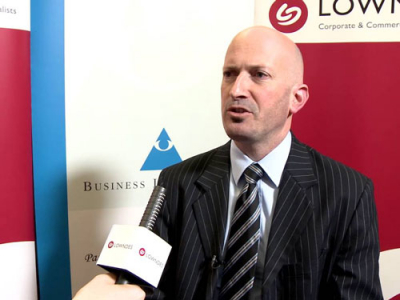 ASB’s chief economist Nick Tuffley.
ASB’s chief economist Nick Tuffley says for the remainder of the current parliamentary term, the implications of Prime Minister John Key’s resignation are quite minimal.
The current Parliament has under a year to run.
He says Finance Minister Bill English, for example, has played a key role in the settings of fiscal and economic policy.
“He, and other senior ministers, will remain as senior leaders guiding policy decisions."
This comes with some speculation that Bill English could be the next PM.
“The Government’s policy settings have been focussed on returning the Crown accounts to surplus, setting clear goals for government departments to achieve, and making policy changes incrementally. There has been a focus on economic efficiency and on value for money out of government spending.”
However, longer term, the broad economic strategy of the National Party will depend on the guidance of the new leader.
But Tufley points out that under a Bill English government (for example) the differences might not amount to much given the influence he has been having.
“The fiscal viability of current NZ Superannuation would potentially be more open to debate, as John Key has long said he would resign rather than change the current scheme.”
Tuffley says there is now greater uncertainty over economic policy for the next parliamentary term, mainly through greater uncertainty over which parties will form government. “Whether the probability of a change in government is increased or reduced will depend on the incoming PM. John Key’s popularity with the electorate, and his ability to ‘sell’ policies, has been high, though after 8 years at the top he is no longer a fresh face.”
A National-led government in the next term would still be a largely known quantity, though its exact policies will still be influenced by its coalition partners.
A Labour/Green-led government’s policies have yet to be clearly defined this far out from the election but would tend to be more interventionist and more redistributive than the National-led government has been to date.
“It is possible that business confidence will dip slightly in the short term, and the usual pre-election slowdown of business investment decisions may be larger than normal,” says Tuffley.
Entries have opened for two awards in the New Zealand Dairy Industry Awards (NZDIA) programme, aimed at helping young farmers progress to farm ownership.
According to ASB, Fonterra's plan to sell it's Anchor and Mainlands brands could inject $4.5 billion in additional spending into the economy.
Sheep and beef farmers are cautiously optimistic as farmgate prices continue to firm.
The 2025-26 season is set to start on a high and a $10/kgMS opening forecast milk price isn't being ruled out.
A global trade war beckons, which is bad news for a small open economy like New Zealand, warns Mark Smith ASB senior economist.

OPINION: As the general election approaches, political parties are churning out policies in the hope of attracting more votes.
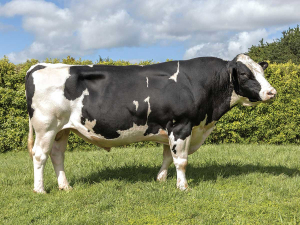
An LIC bull, Tronnoco AR Sadio-ET S3F, bred by Tony and Keri O'Connor of Tronnoco Farming Co Ltd near Timaru, has won the 2026 Mahoe Trophy.
With forecasters advising El Niño conditions will develop through winter and strengthen into spring and summer, Ballance Agri-Nutrients is encouraging farmers and growers to think ahead about nutrient planning and be prepared to work around challenging weather conditions.
In the past, much has been made of the concept of farm to fork, but an Australian expert in food science and marketing with experience in the dairy industry, Dr Angeline Achariya, says the reverse of this slogan is critical to win modern day consumers.
Efficiency is the big one because it tracks back into what is done on farm.
A four year trial has reaffirmed that mixing plantain into dairy pastures can help reduce nitrogen losses to freshwater while maintaining milk production and profitability, say researchers.





OPINION: The same mainstream media muppets that brought you Jacindamania in 2017 have been flat out pimping for the Opportunities…
OPINION: Your old mate reckons the atrocious way farmers in the UK are treated by their lords and masters in…