
Labour Vows to Change Tact on How to Handle Freshwater Rules
A Labour-led Government won’t be bringing back the controversial freshwater rules of 2020.




 increase font size
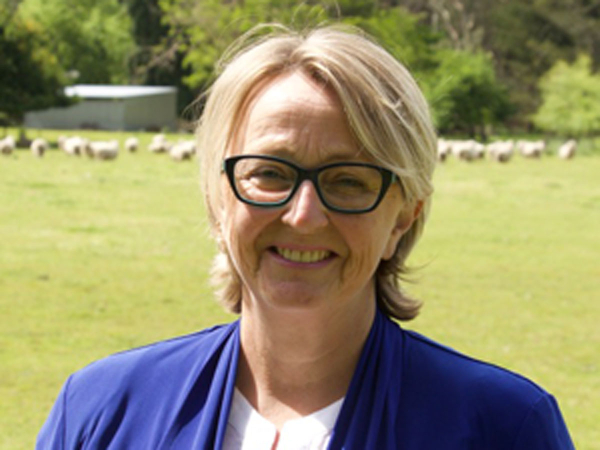 New RWNZ president Sandra Matthews
Rural Women New Zealand’s (RWNZ) new president, Sandra Matthews, says the cancellation of rural school bus services could have devastating consequences.
This year, the Ministry of Education has reviewed 290 of its 1,990 school bus routes. Of those, 38 have been or will be cancelled.
Matthews says these decisions are proving to have widespread consequences for rural families and communities.
“We are aware of families that will now have to drive more than an hour each way to take their tamariki [children] to school, which is unsustainable for working parents and their employers alike,” Matthews told Rural News.
She says this is leading some families to contemplate moving away from rural areas altogether to ensure their children can access education.
“This threatens the very viability of our rural communities,” Matthews says.
Matthews says the issue is the Ministry of Education’s guidelines for rural school bus services, which she labels as “outdated”.
Currently, there are three criteria for a student to be applicable for transport assistance from the Ministry of Education:
Additionally, a minimum of eight children must catch the bus on the route for it to continue running.
Matthews says this number needs to be lowered to account for the realities of smaller, modern rural communities which have fewer people but “are no less important than larger communities”.
She says RWNZ has requested a meeting with Minister for Rural Communities Mark Patterson and Minister for Education Erica Stanford to discuss the organisation’s three requests on the issue.
They want to see Stanford commission a full review of the policies governing the Ministry’s rural school bus guidelines, a halt on further bus route cancellations until that review is completed, and that the review is undertaken urgently in consultation with rural community representatives.
“These services are critically important to ensure rural tamariki have equitable access to education,” Matthews says.
“We must do everything to remove barriers to education so every child can access education. This is critical if the Government is serious about growing New Zealand into a well-educated society for the future and getting truancy levels down,” she adds.
RWNZ is not alone in its opposition to the cancellation of rural bus services.
Labour Party education spokesperson Jan Tinetti says that for working parents in rural areas, school buses are essential.
“They’re now facing hours out of their day to get their young people to and from school – or even longer if they have children in both primary and high school,” Tinetti says.
“Rural school bus cancellations and changes are leaving families scrambling to find alternatives. These cuts are hitting rural communities hard and making access to education even more difficult, while the Government claims to be focused on attendance,” she says.
A Labour-led Government won’t be bringing back the controversial freshwater rules of 2020.

Federated Farmers says it welcomes Labour's commitment to reviewing the Sharemilking Agreements Act, calling on other major parties to do the same.
Red meat farmers are welcoming Labour’s plan to review the Emissions Trading Scheme and not to campaign on pricing agricultural emissions.
Kaikōura families affected by July's severe storm have found a practical solution to a problem that's kept some children away from regular schooling for weeks: a washed-out section of Inland Kaikōura Road, which has stopped the local school bus from running its usual route.
Special courses for secondary school teachers to help excite kids about agriculture and horticulture are now being run at Massey University.


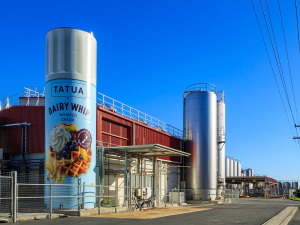
Waikato milk processor Tatua has again declared a record milk payout to farmer shareholders, leaving other processors in the dust.
A Labour-led Government won’t be bringing back the controversial freshwater rules of 2020.
National’s much-touted free trade deal with India featured in the Rural Issues Debate at Mystery Creek, Hamilton on Wednesday night.
New Zealand's 2026-27 freshwater fishing season has opened, with anglers encouraged to head to rivers and lakes over the coming days as conditions look favourable across much of the country.
Central Otago District Council (CODC) has voted against a plan to spread treated sewage sludge from Cromwell and Alexandra on farmland near Lauder, a decision Federated Farmers says reflects strong opposition from rural residents.
Pāmu has released its FY26 Integrated Annual Report, reporting a Net Operating Profit of $113 million, more than double the $49 million recorded in FY25.





OPINION: The same mainstream media muppets that brought you Jacindamania in 2017 have been flat out pimping for the Opportunities…
OPINION: Your old mate reckons the atrocious way farmers in the UK are treated by their lords and masters in…




