
Government Amends Stock Exclusion Regulations for Low-Intensity Grazing
The Government has announced changes to stock exclusion regulations which it claims will cut unnecessary costs and inflexible rules while maintaining environmental protections.




 increase font size
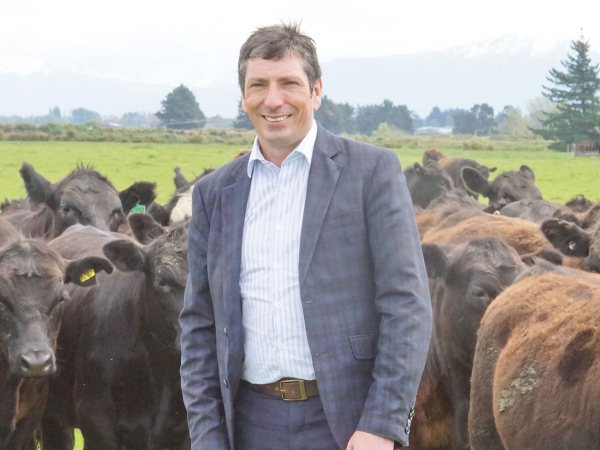 Beef + Lamb New Zealand chief executive Sam McIvor.
Beef + Lamb New Zealand wants changes made to the stock exclusion regulations the Government introduced in August 2020 - specifically the low-slope map.
"Our position has been clear all along - we want the inaccurate low-slope map to be deleted and replaced with a general rule that regional councils would be empowered to give effect to," BLNZ chief executive Sam McIvor says.
The Government's current low-slope map identifies thousands of hectares of steep land as low-slope which therefore is required to be fenced. "Tinkering around the edges of the unworkable and inaccurate national-scale map won't get the right outcomes - we need regional approaches."
McIvor says the Government's decision to support an industry-led Intensive Winter Grazing (IWG) module to farm plans in the coming year and to delay the implementation of the winter grazing rules shows that arbitrary rules are not the right approach. "We have been very clear that farmers need workable and relevant rules and have been advocating for effects-based approaches at the paddock scale to both IWG and to stock exclusion, delivered through effective farm planning."
The Government has announced changes to stock exclusion regulations which it claims will cut unnecessary costs and inflexible rules while maintaining environmental protections.
Matt McRae, a farmer from Mokoreta in Southland who runs a sheep, beef and dairy support business alongside a sheep stud, has been elected to the Beef +Lamb NZ Board as a farmer director.
The red meat sector is poised for a strong rebound this season, with export receipts forecast to top $10 billion and farm profitability to almost double.
Progeny testing at Pāmu’s Kepler farm in Southland as part of Beef + Lamb New Zealand’s Informing New Zealand Beef programme is showing that the benefits of hybrid vigour could have a massive impact on the future of beef breeding.
Beef + Lamb New Zealand (B+LNZ) has reiterated calls for New Zealand to revise its methane targets after the Government's "disappointing" announcement of its revised Nationally Determined Contribution (NDC).



Fonterra Co-operative Group chief financial officer Andrew Murray has resigned to take up a role outside the dairy giant.
A major move is about to get underway to improve the quality and viability of dairy beef and cattle in NZ.
Veterinarians say changes to the code of welfare for dairy cattle provides a positive foundation for improved cattle welfare across the country.
Today, 15 October, is the International Day of Rural Women, which recognises rural women’s contribution to farming, communities and the environment.
Global dairy giant Lactalis has integrated its Australian operations with the Mainland Dairy consumer business it acquired from Fonterra earlier this year.
High country stations, mixed sheep and beef farms, Māori-owned farms, corporates and family operations are among the nine commercial farms taking part in the Livestock Innovation Farming Transformation programme, known as LIFT.

OPINION: The same mainstream media muppets that brought you Jacindamania in 2017 have been flat out pimping for the Opportunities…
OPINION: Your old mate reckons the atrocious way farmers in the UK are treated by their lords and masters in…




