Going gaga
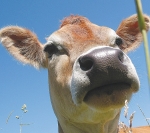
She wears skin and meat every day, is known as Lady Gaga and is the top performer among her peers.




 increase font size

With 'cow pooling' in the spotlight following TV One's Sunday programme, Federated Farmers Rural Butchers believes it has a role to play in reconnecting the public to their food.
"From what I saw on Sunday last night, 'cow pooling' seemed legitimate," says Mike Hanson, Federated Farmers Rural Butchers chairperson.
"The impression I got was that people owned the farm animal and had it processed through a licensed abattoir. If that's the case the meat is legitimate. So much so, they'll even pay a Beef+Lamb NZ levy on it.
"By dealing direct with the farmer and then through a licensed abattoir, consumers seem to be bypassing the supermarket end. The farmer arguably gets more for their stock while the licensed abattoir gets increased volume.
"That's much different from homekill, which also featured last night. Homekill falls under the Animal Products Act 1999 and is legislation we feel works well. We'd be concerned if there was a move to tighten rules because doing so could fuel the trade in black market meat.
"I guess you need to ask yourself if homekill is really for you. It's only an option for those people who want to be actively involved with the animal they'll end up consuming.
"If you aren't a farmer or farm worker, the Animal Products Act states that you must be actively engaged in the 'day-to-day maintenance' of an animal for 28-days before it is processed.
"That said, it's potentially a good way to reconnect people to where their food actually comes from.
"That connection is important when the Sunday Star Times quizzed 21 primary students; all believing cotton socks came from animals. Some thought scrambled eggs came from plants and most were convinced yoghurt grew on trees.
"Rural Butchers are qualified to humanely dispatch animals in a relaxed and natural setting for the animal. We've got the equipment and skills to professionally and safely process the animal into whatever cuts the customer desires.
"A number of our members are dual operators, meaning they can process homekill on retail premises. Being professionals regulated by the NZ Food Safety Authority, we know what to look out for. If things aren't right we won't process meat for human consumption.
"What Sunday's 'cow pooling' story tells us, is a growing number of people want to deal direct and have a connection to the meat they eat. Somehow, I don't think this is a fad," Mr Hanson concluded.
She wears skin and meat every day, is known as Lady Gaga and is the top performer among her peers.
FACIAL ECZEMA (FE) is a disease which causes lowered production and sometimes death from liver damage.
A Morrinsville farmer has been fined more than $33,000 for illegally discharging dairy effluent into the environment. The volume of effluent was such that cows' udders were dragging in it.
FARMERS CAN make an extra $200 a beast by cow pooling, while the purchaser gets cheaper meat, says Federated Farmers Rural Butchers chairperson Mike Hanson.
The recent coverage of 'cow pooling' has raised the profile of home killed meat as a viable method for consumers to attain cheaper meat.


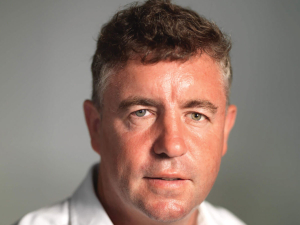
The primary sector is leading New Zealand's economic recovery, according to economist and researcher Cameron Bagrie.
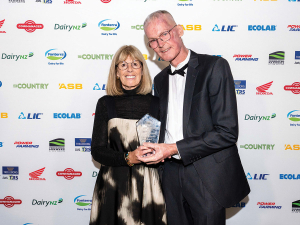
Dairy industry leader Jim van der Poel didn't make much of the invitation he received to the recent New Zealand Dairy Industry Awards in Rotorua.
Farmers around the country are going public big time, demanding their local district, city and regional councils come up with amalgamation plans that meet the needs of rural communities and don't allow urban councils to dominate.
The battle for the rural vote is on and parties are securing high profile names to try and bolster their chances at the general election.
Horticulture New Zealand says proposed changes to the Plant Variety Rights Act 2022 will drive innovation, investment and long-term productivity.
More than 1200 exhibitors will showcase their products and services at next month’s National Fieldays, with sites nearly sold out.





OPINION: It's been an eye-opener watching the big media companies behaving exactly like the powers-that-be who the crusading hacks from…
OPINION: Town and country find themselves on the same page when it comes to anger over price hikes from NZ…