Fonterra FY26 Results: $9.69 Milk Price, $3.4bn Profit
Fonterra has unveiled its annual results for the 2026 financial year, posting $27 billion in revenue and close to $20 billion returned to New Zealand farmer owners and unit holders.




 increase font size
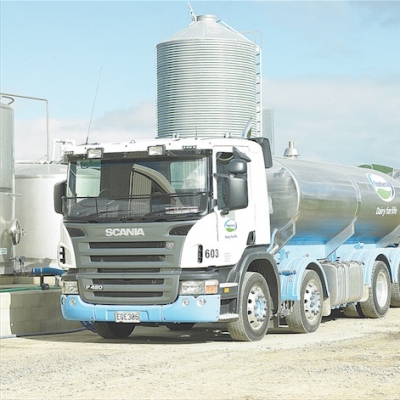 Dry conditions are impacting on Fonterra’s milk collection.
Dry conditions are also beginning to bite Fonterra’s North Island milk collection, which last month was 110 million kgMS – 1% lower than January last season.
The co-op says conditions dried out markedly in January; little rain fell in the North Island and above-average temperatures hit pasture growth.
The South Island is an even bigger problem, with dry conditions engulfing the east coast. South Island collection was 69 million kgMS, 5% lower than January last season.
“Dry conditions continue to impact milk collection in the South Island and irrigation restrictions remain a threat,” the co-op says. “Some farmers with no capacity to irrigate face drying off early as the current economics of supplementary feeds do not support their widespread use.”
There was some good news for Fonterra in Australia, where milk collection for the seven months to January 31 was 82 million kgMS, 6% higher than the same period last season.
The rate of growth has slowed and milk collection there in January was 11 million kgMS, consistent with January last season.
Meanwhile Fonterra says EU production in November 2014 was 3% higher than in the same month the previous year, the seventeenth consecutive year-on-year increase.
Production in the year to November 2014 was 5% higher than the same period in 2013; equating to a volume of six million tonnes of liquid milk. US production in November increased 3% over the same month the previous year; production in the year to November 2014 was 2% higher than the same period in 2013. This increase in production in 2014 equates to one million tonnes.
Argentina and Uruguay production in November decreased 7% compared to the same month the previous year. Production in the year to November 2014 was 4% lower than the same period in 2013. While Uruguay production in 2014 dropped 1%, Argentina’s fell almost 5% due to climatic and political challenges.
New Zealand exports in November decreased 2% compared to the same month the previous year. While exports decreased in November, they are 6% higher in the year to November 2014 than in the same period in 2013.
Fonterra says this year-to-date increase is driven by butter rising 22% and WMP 11%.
Australian exports in November decreased 1% compared to the same month the previous year. EU exports in October increased 12% compared to the same month the previous year but exports in the year to October 2014 are 5% higher than the same period in 2013. This year-to-date increase is driven by skim milk powder (SMP) rising 48% and fluid and fresh milk 11%.
US exports in November decreased 7% compared to the same month the previous year. However, exports in the year to November 2014 are 3% higher than the same period in 2013. This year-to-date increase is impacted by cheese exports rising 23% and SMP 3%.
Argentina and Uruguay continue to face challenges with exports, which in November decreased 13% compared to the same month the previous year. Exports in the year to November 2014 are 8% lower than the same period in 2013. This decrease is seen in most major product categories excluding fluid and fresh milk, which increased 25% to November 2014 compared to the same period in 2013.
China imports in December decreased 33% compared to the same month the previous year. This is the fourth consecutive month of decreasing imports.
This monthly change is impacted by WMP down 79% and SMP down 58%. However, 2014 imports for WMP and SMP remain strong, both 8% higher than in 2013. Middle East and Africa remains an important market for global dairy trade, importing three million tonnes annually.
Imports for October (excluding Algeria) increased 10% compared to the same month the previous year driven by increases in most major dairy categories. Imports in the year to October 2014 are 4% higher than the same period in 2013 with fluid and fresh milk rising 24%, butter 17%, infant formula 11% and SMP 8%.
Asia (excluding China) is one of the largest markets for global dairy trade, importing three million tonnes of product annually. Imports for October increased 7.5% compared to the same month the previous year.
Fonterra has unveiled its annual results for the 2026 financial year, posting $27 billion in revenue and close to $20 billion returned to New Zealand farmer owners and unit holders.
Fonterra Co-operative Group has confirmed the independently assessed candidates standing for election to its board in 2026.
Fonterra has revised its Farmgate Milk Price forecast for the 2026/27 season, lifting the midpoint and narrowing the range on the back of improving global dairy commodity prices.
Outgoing Fonterra Co-operative Council chair John Stevenson says that it has been a privilege to represent the co-op's farmer shareholders.
OPINION: It seems Canterbury processor Synlait is still in the doldrums.



Federated Farmers says it welcomes Labour's commitment to reviewing the Sharemilking Agreements Act, calling on other major parties to do the same.

For Canterbury dairy farmers Sian Meijer and Rick Wobben, wearable technology has become one of their most valuable on-farm tools - helping manage 1850 cows across an expansive, high-performing dairy operation while improving efficiency, mating outcomes and day-to-day decision making.
Fonterra has unveiled its annual results for the 2026 financial year, posting $27 billion in revenue and close to $20 billion returned to New Zealand farmer owners and unit holders.
The first major update to the Dairy Cattle Code of Welfare in more than a decade has been released, marking what DairyNZ describes as an important step in ensuring animal welfare standards continue to evolve alongside scientific evidence and on-farm realities.
Ravensdown shareholders have elected Jane Montgomery and Kate Acland to the Ravensdown Board for three-year terms, following a closely contested director election.
Federated Farmers says new legislation replacing the Resource Management Act will cut red tape, unlock investment and help grow New Zealand's export-led economy, after the Planning Bill and Natural Environment Bill passed their third reading in Parliament yesterday.





OPINION: The same mainstream media muppets that brought you Jacindamania in 2017 have been flat out pimping for the Opportunities…
OPINION: Your old mate reckons the atrocious way farmers in the UK are treated by their lords and masters in…




