Paris Agreement Exit Could Put NZ-EU and UK Trade Deals at Risk
Politicians calling for New Zealand to withdraw from the Paris Agreement on climate risk damaging two of our gold-plated free trade deals.




 increase font size
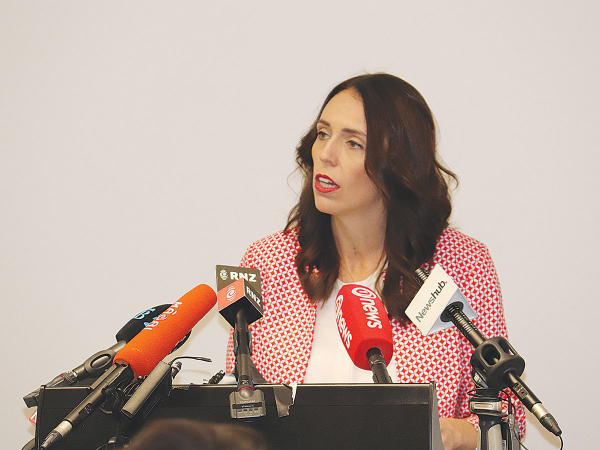 Prime Minister Jacinda Ardern was in Brussels last week hoping to secure NZ's FTA with the EU.
New Zealand may be on the brink of scoring an historic and crucial free trade agreement (FTA) with the European Union (EU).
As Rural News went to press, Prime Minister Jacinda Ardern was in Brussels meeting with the President of the European Commission, Ursula von der Leyen. The meeting is a last ditch attempt to get agreement in principle to a deal, before politicians and officials in Europe head off on their summer holidays.
Rural News understands that the agreement is all but done except for one crucial element - 'commercially meaningful' access for NZ sheep meat and beef. Up until now, both sides are deadlocked on this issue. However, officials are hoping that the talks between Ardern and von der Leyen can break this.
At present, NZ doesn't have preferential access to the EU which is one of the largest global dairy markets in the world. At best, we have some WTO quotas to the EU that aren't used because the quota tariff rate is too high. The situation for beef is equally bad, with NZ only able to ship a mere 1,100 tones to the EU.
On the positive side, it's understood that if the FTA is signed, horticulture is set to be a major beneficiary with the kiwifruit sector in line to gain up to $40 million in reduced tariffs in the first year alone. Onion growers are also believed to be likely beneficiaries, with a figure of $10 million being touted.
It's clear that one issue NZ will not win on relates to what is known as geographical indications (GIs): products - for the most part cheeses - with a name linked to a specific region or even town. Examples are Feta, Gruyere, Gorgonzola and Gouda.
It has been pointed out to Rural News that any country that has completed an FTA with the EU has had to concede on GIs, so NZ is not being treated differently to any other country.
But assuming GIs are in the deal, negotiators are endeavouring to secure a transitional arrangement that would give NZ cheesemakers time to adjust cheesemakers time to adjust to the new regime.
Another big issue, seemingly already agreed to, is rules around sustainability. Both NZ and the EU are at one on this but what remains to be sorted is whether either party can apply sanctions if one or the other breaches environmental or labour related rules.
The stakes in the NZ/EU FTA are high for us. It would give us access to 450 million consumers many of whom are seeking high quality, sustainably produced food. The visit of Ardern and Trade Minister Damien O'Connor is hoped to put the pressure on Brussels to agree to a deal.
Politicians calling for New Zealand to withdraw from the Paris Agreement on climate risk damaging two of our gold-plated free trade deals.
The stark realities of the world trade that New Zealand is having to face have been revealed by Trade Minister Todd McClay.
New Zealand and the European Union are closer than ever.
New Zealand exports to the European Union have surged by $3 billion in two years under the New Zealand-European Union Free Trade Agreement.
OPINION: Your old mate hears an international incident is threatening to blow up the long-standing Anzac alliance as Kiwis and Aussies argue over who wants new Australian resident and former NZ Prime Minister Jacinda Ardern.



LIC shareholders have elected a new North Island representative to the co-operative's Board, along with five representatives to its Shareholder Reference Group (SRG), following the company's Annual Meeting held in Invercargill.
Farmers across parts of Southland and South Otago are continuing to deal with difficult conditions after a prolonged run of wet weather, with pressure building around feed supply, stock management, pasture damage, farm infrastructure and everyday workloads.
Federated Farmers says it welcomes Labour's commitment to reviewing the Sharemilking Agreements Act, calling on other major parties to do the same.
For Canterbury dairy farmers Sian Meijer and Rick Wobben, wearable technology has become one of their most valuable on-farm tools - helping manage 1850 cows across an expansive, high-performing dairy operation while improving efficiency, mating outcomes and day-to-day decision making.
Fonterra has unveiled its annual results for the 2026 financial year, posting $27 billion in revenue and close to $20 billion returned to New Zealand farmer owners and unit holders.
The first major update to the Dairy Cattle Code of Welfare in more than a decade has been released, marking what DairyNZ describes as an important step in ensuring animal welfare standards continue to evolve alongside scientific evidence and on-farm realities.




OPINION: The same mainstream media muppets that brought you Jacindamania in 2017 have been flat out pimping for the Opportunities…
OPINION: Your old mate reckons the atrocious way farmers in the UK are treated by their lords and masters in…




