
Red Meat Farmers Welcome Labour's Emissions Pricing Pledge
Red meat farmers are welcoming Labour’s plan to review the Emissions Trading Scheme and not to campaign on pricing agricultural emissions.




 increase font size
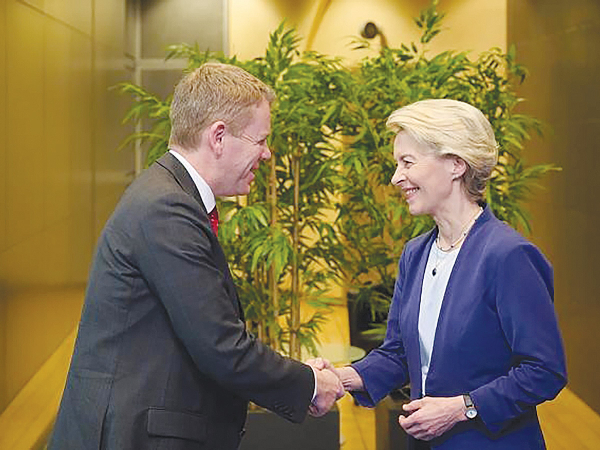 Chris Hipkins and EU President Ursula von der Leyen shake hands after the signing of the NZ/EU free trade agreement.
Planning is already underway to make exporters aware of the opportunities of the recently signed free trade agreement between NZ and the EU.
The deal was signed about a week ago in Brussels by the Minister for Trade and Export Growth Damien O'Connor and the EU Executive Vice President and Trade Commissioner Valdis Dombrovskis, witnessed by Prime Minister Chris Hipkins and EU President Ursula von der Leyen.
The EU is NZ's fourth largest trading partner. It is anticipated that the NZ-EU FTA will become operative in the first half of 2024, once both parties complete the final required legal steps - including approval from the European and NZ Parliaments. However, while this is happening, both NZ and the EU are about to embark on awareness programmes to alert exporters from both jurisdictions about the opportunities the FTA offers.
The European Union's Ambassador to NZ, Nina Obermaier, says the aim is to ensure that exporters have time to get their systems in place and take advantage of the deal from day one. This actually started some time ago. For example, the EU ran a seminar on this topic at Fieldays which attracted considerable interest - and more is planned.
"The EU is producing a special handbook which will be available to exporters," Obermaier told Rural News.
"This is similar to what we have done with the FTAs that we have negotiated with Canada and Singapore. I understand that MFAT will be running a roadshow to again create awareness of the benefits of the FTA. So, roughly, in a years' time when all the new tariffs liberalisation kicks in, more than 91% of all NZ goods that enter the EU will be able to enter that market tariff free and people need to prepare for that," she says.
There have been some grumblings in NZ about the FTA allowing the EU to retain geographic indications (GIs) - brands of products that are names after a specific region, like Feta cheese. But Obermaier says this is something that the EU has protected in all the other FTAs it's negotiated. She claims this clause actually provides some excellent opportunities for NZ to add to the list of geographical indications it already has - such as Marlborough sauvignon blanc.
"For example, Bluff oysters, Cardrona lamb, Chatham Island blue cod and mussels and Māori bread," she says.
Obermaier says the deal is commercially meaningful and dairy and meat were always going to be difficult to get a deal that suited primary producers in both entities. She says NZ farmers would have liked more access and European farmers would have wanted them to have less.
"In the end, I think we struck as sweet spot that should see the deal approved by the European parliament," she says.
 |
|---|
|
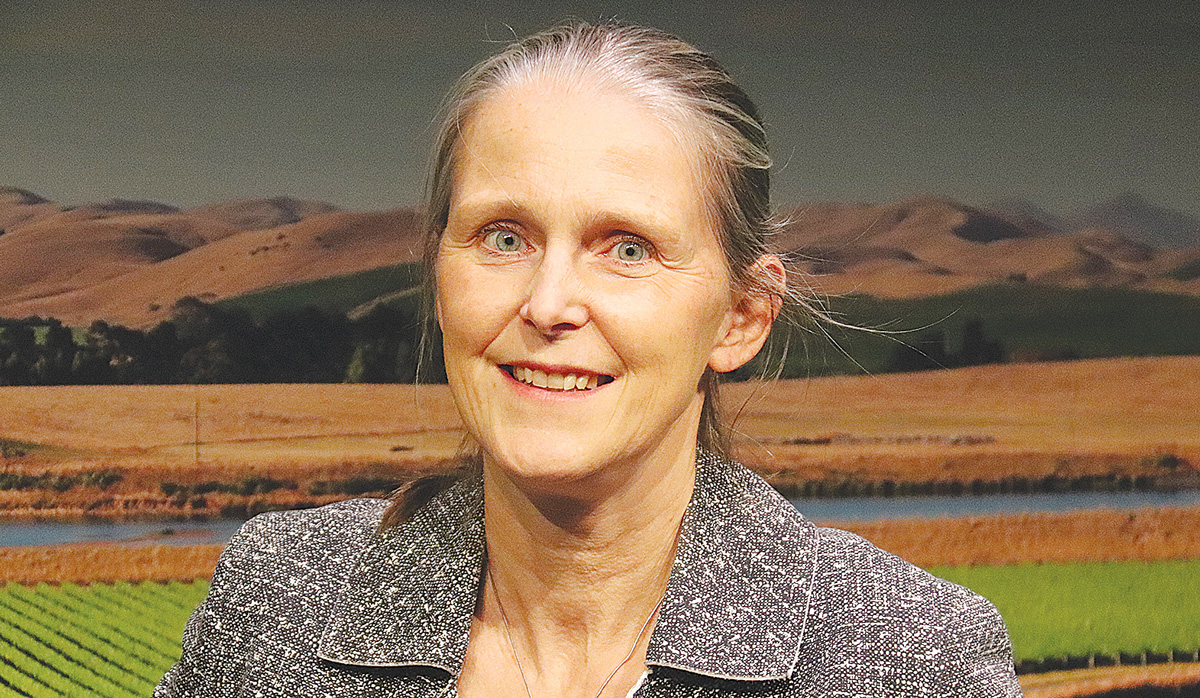
The European Union's Ambassador to NZ Nina Obermaier. |
Trade Minister Damien O'Connor says NZ did its best to negotiate around the GI issue and that they managed to get a transition clause put into the FTA, which will allow NZ companies to phase out GIs that come within the scope of the agreement. But like Obermaier, he's confident that NZ can quickly develop its own GIs and brands.
In Brussels there was understandable hype about the signing. PM Chris Hipkins described it as a ground-breaking deal that will save $150 million annually in tariffs.
O'Connor labelled the deal as hugely significant, opening up a market of 450 million discerning consumers. He says the EU know who we are and like our values and that's why they have signe the deal.
European Commission president Ursula von der Leyen has described the FTA as a trail blazer. She says the FTA brings major opportunities for companies, farmers and consumers, on both sides.
Meanwhile, Dombrovskis said the deal contains the most state-of-the-art sustainability commitments of any EU free trade agreement ever, including on climae and labour rights.
Red meat farmers are welcoming Labour’s plan to review the Emissions Trading Scheme and not to campaign on pricing agricultural emissions.
Politicians calling for New Zealand to withdraw from the Paris Agreement on climate risk damaging two of our gold-plated free trade deals.
The stark realities of the world trade that New Zealand is having to face have been revealed by Trade Minister Todd McClay.
New Zealand and the European Union are closer than ever.
New Zealand exports to the European Union have surged by $3 billion in two years under the New Zealand-European Union Free Trade Agreement.


A major move is about to get underway to improve the quality and viability of dairy beef and cattle in NZ.
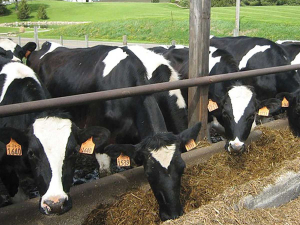
Veterinarians say changes to the code of welfare for dairy cattle provides a positive foundation for improved cattle welfare across the country.
Today, 15 October, is the International Day of Rural Women, which recognises rural women’s contribution to farming, communities and the environment.
Global dairy giant Lactalis has integrated its Australian operations with the Mainland Dairy consumer business it acquired from Fonterra earlier this year.
After almost two decades of sharemilking, saving and building equity, Aaron and Marcia Flay this year realised their long-held dream of settling on their first dairy farm.
Good medium to long term prospects for NZ beef, especially in the US, has heighted the focus on various initiatives to capitalise on this situation.


OPINION: The same mainstream media muppets that brought you Jacindamania in 2017 have been flat out pimping for the Opportunities…
OPINION: Your old mate reckons the atrocious way farmers in the UK are treated by their lords and masters in…




