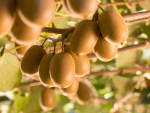
NZKGI Responds to Migrant Worker Exploitation Reports
Where any worker in the kiwifruit industry is mistreated, we expect the authorities to take action.




 increase font size
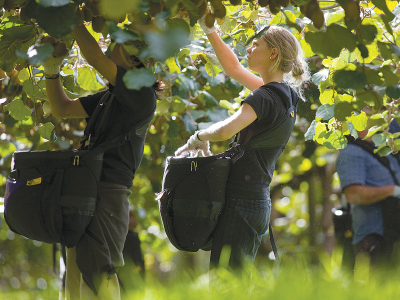 The ag and hort sectors offer huge career opportunities, says Dave Matthews.
In an electronic world, getting teenagers interested in careers in agriculture or horticulture is an uphill struggle.
And all the more as the rural-urban divide seems to be widening.
So it’s good news that one teacher is thinking outside the circle, with a Pathway for Students to Agriculture and Horticulture.
Dave Matthews, a native of northeast England, started out teaching in low-decile schools in south London before migrating to New Zealand in 1999. He first taught in south Auckland and north Waikato.
He became head of agriculture at Pukekohe High School in 2017, inheriting a department ‘treading water’ at best. He set about getting children interested in agri and hort, key industries in the immediate area.
His course now has about 150 students (year 10-13) from the school’s 1600 roll.
Many students already know about the sector, coming from farming families or the many lifestyle blocks in the area. Others choose the subject as they don’t always do well studying the three Rs.
At the start of their journey, year 10 students are given a general taste of ag and hort, learning why they are important to the area and broader NZ. They also look at plant science and get to grow crops from seed to harvest in growing units set up on the school premises.
“As well as the classroom stuff, we like the kids to get their hands dirty,” Matthews told Rural News. “But most of all they learn transferable skills.
“Even if they don’t pursue a career in the sector, maybe in later life they will end up with a vegie patch at the bottom of the garden.”
During the school year, students go on many field trips, eg to local dairy farms to look at milk production, and collect native seeds on Awhitu Peninsula. In due course, these are propagated at the school and end up on local farms to help landowners do riparian planting or create wildlife reserves.
The studies are aimed at “opening students’ eyes to the possibilities in the sector,” said Matthews.
Year 11 students visit properties such as Limestone Downs, a commercial sheep farm near Port Waikato. There they do day-to-day husbandry tasks such as ear tagging, drenching and tail docking.
As one would expect of the Pukekohe location, much of the course content is the food chain, with a focus on plants, fertiliser and soils.
Matthews says he spends a lot of time challenging students’ and their parents’ perceptions. They don’t always consider an agri or hort career viable.
His endeavours have drawn the attention of the local MP for Hunua, Andrew Bayly (Nat.), council people and, importantly, several prominent local businesses now offering workplace experience.
Older students spend one day per week for 10 weeks working in these businesses, experiencing day-to-day operations and learning, for example, fork truck operation, UTV driving and health and safety.
Students have found work in the sector after leaving school and have gone on to technical and mid-management positions locally, NZ-wide and overseas.
“The students just need their eyes opened to the opportunities out there, in many cases using technologies that other industries only dream about,” Matthews said.
“My job is to show them what they can aspire to. In some cases that means pupils... can get more hands-on skills and really shine.”
Matthews says not many NZ schools teach agri subjects and those which do are usually rural.
Where any worker in the kiwifruit industry is mistreated, we expect the authorities to take action.

Kiwifruit growers are watchful but remain optimistic as concerns around the potential effects of the El Niño weather pattern this season.
James Blair, an agronomist for AS Wilcox and the Pukekohe regional champion, has won the 2026 Young Grower national title.
Claimed to be the first autonomous robot for New Zealand vegetables growers, the first Kilter AX-1 unit has arrived in the country.
After delivering a strong financial year, rural trader PGG Wrightson says the coming months will depend on customer confidence and weather.



Ravensdown shareholders have elected Jane Montgomery and Kate Acland to the Ravensdown Board for three-year terms, following a closely contested director election.
Federated Farmers says new legislation replacing the Resource Management Act will cut red tape, unlock investment and help grow New Zealand's export-led economy, after the Planning Bill and Natural Environment Bill passed their third reading in Parliament yesterday.
Leading figures from the major political parties will be questioned on their primary sector policies at the Rural Issues Debate at Mystery Creek Events Centre, Hamilton, on 30 September.
OPINION: Have a plan in place now!
Beef + Lamb New Zealand (B+LNZ) says it welcomes the passage of the Natural Environment Bill and Planning Bill, calling the bills a positive step for sheep and beef farmers.
A spate of southerly winds bringing cold temperatures has presented challenges for Taranaki dairy farmers.



OPINION: The same mainstream media muppets that brought you Jacindamania in 2017 have been flat out pimping for the Opportunities…
OPINION: Your old mate reckons the atrocious way farmers in the UK are treated by their lords and masters in…




