
Federated Farmers Backs Year 11 Agricultural Science
Federated Farmers is backing Feilding High School’s call to keep Agriculture and Horticultural Science as a standalone subject in Year 11.




 increase font size
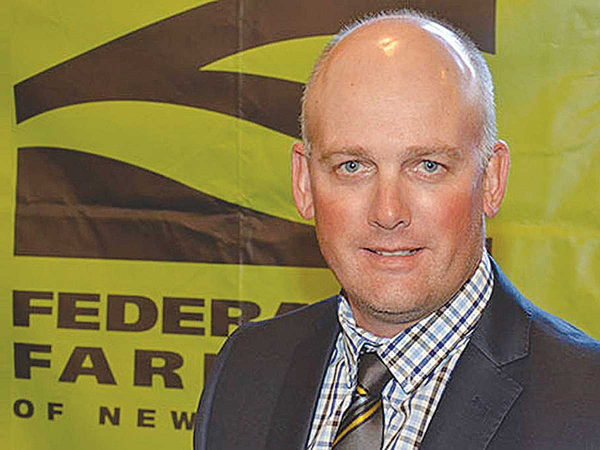 Federated Farmers dairy chairman Chris Lewis.
Dairy farmers and the Government remain at loggerheads over COVID-19 tenancy restrictions for on-farm accommodation.
While the Government maintains that the problem is “reasonably limited”, Federated Farmers warn that serious issues are developing on some farms.
Federated Farmers dairy chairman Chris Lewis says it is still fielding calls from some farmers who report former farm staff refusing to vacate accommodation, one week after Moving Day on June 1.
Lewis says there is a “hardcore” group of farm workers refusing to move out of accommodation despite being no longer employed on the farm. Many workers have a house included as part of their contract. At the end of each dairy season, farm owners, sharemilkers, managers, employees and their families often shift properties for new jobs, traditionally on Moving Day.
In March the Government announced an extension of no-cause terminations, meaning tenants could not be evicted, to support New Zealanders to stay in their rental properties during the COVID-19 lockdown. The emergency legislation comes up for review on June 25.
Lewis says farmers expect the situation to worsen if the Government’s emergency measures to protect tenants are extended beyond June.
“This hasn’t been an ordinary year and some jobs are still being advertised and potential employees are still being interviewed,” Lewis told Rural News.
Associate Housing Minister Kris Faafoi recently spoke to Federated Farmers “to understand the nature and extent of the issue”, a spokesman told Rural News.
“Those discussions were helpful and indicated the issue seemed reasonably limited,” he says.
Faafoi’s office says details will be worked through in conjunction with Federated Farmers and depending on individual situations.
Federated Farmers floated two potential solutions: either an immediate amendment to the emergency regulations or the Government provides accommodation assistance payments to enable existing tenants on farm to find alternative temporary accommodation while they seek more permanent accommodation.
Lewis says farmers don’t accept that the Government cannot change the Residential Tenancy Act (RTA), noting that the emergency measures were introduced and passed in Parliament in just one day.
The Government has ruled out making further immediate legislative changes to the RTA.
Federated Farmers is backing Feilding High School’s call to keep Agriculture and Horticultural Science as a standalone subject in Year 11.

National’s pledge to introduce 19 new national standards shows the party is serious about getting Wellington out of farming, Federated Farmers says.
Mobile phone coverage and reliability are deteriorating in rural areas, and farming families are bearing the cost, according to a Federated Farmers survey.
Central Otago District Council (CODC) has voted against a plan to spread treated sewage sludge from Cromwell and Alexandra on farmland near Lauder, a decision Federated Farmers says reflects strong opposition from rural residents.
Federated Farmers has called on Central Otago District Council (CODC) to drop or vote down a plan to truck sludge from Alexandra and Cromwell to farmland near Lauder, warning it would compound an "outrageous" situation created by a separate council's decision weeks earlier.



Alliance is calling for final applications for its 2027 Graduate Programme, with applications closing on Sunday 25 October.
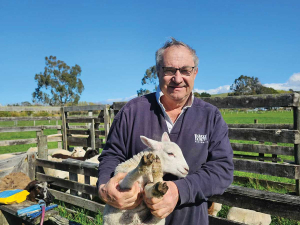
Decades piloting planes has ensured vet and farmer David Hayes is focused on safety. So, after a serious accident while welding on farm, he is sharing his experience so others can learn from it.
Canterbury milk processor, Synlait Milk has confirmed Leon Fung as its chief executive officer.
OPINION: Making it easier to collect rainwater and use it to grow crops and livestock is a no brainer.
As part of its Election 2026 coverage, Rural News asked political parties how they would help pull the arable sector out of the doldrums. Here's what they said:
Farmers are being encouraged to rethink how they manage waste on farm with the launch of ruralwastesorted.co.nz, a new website bringing together practical tips, real farmer experiences and resources.




OPINION: The same mainstream media muppets that brought you Jacindamania in 2017 have been flat out pimping for the Opportunities…
OPINION: Your old mate reckons the atrocious way farmers in the UK are treated by their lords and masters in…




