OSPRI Reduces TB Testing and Lifts Movement Controls in Key Regions
Ospri is reducing TB testing frequencies and movement control measures as the disease risk subsidies in parts of the country.




 increase font size
 B+LNZ chief economist Andrew Burtt.
Despite a positive forecast for global sheepmeat and beef demand, an increase in farm expenditure and inflation could significantly reduce farmers’ profit margins.
That’s according to Beef + Lamb New Zealand’s (B+LNZ) New Season Outlook 2022-23 report.
B+LNZ chief economist Andrew Burtt says that with high market prices for sheepmeat and beef globally, and a low NZ dollar, farmgate prices are relatively strong for sheep and beef farmers.
He says beef cattle pricing in particular will drive revenue for the season.
However, it’s expected that increases in farm expenditure and inflation will reduce farm profit margins.
Farm expenditure is expected to increase by 3.4% across the country in 2022-23, averaging at $535,000 expenditure per farm.
“Farmers are facing increasing inflationary pressure on-farm and, despite efforts to curb spending, it’s a fight to keep costs down,” Burtt says.
He says that with revenue remaining similar to last season and costs rising, overall profits will decrease, forecasting a decrease of 9.7% to average $181,000 per farm.
“From 2021-22 to 2022-23, gross farm revenue is forecast to fall by $2,000 per farm, whereas total expenditure increases by $17,400 per farm.”
Burtt says a fall in farmgate prices and fewer lambs sold will have an impact on sheep revenue and the lamb crop for spring is expected to fall compared with last year.
“This is due to a lower number of breeding ewes and drought conditions this past autumn for farmers in Waikato, South Auckland, Southland, and parts of Otago.
“Snowstorms in early October also impacted lambing in the South Island, particularly for hill and high-country farms, but cattle revenue is expected to increase for 2022-23 thanks to strong farmgate prices.”
Meanwhile, B+LNZ chief executive Sam McIvor says farmers are right to be concerned by new cost pressures, which include regulatory costs created by new government policies.
“The increasing costs on the horizon together with the uncertainty around the Government’s proposed agricultural emissions pricing system and its impacts are a double whammy,” he says.
While farmers are used to adapting to challenges and are willing to play their part in reducing greenhouse gas emissions, the emissions pricing system released by the Government last month disproportionately puts sheep and beef farmers and communities at risk, says McIvor.
The pricing plan, which is currently in the consultation phase, could see beef and sheep production drop by up to 20%.
“What is on the table is unacceptable,” says McIvor, “In addition to pricing some farmers out of business, it will also increase food prices, cost jobs and ultimately reduce New Zealand’s export income. That is why we are adamant that the Government must make changes to what it proposed.”
Ospri is reducing TB testing frequencies and movement control measures as the disease risk subsidies in parts of the country.

OPINION: The good times felt across the dairy sector weren't lost at last week's Beef + Lamb NZ annual meeting.
Southland farmer and director Tony Cleland has been named OSPRI New Zealand’s new chair.
Beef + Lamb New Zealand (B+LNZ) is calling on livestock farmers to take part in a survey measuring the financial impact of facial eczema (FE).
Beef + Lamb New Zealand (B+LNZ) chair Kate Acland says there are clear governance processes in place to ensure fairness and transparency.



OPINION: In politics, credibility is and should be big. It must surely rank higher than charisma, which is quite trite and superficial. Yet, voters nowadays are often wooed and influenced by how someone looks or talks at a superficial level. TV plays a huge role in this.
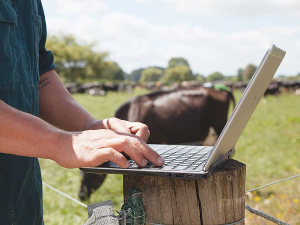
Farmers can spend less time on paperwork, thanks to a new data sharing agreement between DairyNZ’s DairyBase and LIC’s MINDA software.
Kaikōura families affected by July's severe storm have found a practical solution to a problem that's kept some children away from regular schooling for weeks: a washed-out section of Inland Kaikōura Road, which has stopped the local school bus from running its usual route.
Rural New Zealand is welcoming the Government’s recent package of rural healthcare initiatives.
Interest in agritech and production animal systems has prompted Massey University's School of Agriculture and the Environment to new majors to its popular animal science degree.
Ballance Agrinutrients chief executive Kelvin Wickham says despite a tough year, he is pleased the business has returned to profit.




OPINION: The same mainstream media muppets that brought you Jacindamania in 2017 have been flat out pimping for the Opportunities…
OPINION: Your old mate reckons the atrocious way farmers in the UK are treated by their lords and masters in…