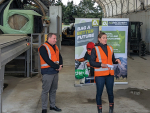
New Rural Recycling Scheme to Replace Voluntary Farm Plastics Programmes by 2027
Environment Minister Nicola Grigg has announced details of a new rural plastics recycling scheme.




 increase font size
The Government and farming leaders are joining forces to measure and price emissions at farm level by 2025.
By that date, the partnership aims to see 100% of New Zealand's emissions on the path downwards. But first, emission measurement and pricing methods will have to be developed that are both practical and cost-effective.
In 2022, Cabinet has agreed that the independent Climate Change Commission will check in on the progress made and if commitments aren't being met, the Government can bring the sector into the ETS at processor level before 2025.
The 5-year joint action plan includes:
• Improved tools for estimating and benchmarking emissions on farms
• Integrated farm plans that include a climate module
• Investment in research, development and commercialisation
• Increased farm advisory capacity and capability
• Incentives for early adopters
• Recognition of on-farm mitigation such as small plantings, riparian areas and natural cover
The Government says partnering with Māori will be critical to the success of this joint action plan.
"I'm proud that we have a world-first agreement as part of our plan to tackle the long-term challenge of climate change and we've done that by reaching an historic consensus with our primary sector," Prime Minister Jacinda Ardern said.
"For too long politicians have passed the buck and caused uncertainty for everyone while the need for climate action was clear.
"This plan provides the primary sector with certainty and puts us shoulder-to-shoulder on a path to reduce emissions, with ongoing support to help with the plan such as the $229 million Sustainable Land Use investment.
"This will reduce emissions by giving farmers the autonomy to plan to do so and reward those who do," she said.
Deputy Prime Minister Winston Peters says the decision to enact the sector-led plan shows that the Government has listened to farmers.
Major reforms to the ETS have also been announced to make it fit for purpose, with a cap on industrial energy and transport emissions, and forester incentives simplified.
Minister of Agriculture Damien O'Connor says farmers understand the changing climate affects them and many are already making on-farm changes.
"The agreement with sector leaders shows the value of collaboration and provides certainty for farmers, but the hard work begins now to develop the tools and systems to account for on-farm emissions in 2025.
"The Government will back that with investment in research, extension services and advice for farmers," Damien O'Connor said.
Environment Minister Nicola Grigg has announced details of a new rural plastics recycling scheme.

For the first time in a quarter of a century, Federated Farmers has something positive to say about the Labour Party’s climate change policy leading into a general election.
The Ballance Farm Environment Awards are coming to the West Coast of the South Island.
Climate, nature and animal wellbeing make up Fonterra's refreshed sustainability roadmap released last week.
There's been widespread support from the primary sector for the Government's announcement on changes to freshwater farm plans that come under the Natural Environment Bill, which is now set to replace the existing RMA.


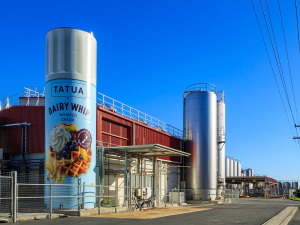
Waikato milk processor Tatua has again declared a record milk payout to farmer shareholders, leaving other processors in the dust.

A Labour-led Government won’t be bringing back the controversial freshwater rules of 2020.
National’s much-touted free trade deal with India featured in the Rural Issues Debate at Mystery Creek, Hamilton on Wednesday night.
New Zealand's 2026-27 freshwater fishing season has opened, with anglers encouraged to head to rivers and lakes over the coming days as conditions look favourable across much of the country.
Central Otago District Council (CODC) has voted against a plan to spread treated sewage sludge from Cromwell and Alexandra on farmland near Lauder, a decision Federated Farmers says reflects strong opposition from rural residents.
Pāmu has released its FY26 Integrated Annual Report, reporting a Net Operating Profit of $113 million, more than double the $49 million recorded in FY25.





OPINION: The same mainstream media muppets that brought you Jacindamania in 2017 have been flat out pimping for the Opportunities…
OPINION: Your old mate reckons the atrocious way farmers in the UK are treated by their lords and masters in…




