
Federated Farmers Praises Labour's Emissions Tax Backdown
For the first time in a quarter of a century, Federated Farmers has something positive to say about the Labour Party’s climate change policy leading into a general election.




 increase font size
 James Shaw.
Farmers more than any other New Zealanders will be negatively impacted by the effects of climate change, says Climate Change Minister James Shaw.
Speaking to Rural News at Fieldays, Shaw noted how this is already happening -- droughts, floods, fires and storms. He says farmers are not in this alone and he understands that many farmers feel unfairly singled out.
But Shaw is equally worried that Auckland city’s transport emissions have risen 24% while NZ’s methane emissions have not risen as much.
He says everyone needs to do their bit and work together. “We know that farmers best understand what happens on a farm and on land,” he says. “I see my job as doing what I can to support farmers and the agricultural sector to make a transition.”
Shaw believes what is happening now gives NZ one of the greatest opportunities in a generation. Many environmental problems and challenges remain to be overcome, he says, but the solutions are coming in the form of science and technology. As for NZ’s primary exports, they must move from volume to value.
“Science plays a big part with consumers of our food exports. The markets we sell into are getting increasingly sophisticated at the price point we want to attract,” he told Rural News.
“We are talking about people making decisions based on a whole set of values, not just price, because they are quite prepared to pay a premium. So where their product comes from is becoming increasingly important to them.”
Consumers in some markets are swapping information by cellphone, Shaw says. They photograph the barcode of a product and trace that back to the farm it came from.
“This is amazing and quite a technological challenge for us, but it’s one we are leading the world in. Consumer demand changes all the time and farming in NZ has changed dramatically in response to that demand.”
Shaw says NZ has adapted well to change and has a good idea of what consumers want.
“We just need to stay closely attuned to that because consumer demand is changing rapidly. We have to pay close attention to innovation and technologies inside NZ and what is happening overseas, to see what we can bring in to serve us well, and to be aware of what could be disruptive.”
Shaw says while consumers may think specifically about intensive farming when buying milk or beef, they will be looking for some sort of certification to assure them that what they are buying is up to standard.
For the first time in a quarter of a century, Federated Farmers has something positive to say about the Labour Party’s climate change policy leading into a general election.
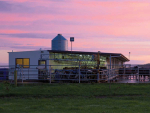
Climate, nature and animal wellbeing make up Fonterra's refreshed sustainability roadmap released last week.
Walking around the Fieldays this year, expected most of the conversations to be about machinery purchases and farm infrastructure upgrades. Instead, one topic seemed to keep cropping up more frequently with farmers – the price of PKE.
A new digital assistant is now helping Ballance Agri-Nutrients farmers speed up nutrient information and ordering.
OPINION: At Fieldays this year, one theme kept surfacing across the sector: global shocks are no longer something that happens “over there”. They are now translating quickly into local, farm-level impacts through increasingly complex and connected channels.


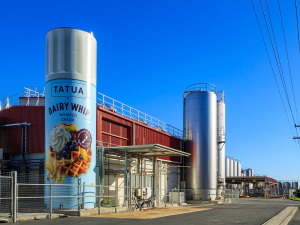
Waikato milk processor Tatua has again declared a record milk payout to farmer shareholders, leaving other processors in the dust.
A Labour-led Government won’t be bringing back the controversial freshwater rules of 2020.
National’s much-touted free trade deal with India featured in the Rural Issues Debate at Mystery Creek, Hamilton on Wednesday night.
New Zealand's 2026-27 freshwater fishing season has opened, with anglers encouraged to head to rivers and lakes over the coming days as conditions look favourable across much of the country.
Central Otago District Council (CODC) has voted against a plan to spread treated sewage sludge from Cromwell and Alexandra on farmland near Lauder, a decision Federated Farmers says reflects strong opposition from rural residents.
Pāmu has released its FY26 Integrated Annual Report, reporting a Net Operating Profit of $113 million, more than double the $49 million recorded in FY25.





OPINION: The same mainstream media muppets that brought you Jacindamania in 2017 have been flat out pimping for the Opportunities…
OPINION: Your old mate reckons the atrocious way farmers in the UK are treated by their lords and masters in…




