McRae Wins Southern South Island B+LNZ Director Vote
Matt McRae, a farmer from Mokoreta in Southland who runs a sheep, beef and dairy support business alongside a sheep stud, has been elected to the Beef +Lamb NZ Board as a farmer director.




 increase font size
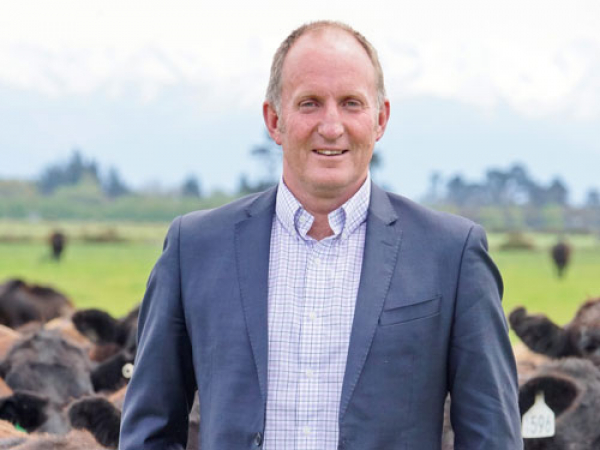 Chair Andrew Morrison has especially defended the huge lift in NZ Meat Board director fees.
Andrew Morrison says farmers will ultimately have the final say on whether or not a controversial move to increase both Beef+Lamb NZ (BLNZ) and New Zealand Meat Board (NZMB) director fees goes ahead.
The BLNZ and NZMB chair made this comment in response to a number of questions put to him by Rural News about the process and reasoning that has seen its directors recommend themselves a healthy pay increase at this month’s annual meeting in Invercargill on March 17.
Morrison has especially defended the huge lift in NZMB director fees, which sees a 38% jump in the chair’s annual remuneration and a 23% increase in all the other directors’ fees.
“It’s important to note the responsibilities of the [Meat] Board, and how different the role is from the BLNZ board,” he argued.
“The NZMB administers $2.5 billion of quota in an increasingly complex environment – the complexity of the roles in quota management brought about by issues such as Brexit and Covid-19 have been huge.”
Morrison also claims that because the NZMB is investing over $70 million of farmer reserves and changing from fixed interest to a balanced portfolio of fixed interest and equities to increase returns and grow the fund.
“This has required significantly more time from the board in policy development and monitoring – including the development of the Statement of Investment Policies and Objectives (SIPO), consideration of the ongoing review of fund manager performance, ethical and sustainable investing consideration,” he told Rural News.
“The simple fact is, to get greater returns for farmers’ money requires more time and activity by the board.”
Meanwhile, Morrison concedes that the board did consider the “optics” of the move.
However, it believed that farmers should be aware of the “commitment that directors make to the industry on both boards.”
He also argues that there has been an increased workload for the BLNZ board – particularly relating to environmental regulation.
“Directors on the two boards are frequently called into additional workshop days on specific requirements so they can better understand and deal with emerging issues that have huge implications for our sector,” he adds.
“Put simply, the board decided – backed by independent advice – that remuneration had not kept pace with the demands of the role, or with the market, and therefore recommended the increases.”
Morrison also claims that both recommendations were at “the conservative end” of benchmarking for both boards.
He says another reason for the controversial decision to increase director fees is to factor in the “board’s aspirations” for future director candidates.
“By fairly remunerating for time and expertise, [we] will ensure the best possible candidates who can then afford to backfill in their own farming businesses,” Morrison told Rural News.
“Directors’ fees are always closely scrutinised, with good reason,” he added.
“There are effectively three steps before any increase. First, the board considers information about director fee benchmarks and makes its recommendations. Secondly, farmers vote on the recommendations, and finally, the board decides whether to activate any increase that’s accepted through the annual meeting process.”
Morrison says the board has put the resolution to increase director fees in the notice of meeting.
“It’s now for farmers to vote.”
Matt McRae, a farmer from Mokoreta in Southland who runs a sheep, beef and dairy support business alongside a sheep stud, has been elected to the Beef +Lamb NZ Board as a farmer director.
Recent widespread autumn rain will have triggered the germination of subterranean clover seeds, and the resulting seedlings should be allowed to reach the 3–4 trifoliate leaf stage before grazing, says Beef+Lamb NZ.
A hub farm in each of Beef + Lamb NZ’s seven regions and more focus groups are being rolled out for the red meat sector this year.
The red meat sector is poised for a strong rebound this season, with export receipts forecast to top $10 billion and farm profitability to almost double.
Progeny testing at Pāmu’s Kepler farm in Southland as part of Beef + Lamb New Zealand’s Informing New Zealand Beef programme is showing that the benefits of hybrid vigour could have a massive impact on the future of beef breeding.


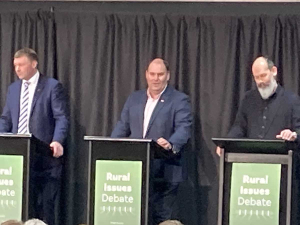
National’s much-touted free trade deal with India featured in the Rural Issues Debate at Mystery Creek, Hamilton on Wednesday night.

New Zealand's 2026-27 freshwater fishing season has opened, with anglers encouraged to head to rivers and lakes over the coming days as conditions look favourable across much of the country.
Central Otago District Council (CODC) has voted against a plan to spread treated sewage sludge from Cromwell and Alexandra on farmland near Lauder, a decision Federated Farmers says reflects strong opposition from rural residents.
Pāmu has released its FY26 Integrated Annual Report, reporting a Net Operating Profit of $113 million, more than double the $49 million recorded in FY25.
Meat Industry Association data, released alongside the Red Meat Sector conference in Wellington, shows export value climbing across the US, China, UK and Canada.
Applications are set to open for the 2027 Zanda McDonald Award, a trans-Tasman award recognised for identifying and fast-tracking talented young leaders in agriculture and agribusiness.



OPINION: The same mainstream media muppets that brought you Jacindamania in 2017 have been flat out pimping for the Opportunities…
OPINION: Your old mate reckons the atrocious way farmers in the UK are treated by their lords and masters in…




