94% of NZ farmers oppose Paris Agreement, survey shows
A survey of 2000 farmers shows 94% of respondents believe that remaining in the Paris Agreement for climate change is not in the country's best interest.




 increase font size
 Groundswell NZ is calling on all landowners to refuse access to public agencies undertaking surveys on private land.
After months of agitation and meetings around the country, a rural advocacy group has launched what it describes as the "first in a range of actions" to mobilise farmers against unworkable regulations.
Groundswell NZ is calling on all landowners to refuse access to public agencies undertaking surveys on private land - including Significant Natural Areas (SNA) and wetland surveys.
"Under the new Freshwater and Indigenous Biodiversity regulations, the Government is proposing it be mandatory for councils to survey all land within their districts for SNA assessments and wetlands," Groundswell NZ spokesman Bryce McKenzie claims.
He says farmers and landowners around the country are concerned about the misuse of this survey information.
"It has no caveats to protect landowners' privacy interests and no compensation of the impacts on property values," McKenzie adds.
"This shows a lack of respect for landowners who have been proactive in conservation. We already have a proven successful system with the QEII Trust covenants, which help landowners protect areas on private land."
Last week, Groundswell NZ wrote to all councils around the country demanding they halt mapping of natural areas on private land until these outstanding concerns were resolved.
"We have already had some councils indicate support for out campaign, as they too are fed up with the heavy hand of government and loss of flexibility for councils and communities to design their own plans," McKenzie claims.
He says Groundswell NZ is putting a stake in the ground and saying 'enough is enough'. The group says it wants to mobilise support and grow its campaign nationwide.
However, this stance on SNAs is in stark contrast to Federated Farmers. Feds environmental spokesman Chris Allen has accused Groundswell of "winding up farmers needlessly". He claims they are ignoring the fact that it's a two-year collaborative process and the final documenet has not been finalised. Allen told another media outlet that they "need to chill, wait until they see the final document".
Local Government NZ, which represents all councils around the country, told Rural News that the Government has made policy decisions around freshwater and biodiversity, which councils are required to implement.
"It's important to note that this is just the start of a long process, as the Government seeks to address a significant decline in New Zealand's biodiversity," a LGNZ spokesman says. "Councils are, or will be required to initially identify significant natural areas and wetlands and set rules regionally and locally for SNAs and enforce national rules re wetlands.
"It's also important to note that the National Policy Statement for Indigenous Biodiversity has not yet been finalised, and we note the overarching requirement to protect areas of significant vegetation is a matter of national importance and has been in place since 1991."
LGNZ's spokesman told Rural News that local government is aware there is a lot going on, particularly for the primary sector.
"We all need to look at this as a 'long game' which essentially requires some practices to change to better look after the environment - a goal that we think everyone can support."
A survey of 2000 farmers shows 94% of respondents believe that remaining in the Paris Agreement for climate change is not in the country's best interest.
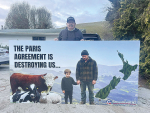
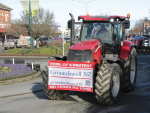
Groundswell is ramping up its 'Quit Paris' campaign with signs going up all over the country.
Groundswell NZ is ramping up its ‘Quit Paris’ campaign.
Beef + Lamb New Zealand (B+LNZ) chair Kate Acland says there are clear governance processes in place to ensure fairness and transparency.
OPINION: The coalition Government, already under the pump thanks to poor polling numbers, is facing the ire of its traditional support base – dairy and red meat farmers.


OPINION: Farmers around the country are welcoming the proposed reform of local government.
A move to boost farmer uptake of low methane emitting sheep is underway.
Silver Fern Farms has tackled the ongoing war-induced shipping challenges to mideast markets by airlifting 90 tonnes of chilled New Zealand lamb and beef to the United Arab Emirates.
The primary sector is leading New Zealand's economic recovery, according to economist and researcher Cameron Bagrie.
Dairy industry leader Jim van der Poel didn't make much of the invitation he received to the recent New Zealand Dairy Industry Awards in Rotorua.
Farmers around the country are going public big time, demanding their local district, city and regional councils come up with amalgamation plans that meet the needs of rural communities and don't allow urban councils to dominate.




OPINION: The old saying 'a new broom sweeps clean' doesn't always hold up, if you ask the Hound.
OPINION: This old mutt went to school to eat his lunch, but still knows the future of the country, and…