Fonterra Elections 2026: Voting Opens Tuesday 20 October
Fonterra shareholders can begin voting on Tuesday 20 October in the 2026 Board of Directors’ election, a Co-operative Council election in one Ward, and seven Annual Meeting resolutions.




 increase font size
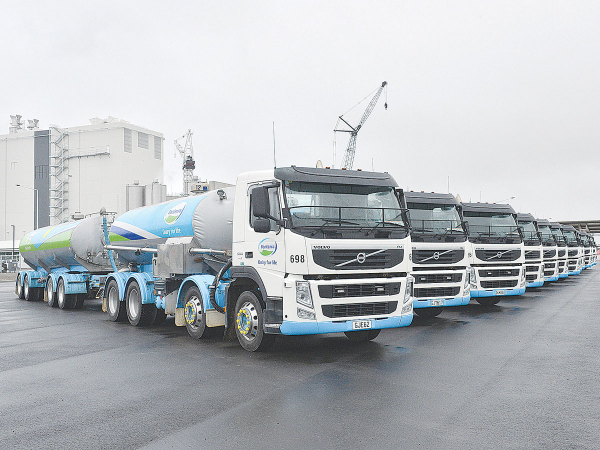 Most independent processors want the Government to shelve its plan to amend the Dairy Industry Restructuring Act.
Fonterra's bid to gain parliamentary approval for its new capital structure is fiercely opposed by rival milk processors.
Most independent processors want the Government to shelve its plan to amend the Dairy Industry Restructuring Act (DIRA), which will accommodate capital structure changes voted for by Fonterra shareholders late last year.
Submissions made to the Ministry for Primary Industries (MPI) on Cabinet's plan to approve the DIRA changes were made public last month.
The country's second largest milk processor, Open Country Dairy, submitted that it had "serious concerns".
"The Fonterra capital restructure will damage competition and innovation in the New Zealand dairy sector, harm productivity and leave Fonterra vulnerable," says Open Country chief executive Steve Koekemoer.
He refers to an analysis of the restructure and proposed DIRA changes from Castalia, a global economics and regulatory advisory firm hired by Open Country for the exercise.
Koekemoer claims it highlights the major risks for competition and productivity from granting Fonterra even greater ability to manipulate the milk price.
"We urge the Government to reject the capital restructure and not to proceed with these DIRA amendments.
"The Government committed in April 2022 to review DIRA more fundamentally, in response to the Productivity Commission's concerns about 2020 changes to DIRA.
"Not even one month later it is now considering even greater relief and favouritism for Fonterra."
But Koekemoer concedes that the restructure is likely to proceed as hinted by the Government.
In a joint submissions three smaller processors - Synlait, Miraka and Westland Milk - claim the Government has taken an "anti-investment and anti-competition position" by proceeding with the DIRA amendments.
"Government proposals have not fully taken into account the impact this will have on competition in the raw milk market and dairy processing in New Zealand," they say.
A key aspect of the original pro-competition provisions of the DIRA was to assure the unimpeded "free exit" of Fonterra members should they choose to supply milk to other parties.
However, the three processors claims this included provisions that ensured Fonterra could not discourage members from leaving by preventing them from accessing the full value of their investment on departure.
"In the original DIRA, Fonterra was required to redeem shares of existing members on the basi of a (presumably independently) assessed fair market value."
They claim Fonterra is now seeking further changes to DIRA to facilitate another change in its capital structure.
"Fonterra members will no longer to be able to exit Fonterra and receive fair market value for their shares."
Fonterra chairman Peter McBride says he doesn't know why other processors are concerned with the co-op's capital structure. "I find it quite intriguing; we have no interest in their capital structure," he told Rural News. "Why's our capital structure is so important to them?"
Fonterra shareholders can begin voting on Tuesday 20 October in the 2026 Board of Directors’ election, a Co-operative Council election in one Ward, and seven Annual Meeting resolutions.

Fonterra Co-operative Group chief financial officer Andrew Murray has resigned to take up a role outside the dairy giant.
Four candidates have been confirmed for two director positions on Fonterra’s board.
A record farmgate milk price and strong global demand is laying the foundation for continued growth of organic dairy farming in New Zealand.
Waikato milk processor Tatua has again declared a record milk payout to farmer shareholders, leaving other processors in the dust.


Federated Farmers has welcomed new rural policies released by ACT, saying they align closely with its own election priorities.

Rural Contractors NZ says proposed changes to land transport rules for agricultural vehicles are a welcome response by the Government to out of date regulations which have seen members hit with huge fines.
Alliance is calling for final applications for its 2027 Graduate Programme, with applications closing on Sunday 25 October.
Decades piloting planes has ensured vet and farmer David Hayes is focused on safety. So, after a serious accident while welding on farm, he is sharing his experience so others can learn from it.
Canterbury milk processor, Synlait Milk has confirmed Leon Fung as its chief executive officer.
OPINION: Making it easier to collect rainwater and use it to grow crops and livestock is a no brainer.




OPINION: The same mainstream media muppets that brought you Jacindamania in 2017 have been flat out pimping for the Opportunities…
OPINION: Your old mate reckons the atrocious way farmers in the UK are treated by their lords and masters in…




