New Zealand's irrigators must emphasise the connection between irrigation and food supplies, says IrrigationNZ chief executive Andrew Curtis.
“There’s no horticultural crop grown in NZ that doesn’t use some form of irrigation, at least as a risk mitigation tool in case it does go dry,” said Curtis. Other crops rely heavily on irrigation; Central Otago wouldn’t be growing any fruit or wine without it, he said.
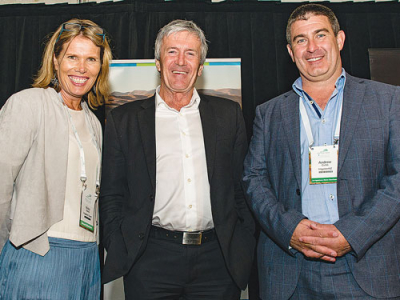
Curtis said this after the recent IrrigationNZ 2018 Conference which gathered nearly 500 industry people for three days at Alexandra, in the heart of Central Otago.
While agreeing that irrigation had a public relations problem, Curtis said the industry had to provide credible data for the public to explore and discover the worth of irrigation for themselves.
“Not us telling people, but us being transparent, providing information for people then they can interpret it how they see fit. That’s one of the key things the industry must do.”
However, Curtis said the mood of the conference was positive and recognised the challenges and the role modernisation and technology would play to solve some water quality issues.
Agriculture Minister Damien O’Connor had told attendees it is “time to stop, reflect and reassess where things are at,” said Curtis, but that the Government would not be opposed to irrigation if it could be shown to be environmentally sustainable, backed by the community and viable.
Curtis says the Government’s ending Crown Irrigation Investments Ltd (CIIL) loan funding for large projects was no surprise, since it had been clearly signalled in the coalition and confidence and supply agreement with The Greens.
But the industry is “a little bit disappointed”, feeling a commitment existed particularly to the South Canterbury Hunter Downs and North Canterbury Hurunui schemes.
“However, it’s not the end of the line for those projects and there are ways we can get through.
“Obviously the Provincial Growth Fund should be able to help; some of the feasibility work shows that they’re environmentally sustainable. It’s certainly not the end of the line, but life could be easier.”
Curtis says challenges remain in finishing feasibility work for Hurunui and in modernising the Falls Dam for Central Otago’s Manuherikia scheme.
“Particularly the Hurunui; they’re already provided something like $11 million-plus of Crown money to get them to where they are. They’ve been through several iterations based on ongoing zone committee processes.
“Those guys just need a final hand to get over the line but they’re already consented; it shows they’re environmentally sustainable. They’ve got quite strong backing by the community up there particularly since the drought. Here’s hoping they can access the provincial growth fund.”
In closing, Curtis told the conference that consumers know better where food is sourced from, creating a need for sustainable production that was traceable back to the farm. Automation would increase and plant-based foods would replace some traditional protein.
While NZ has plenty of rain by world standards, increasing water scarcity will demand that irrigators become more water-efficient requiring new technologies.
Curtis referred to a shift to farming within limits, in which better environmental outcomes are part of the everyday business of farming.