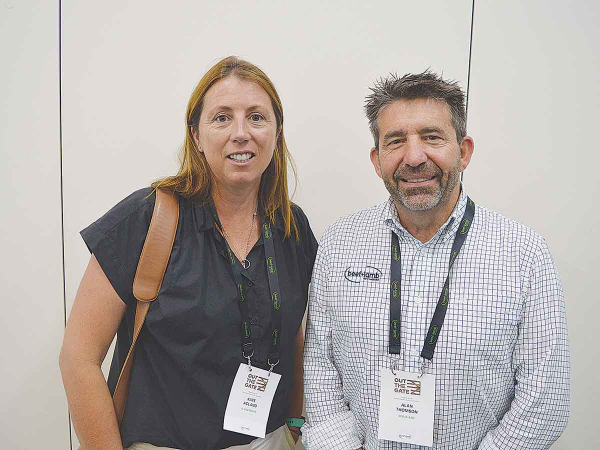
Quotas and free trade deals are saving the beef sector over $1 billion in tariffs each year, says Beef+Lamb NZ chief executive Alan Thomson.
While agriculture remains one of the most heavily protected sectors in the world, NZ has significantly benefitted from the World Trade Organisation and free trade agreements (FTAs) over the last couple of decades, Thomson says.
"We pretty much would not be able to export to the EU, US or UK without these deals as their usual tariff rates on sheep and beef products range from 30 to 100%."
He was speaking at the B+LNZ annual meeting in Rotorua last month.
Thomson, who took up his role five months ago, says trade remains a very important plank on B+LNZ's work.
He notes that last year B+LNZ influenced the EU decision to delay the implementation of anti-deforestation regulations, which would have disrupted global supply chains and threaten $200 million worth of NZ beef and leather exports.
"Additionally, we supported the Government's successful negotiation of trade agreements with the UAE and the Gulf Cooperation Council. Trade will be a major focus this year as we navigate our way through the USA's shifting trade policy, China's beef safeguard action, and supporting New Zealand's FTA negotiations with India."
Thomson believes an FTA with India could be a game changer for the sheep industry as there aren't as many markets for lamb as we do for beef. Indians are major consumers of sheepmeat, but this market is largely closed to us because of its current 30% tariff.
B+LNZ is also keeping an eye on the tariff wars brewing following the election of Donald Trump as US President. As Rural News went to print, many US trading partners were bracing for a new round of tariffs.
B+LNZ chair Kate Acland told the meeting that trade policy will be a major priority in the year ahead as the sector navigates its way through the US tariff and China safeguard investigation process.
"Our staff in the UK and Europe, and in the US, mean we have a deep understanding of what is happening and good relationships with our counterparts which will be critical over the coming years as we navigate through these challenging times.
"We will be complementing this by lifting our visits to these countries. I recently visited the US to attend CattleCon and will return in a few months to Washington and then go onto Europe as it is vital we have strong relationships and an international presence at this time."
Acland touched on the importance of having diverse markets for NZ red meat products.
"If there's one thing the last two years have shown, it's the importance of diverse market opportunities that our resilient sector can make the most of.
"As a relatively small economy, New Zealand has significantly benefited from international rules and systems such as the WTO and FTAs."
Out the Gate
The Out the Gate event, organised with the B+LNZ annual meeting, attracted 240 people.
The session opened with Simon Quilty from Global Agritrends Downunder who explored the ripple effect in global red meat markets. He provided insights into how shifting supply and demand dynamics are shaping pricing and opportunities for New Zealand beef and lamb.
Quilty highlighted the exceptionally tight global protein supply, particularly for beef, which is driving strong demand and higher prices. He emphasised that the US has a critical need for New Zealand's lean beef, with grinding meat playing a major role in meeting demand. The rising cost of US protein has also lifted lamb prices, creating further opportunities for New Zealand farmers.
He pointed to Australia's recent liquidation of its breeding flock as a key factor in supply tightening, predicting a significant rebound as the country begins rebuilding. This tightening supply is "music to New Zealand farmers' ears" as it supports stronger pricing.
Another keynote speaker, Shamubeal Eaqub, chief economist at Simplicity, examined the economic landscape and its impact on sheep and beef farming. He discussed major global shifts, including geopolitics, trade disruptions and climate challenges, noting that while New Zealand remains relatively stable, it is not immune to these pressures.
Eaqub suggested the best solution to weathering these pressures is the importance of investing in people - good management, strong workplace culture and ongoing training are essential for securing a skilled workforce in the face of an ageing population.