
Feds Back National’s 19 Farming National Standards
National’s pledge to introduce 19 new national standards shows the party is serious about getting Wellington out of farming, Federated Farmers says.




 increase font size
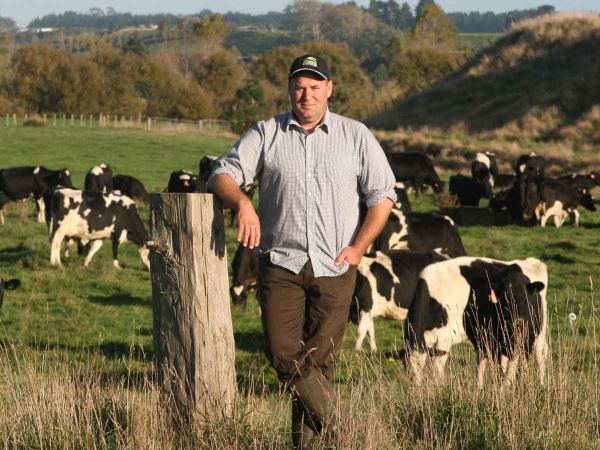 Andrew Hoggard.
Federated Farmers has some advice for how the Government should divvy up the $3 billion infrastructure fund.
The COVID Response and Recovery Fund was announced as part of Budget 2020, with Cabinet this week announcing how the fund will be allocated.
The fund, aimed at creating 20,000 jobs as part of “shovel ready” infrastructure projects, is in addition to an existing $12 billion towards the New Zealand Upgrade Programme and existing Provincial Growth Fund investments.
Of the fund, $708 million will go towards transport, $670 million towards community and social development, $464 million towards housing and urban development, and $460 million towards environmental projects.
Investments in the fund include about $210 million for climate resilience and flood protection projects, $155 million for transformative energy projects, about $180 million for large-scale construction projects, and $50 million for enhanced regional digital connectivity.
Federated Farmers President and commerce spokesperson Andrew Hoggard says the Government should have an eye to building longer-term resilience and putting in infrastructure that underpins increased primary industry production.
Following some of the worst droughts on record, Hoggard says the Government’s $210 million fund for climate resilience and flood protection is a prime candidate for boosting community water storage.
He says the $708 million put aside for transport shouldn’t all go to expensive trainsets, cycleways, walkways and metro motorways.
"There needs to be increased investment in the maintenance and improvement of rural roads and bridges to better support transport connections heavily relied upon by rural and provincial people," says Hoggard.
"Many rural roads are already in a poor state and numerous rural bridges are past their designed lifetimes."
Hoggard says for the $670 million for community development, investment in improving the limited broadband capability in rural areas — and not just more communications hubs in provincial towns — will help level the digital divide between town and country and support increased uptake of emerging technologies on farms to lift productivity and the nation’s earnings.
"As for the $155 million put aside for energy projects, there’s a strong case for improving the reliability of rural electricity supply, and support for farm-scale and community-scale generation that moves us further towards that climate-friendly goal of 100% renewable energy."
National’s pledge to introduce 19 new national standards shows the party is serious about getting Wellington out of farming, Federated Farmers says.
OPINION: Rivers never sit still. They start as snowmelt and rain in the high country, pick up a creek here and a stream there, and carry all of it down to where it's needed.
Mobile phone coverage and reliability are deteriorating in rural areas, and farming families are bearing the cost, according to a Federated Farmers survey.
Central Otago District Council (CODC) has voted against a plan to spread treated sewage sludge from Cromwell and Alexandra on farmland near Lauder, a decision Federated Farmers says reflects strong opposition from rural residents.
Federated Farmers has called on Central Otago District Council (CODC) to drop or vote down a plan to truck sludge from Alexandra and Cromwell to farmland near Lauder, warning it would compound an "outrageous" situation created by a separate council's decision weeks earlier.


National’s pledge to introduce 19 new national standards shows the party is serious about getting Wellington out of farming, Federated Farmers says.
The National Party’s policies to make it easier to grow fresh vegetables, secure reliable water and energy and simplify farm planning are practical changes that will give growers the confidence to invest, according to Horticulture New Zealand (HortNZ).
Fonterra Co-operative Group chief financial officer Andrew Murray has resigned to take up a role outside the dairy giant.
A major move is about to get underway to improve the quality and viability of dairy beef and cattle in NZ.
Veterinarians say changes to the code of welfare for dairy cattle provides a positive foundation for improved cattle welfare across the country.
Today, 15 October, is the International Day of Rural Women, which recognises rural women’s contribution to farming, communities and the environment.




OPINION: The same mainstream media muppets that brought you Jacindamania in 2017 have been flat out pimping for the Opportunities…
OPINION: Your old mate reckons the atrocious way farmers in the UK are treated by their lords and masters in…




