
Election 2026: How Parties Would Lift the Arable Sector
As part of its Election 2026 coverage, Rural News asked political parties how they would help pull the arable sector out of the doldrums. Here's what they said:




 increase font size
 The report was launched at the Fieldays in Hamilton.
Food and fibre export revenue is tipped to reach $54.6 billion this year and hit a record $66.6b in 2028 as the Government focuses on getting better access to markets and cutting red tape.
The forecasts were released today in the latest Situation and Outlook for Primary Industries (SOPI) published by the Ministry for Primary Industries. The report was launched at the Fieldays in Hamilton.
Agriculture Minister Todd McClay says this achievement is testament to the hard work and resilience of farmers, growers, processors, fishers and foresters.
Amid global inflation and lower demand, this year’s forecast result is a 5% dip on last year’s record $57.4b. However, export revenue is expected to lift significantly over the coming four years, with sustained growth forecasting a record $66.6b in 2028.
“The Coalition Government has set the aspirational goal of becoming an exporting powerhouse by doubling the value of our exports in 10 years. Our food and fibre sector will be pivotal to achieving this goal,” McClay says.
“As a small exporting economy, the Government is committed to easing the path for New Zealand’s exports and tackling barriers faced by our food and fibre exporters.
“My visits to China, the Gulf regions, India, and Southeast Asia are already paying dividends, with negotiations kicking off on a Comprehensive Economic Partnership Agreement with the United Arab Emirates to open up new commercial opportunities for our exporters.
“It is only through the continued growth of New Zealand’s high quality, safe and sustainable exports that our economy is boosted, our cost of living reduced and the public services Kiwis deserve are funded,” McClay says.
Fisheries Minister Shane Jones says to grow New Zealand’s exports and continue providing vital food and fibre needed here too, the country needs the right settings, tools, and support for producers.
“The Government is working to ensure regulations are less costly and bureaucratic while protecting our environment, as our domestic and overseas consumers expect.
“An example of this is the recent introduction of the Resource Management (Extended Duration of Coastal Permits for Marine Farms) Amendment Bill. It will extend current resource consents for marine farms by up to 20 years, removing a significant burden on the aquaculture industry and providing certainty for the future of marine farms.”
As part of its Election 2026 coverage, Rural News asked political parties how they would help pull the arable sector out of the doldrums. Here's what they said:
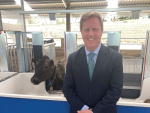
Food and fibre exports have returned a billion- dollar bonus to the country.
The Government is backing work on a community-led water storage scheme that could irrigate up to 11,000 more hectares of the Poverty Bay flats, Agriculture Minister Todd McClay says.
A Labour-led Government won’t be bringing back the controversial freshwater rules of 2020.
It was billed as a chance for all the political parties to woo the rural vote, but question marks hang over just how effective this was.



Federated Farmers has welcomed new rural policies released by ACT, saying they align closely with its own election priorities.

Rural Contractors NZ says proposed changes to land transport rules for agricultural vehicles are a welcome response by the Government to out of date regulations which have seen members hit with huge fines.
Alliance is calling for final applications for its 2027 Graduate Programme, with applications closing on Sunday 25 October.
Decades piloting planes has ensured vet and farmer David Hayes is focused on safety. So, after a serious accident while welding on farm, he is sharing his experience so others can learn from it.
Canterbury milk processor, Synlait Milk has confirmed Leon Fung as its chief executive officer.
OPINION: Making it easier to collect rainwater and use it to grow crops and livestock is a no brainer.





OPINION: The same mainstream media muppets that brought you Jacindamania in 2017 have been flat out pimping for the Opportunities…
OPINION: Your old mate reckons the atrocious way farmers in the UK are treated by their lords and masters in…




