Farm Safety Improves Through 'Incremental Gain', Says Birkett
Improving health and safety is about incremental gain rather than a sudden decision, says Leeston farmer and Federated Farmers health and safety spokesman David Birkett.




 increase font size
 WorkSafe says its Safer Farms Programme is about helping farmers meet their current and future legal obligations.
In April two people died on farms in ‘workplace’ deaths – one was a boy aged 14. And in Waikato in April a toddler nearly drowned in dairy farm effluent.
Incidents such as these are all too common. They are devastating for farmers, their families and the wider farming community. They will affect them for life. But they are only one piece of a much larger story.
That story tells of the 283 people who have died in workplace accidents on farms since 2000 and the 50-plus people a day who have to see a doctor because of farming workplace injuries. Then there is the impact of this on families and communities and productivity. That is why WorkSafe New Zealand is working with rural communities and the ACC to roll out the Safer Farms programme.
Safer Farms is to improve the awareness of and approach to safety onfarm. Despite what you may have read or heard, this is not new rules or laws. Yes, there is new health and safety legislation in the pipeline, but Safer Farms comes under current and future law.
Some farmers are unaware of their responsibilities under current law and are seeing Safer Farms as an imposition of new law, rather than an attempt to bring them up to date.
Simply put, Safer Farms is designed to help farmers better understand how to make their farms safer – including how to meet their current and future legal obligations.
WorkSafe has a critical role in ensuring farmers understand their responsibilities, rather than having them rely on uninformed comment. That’s why WorkSafe is sitting down with organisations such as Federated Farmers to develop practical health and safety tools for farmers. That’s why we’re going to field days and talking with farmers, and ensuring rural retailers get the correct health and safety messages to their customers.
That’s why we will work with schools to educate children living on farms about how to stay safe on farms.
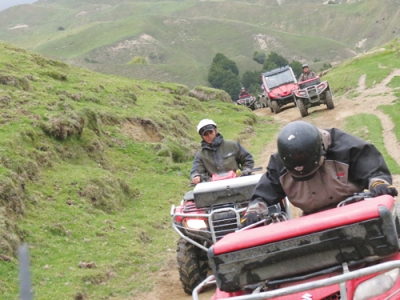
Unfortunately, some people wish to concentrate on single issues at the expense of the total picture. No matter the cold, hard facts relating to deaths and injuries, some people will not accept that helmets are a reasonable precaution to take on motorbikes and quads.
Quad manufacturers are explicit about which vehicles are appropriate for single and multiple riders and highlight the dangers of ignoring those guidelines. Yet some people choose to ignore that clear guidance. And that is why regulatory breaches will be met with appropriate regulatory action.
There have been references to ‘ways of life’ being threatened. No-one denies that the rural lifestyle is part of New Zealand’s DNA. It is something we as a country want to protect. That protection includes protecting the wellbeing of the people living and working on our farms.
The rural lifestyle, with families a part of that, can be maintained, but with better risk management.
WorkSafe knows that people don’t just work on farms, they live on them. We respect and understand that. But on these workplaces farmers have a responsibility to manage the risk they create.
Of course you cannot eradicate all risk – much of day-to-day farming has inherent and unavoidable risk. Good safety management means understanding those risks and knowing the best and safest way to manage them.
Many farmers are expert at managing the risks of stock, pasture and business. Managing risk for day-to-day safety is well within their skills. Yet, for some reason, taking the time to sit down and plan to save lives and livelihood isn’t seen as important by some. This is not managing risk because it’s the law, but doing it because it’s good for business, family, and community.
Since 2008 over 120 people have died working on farms. The only way we can change these sad statistics is by working together.
• Al McCone is programme manager for agriculture at WorkSafe New Zealand.
Improving health and safety is about incremental gain rather than a sudden decision, says Leeston farmer and Federated Farmers health and safety spokesman David Birkett.
A huge reduction in ACC claims from on-farm accidents over the last five years is due to thousands of small, practical decisions being made in sheds, yards, paddocks and around kitchen tables across the country, says Safer Farms ambassador Lindy Nelson.
Lindy Nelson, Safety Farms ambassador, has been named the winner of the Leadership category at the 2026 New Zealand Workplace Health and Safety Awards in Auckland.
A safety push across New Zealand has revealed significant gaps in hazardous substances management, farm vehicles, tractors, quad bikes and side-by-sides.
Safer Farms ambassador Lindy Nelson's dedication to "rethinking how the primary sector works together to reduce harm on farm" has been recognised with a finalist place in the New Zealand Workplace Health and Safety Awards for 2026.


New Zealand's citrus growers were challenged to build their future on the value embedded in their fruit rather than the volume they produce, at Citrus New Zealand's annual gathering in Gisborne on 17 September.
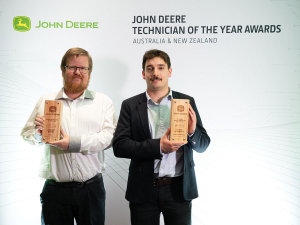
Leading John Deere technicians and apprentices from New Zealand and Australians were recognised at the recent sixth annual JD Technician of the Year Awards, held in Brisbane.
In Dacre, near Invercargill in New Zealand’s South Island, Bruce Dinnington is running a dairy operation unlike any other.
A free online platform aggregating governance vacancies across rural and regional New Zealand has been launched.
Environment Minister Nicola Grigg has announced details of a new rural plastics recycling scheme.
Agricultural drone operators say that a government decision to allow lower-risk drone work without certification won’t lower standards but drive innovation and efficiency.





OPINION: The same mainstream media muppets that brought you Jacindamania in 2017 have been flat out pimping for the Opportunities…
OPINION: Your old mate reckons the atrocious way farmers in the UK are treated by their lords and masters in…




