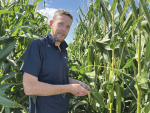
Fall Armyworm in NZ Maize: Four Years of Research
Four years since it was first detected in New Zealand, researchers and growers now know much more about management of maize pest fall armyworm (FAW).




 increase font size
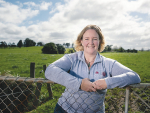
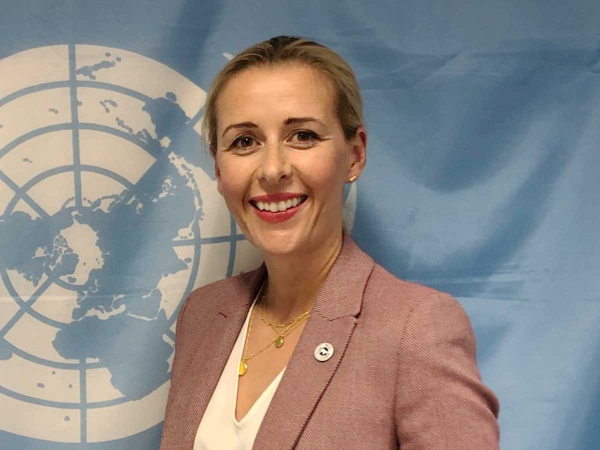 Laura Ryan, chair of Meat Business Women.
New Zealand meat businesses are being asked to contribute to a global study on gender equality.
The study aims to create robust data on women in the meat industry for the first time and identify strategies for making the sector more inclusive.
Global networking group, Meat Business Women has launched a survey seeking data on the number of women employed at different organisational levels, their level of pay, and their potential barriers to career progression.
The findings will be published in a major new report on gender representation in the meat industry, to be unveiled at World Meat Congress on 12 June 2020.
Meat businesses from the UK, Ireland, New Zealand, Australia and the US will be contributing to the report.
“We have long been frustrated by the lack of reliable data on women in the meat industry,” says Laura Ryan, chair of Meat Business Women.
“By taking part in our survey, businesses will help create much-needed clarity on the contribution women make across the supply chain – and, importantly, where action is needed to improve representation.
“We are calling on everyone in the meat industry to get involved and contribute to this important piece of work, to help make our sector more sustainable and profitable.”
The survey will run to 3 April and is open to companies from across the supply chain, including meat processors, packers, retailers, wholesalers and independent butchers.
Before going through the survey, it is recommended respondents have the following data to hand:
“For the meat industry to remain successful in a tough market, it needs to attract the best talent and make the most of existing talent within its organisations.
“By submitting data for our state-of-the-nation report, businesses can play a vital role in identifying ‘glass ceilings’ and ‘broken rungs’, so we can remove barriers to gender equality together and set the meat industry up for long-term success.”
Businesses can submit their responses here: http://bit.ly/Meatbusinesswomen
Four years since it was first detected in New Zealand, researchers and growers now know much more about management of maize pest fall armyworm (FAW).
Generative AI in the workplace, trials in the field, and industry-relevant research took centre stage at this year’s Grape Days events in Central Otago, Hawke’s Bay and Marlborough.
OPINION: When we talk about the future of farming, we often focus on the tools - automation, sensors, satellite data, digital models. But we rarely talk about the people shaping that future. And more importantly, who might be missing from the room.
Ahead of the World Butchers' Challenge, the captains of 14 nations’ teams squared off in Paris over the weekend.
Scientists from the Ministry for Primary Industries (MPI) are part of an international team working to develop a low-cost diagnostic tool that could significantly improve food crop production in developing countries.


Federated Farmers has welcomed new rural policies released by ACT, saying they align closely with its own election priorities.

Rural Contractors NZ says proposed changes to land transport rules for agricultural vehicles are a welcome response by the Government to out of date regulations which have seen members hit with huge fines.
Alliance is calling for final applications for its 2027 Graduate Programme, with applications closing on Sunday 25 October.
Decades piloting planes has ensured vet and farmer David Hayes is focused on safety. So, after a serious accident while welding on farm, he is sharing his experience so others can learn from it.
Canterbury milk processor, Synlait Milk has confirmed Leon Fung as its chief executive officer.
OPINION: Making it easier to collect rainwater and use it to grow crops and livestock is a no brainer.

OPINION: The same mainstream media muppets that brought you Jacindamania in 2017 have been flat out pimping for the Opportunities…
OPINION: Your old mate reckons the atrocious way farmers in the UK are treated by their lords and masters in…




