Editorial: No Small Challenge
OPINION: There could hardly be a more appropriate theme for a conference than the one chosen by the red meat sector - Navigating Volatility.




 increase font size
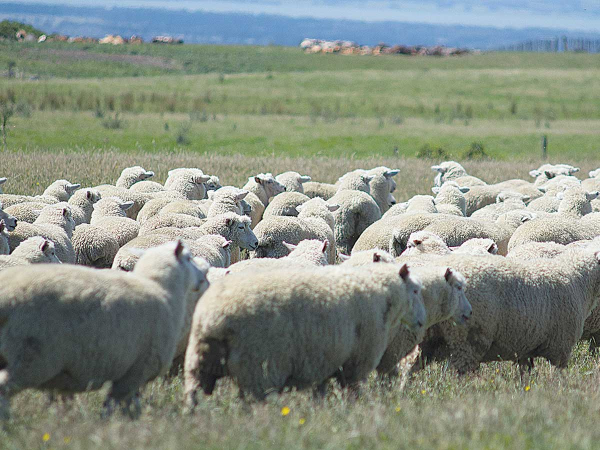 Beef+Lamb NZ is predicting a 26% fall in the average farm profit on sheep and beef farms in the coming year.
New Zealand beef and sheep farmers are facing more than 25% less income in the season ahead.
That’s the conclusion of Beef+Lamb NZ (BLNZ) in its recently released new season outlook for 2020-21. It is forecasting lamb export receipts to decline by almost 15% and sheepmeat co-products to decline by around 8% compared to the 2019-20 season. Beef and veal export revenue is forecast to decline by 9% on 2019-20.
“The uncertainty in the export market will be reflected in farm-gate prices and subsequent farm profitability,” says BLNZ’s chief economist Andrew Burtt.
The outlook predicts that the average farm profit before tax on sheep and beef farms in New Zealand will fall 26% to an average $115,100 this season.
BLNZ says the disruption caused by Covid-19 is expected to reach into next year with global economies, consumer demand and trading channels all impacted.
“Increasing competitiveness in key beef export markets also has the potential to alter the trading environment,” the report adds.
“Despite this, there are solid underlying market fundamentals that will continue to support demand for New Zealand sheepmeat and beef exports.”
BLNZ believes China’s demand for meat protein will continue to be fuelled by pork shortages that have resulted from African Swine Fever (ASF).
“There is growing demand for high-quality, nutritionally rich proteins,” the report says. “A shifting consumer preference towards food safety will also support demand for New Zealand sheepmeat and beef.”
However, BLNZ concedes that this challenging environment is expected to result in a decline in both sheepmeat and beef export receipts in 2020-21.
“Average export values are forecast at similar levels, or slightly above, five-year averages,” it says.
“The trading environment will also face ongoing uncertainty around key trade negotiations. Brexit outcomes and the deteriorating relationship between the US and China will have an influence on market dynamics in the new season.”
BLNZ says, on farm, the uncertainty in the export market will be reflected in lower farm-gate prices and subsequent farm profitability.
“The drought of 2020 will have a continuing adverse impact on lamb and beef production in the new season,” it adds. “Wool returns are forecast to remain depressed, with shearing expenses still on the rise.”
Overall, BLNZ is picking gross farm revenue to decline for the year ahead.
It blames market disruption as a result of Covid-19 as the predominant driver of the decline in sheepmeat export revenue.
“The decline in food service sector demand has adversely impacted export sales for New Zealand’s high-value frozen lamb. This is particularly evident in the US and EU.”
It adds that weaker global economic conditions have also resulted in lower consumer spending, and greater price sensitivity.
“The outcome of Brexit negotiations will influence the sheepmeat trading environment in 2020-21,” the report says.
Meanwhile, BLNZ believes demand for sheepmeat will be helped by tighter global supplies, as production from both New Zealand and Australia is expected to be down.
“Continued demand from China for meat protein as a result of ASF-induced pork shortages will also be a positive driver of demand in 2020-21.”
On the beef front, things are a little more positive, with BLNZ expecting global beef trade in the 2020-21 season to grow increasingly competitive.
“This, combined with weaker consumer demand as a result of Covid-19 and trade tension between New Zealand’s leading export markets China and the US is forecast to weigh on beef demand in the outlook period,” it says. “Declining food service demand has also impacted beef demand. However, a higher proportion of New Zealand beef exports can be transferred into the retail sector.”
Much of New Zealand’s beef is an ingredient used in supply chains that can service both food service and retail.
“Ground beef sales have been a strong performer in the post-Covid world.”
BLNZ also suggests that – again – ASF and growing demand for quality proteins from the affluent Asian consumers will remain key drivers of demand for NZ beef.
OPINION: There could hardly be a more appropriate theme for a conference than the one chosen by the red meat sector - Navigating Volatility.
New Zealand's red meat and fifth-quarter exports reached $867 million in August, up 23% on the same month last year, as stronger returns lifted earnings across all major markets.
Meat Industry Association data, released alongside the Red Meat Sector conference in Wellington, shows export value climbing across the US, China, UK and Canada.
With lambing underway in many regions, Beef + Lamb New Zealand is encouraging farmers to put together a wellequipped lambing kit to help minimise lamb losses, particularly in bad weather.
Chinese beef trade quotas and a looming suspension of Brazilian beef imports into the European Union are expected to reshape global beef trade flows over the remainder of 2026, with implications for New Zealand exporters, according to Rabobank's Q3 Global Beef Quarterly report.


High country stations, mixed sheep and beef farms, Māori-owned farms, corporates and family operations are among the nine commercial farms taking part in the Livestock Innovation Farming Transformation programme, known as LIFT.
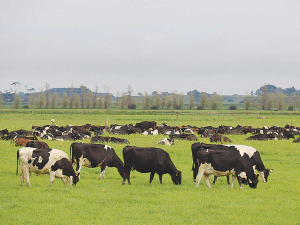
OPINION: New health and safety guidance unveiled by the Government recently provides farmers greater certainty about what is expected of them when managing risks on farm.
The National Animal Welfare Advisory Committee (NAWAC) is seeking public feedback on proposed changes to the Code of Welfare for Rodeos.
A New Zealand initiative supporting farmers to restore the health of grazing landscapes has received international backing through the Regenerative Fund for Nature, a global collaborative fund supporting regenerative agriculture and the communities that produce natural fibres for the fashion industry.
Combine premium New Zealand products, blend in a family ritual and what do you get? A world-class functional drink.
Entries are now open across eleven regions for the 2027 New Zealand Dairy Industry Awards (NZDIA).



OPINION: The same mainstream media muppets that brought you Jacindamania in 2017 have been flat out pimping for the Opportunities…
OPINION: Your old mate reckons the atrocious way farmers in the UK are treated by their lords and masters in…




