
Wools of New Zealand Calls for India FTA to Boost Farmer Returns
Wools of New Zealand is joining calls for New Zealand to urgently ratify a Free Trade Agreement with India.




 increase font size
 Wools of NZ chief executive John McWhirter says the company’s strategy is to capture more value for its 2,000 grower shareholders.
A year down the track after joining forces with Primary Wool Co-operative, Wools of New Zealand (WNZ) describes the merger as a success.
“There is now a real pathway to farmgate prices rising,” the farmer co-operative’s chief executive John McWhirter told Rural News.
He says the company’s strategy is to capture more value for its 2,000 grower shareholders.
“The merger was never going to change the fundamental problem of the wool industry or the price of wool. However, for the first time, we now have an integrated value chain from the grower through to the consumer.”
He adds the merger was about bringing two wool companies together and adding more resource to invest in the consumer goods business. McWhirter says that wool carpets account for a greater proportion of WNZ’s partners’ retail sales than ever before.
“This rising demand is a clear indicator that more New Zealanders are considering sustainable floor options for their homes.”
McWhirter says currently there is around a 5-7% over supply of wool compared to the demand for wool, which is around 45,000 bales.
“If we can increase the demand for wool by 45,000 bales – then the price of wool will go up as supply and demand kicks into place.”
He says the faster they can grow the sales of wool carpet within NZ and internationally, the faster they will increase the price of wool at the farmgate.
McWhirter says demand for wool is now starting to increase.
“For the first time in 20 years, in the last 12 months, wool carpet stopped declining and actually grew.”
He says wool carpet sales grew in NZ last year by 25% - from 14% to 18%. However, this is a long way back from where it was in the mid-1990s, when wool carpets made up about 90% of floor coverings sold in NZ.
Wool’s of NZ is rolling out a commercial and brand campaign, which McWhirter says showcases farmer-suppliers and highlights wool carpet’s natural and durable attributes as well as its affordability.
“We’re ramping up branded consumer product sales, driving operational excellence into the new business and really connecting with our growers and customers.”
McWhirter says the aim of the advertising campaign is to leverage the increasing demand for wool carpets in New Zealand.
Meanwhile, he says WNZ is continuing to add more independent and retail chains to market wool carpets – following the launch of its partnership with Flooring Xtra and other retailers last year.
“Retailers are clearly telling us that consumers want sustainable, renewable and biodegradable carpet made from wool grown right here in New Zealand.”
McWhirter says the co-operative now has 11 wool stores, a carpet manufacturing partner, a New Zealand carpet distribution warehouse and over 150 carpet retail store partners in NZ.
“We also have a UK office, many offshore customers, a strong well recognised Wools of NZ brand and loyal grower suppliers.”
He says Wools of NZ is owned by farmers and its only objective is to positively benefit NZ sheep farmers.
Wools of New Zealand is joining calls for New Zealand to urgently ratify a Free Trade Agreement with India.
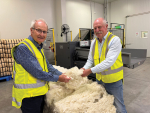
Keratin biomaterials company Keraplast and Wools of New Zealand have signed a new superpremium wool contract which is said to deliver a boost to wool growers.
Wool farmers are hoping that efforts by two leading companies to develop a more efficient supply chain would eventually boost farmgate returns.
Wools of New Zealand has signed a partnership agreement with a leading Chinese manufacturer as the company looks to further grow demand in China and globally.
Chinese textile company Saibosi has partnered with Wools of New Zealand to put the 'farm to floor' story of New Zealand wool rugs on screen for its customers.



Now in its fourth year, the 2026 Fencing Industry Awards, formed part of the proceedings of the FCANZ Conference, held in Nelson during August.

DairyNZ deputy chair Cameron Henderson has been re-appointed unopposed for another term.
OPINION: The stats speak for themselves.
Farms across the upper North Island are trialling different pasture mixes as part of a research programme that aims to build greater resilience into farming systems.
Election years are always a concerning time for farmers, according to DairyNZ chair Tracy Brown.
The Ballance Farm Environment Awards are coming to the West Coast of the South Island.



OPINION: The same mainstream media muppets that brought you Jacindamania in 2017 have been flat out pimping for the Opportunities…
OPINION: Your old mate reckons the atrocious way farmers in the UK are treated by their lords and masters in…