
Synlait CEO Resignation Highlights Deeper Challenges Facing Dairy Processor
A revolving door of chief executives at milk processor Synlait is a warning sign, says Lincon University senior lecturer in agribusiness Nic Lees.




 increase font size
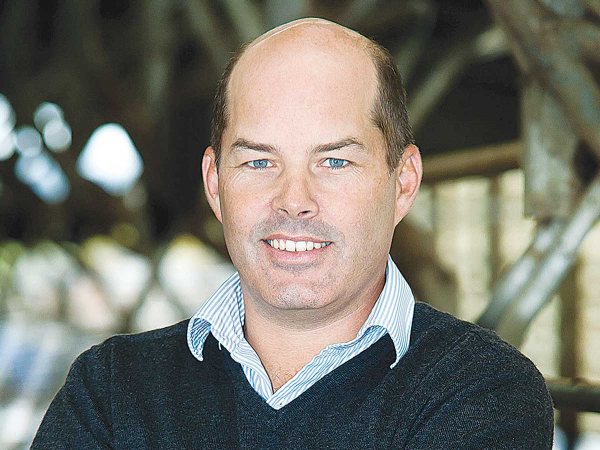 Miraka chief executive Richard Wyeth acknowledges that this year’s forecast payout range of $5.75 to $6.75 is down on last season.
Miraka, the Māori-owned dairy company near Taupo, believes its farmer suppliers are relatively happy about a possible lower payout this season.
Chief executive Richard Wyeth says Miraka’s payout range for this season is $5.75 to $6.75, with the midpoint at $6.25, which he acknowledges is down on last season.
Wyeth says this price reflects the disruption, nervousness and uncertainty created by Covid-19 and what the next 12 months might look like.
“The dollar has come off and then strengthened quite quickly, then come off again. That uncertainty as to where the dollar is going to land and where prices are going to sit has made for a slightly more pessimistic view than last year,” he told Rural News.
“But overall, the signals we are seeing at the moment are positive.”
Wyeth says Miraka’s frozen milk concentrate, which the company launched this year, is a positive sign and a major focus of its refreshed growth strategy. The product is designed for the Asian market.
“The frozen milk concentrate is made by taking the concentrates out of the evaporator and freezing it and shipping into the market, where they defrost it and gets used as a milk product,” he explains. “The product is packed in a 20 litre bag and box.”
With solid demand for its UHT products, business for Miraka has been good. Wyeth says its milk powder business is solid and there is steady demand for this. He says there is a certain irony in that the outlook is really positive due to the fact that China, where 100% of Miraka’s UHT goes, is one of the only countries in growth.
“We have seen the demand really go through the roof since they have got through Covid and our two key customers have actually asked us for more UHT,” Wyeth adds.
“We are currently running at capacity, so we are stretching the plant at the moment. There was certainly a short term blip last season but for this current season the demand is very strong for UHT.”
Wyeth says a positive for Miraka during Covid was that the Chinese authorities encouraged their people to drink more milk.
He believes it’s interesting that when Covid first hit people were saying ‘don’t focus on China’.
“Three months later, the same people are saying ‘aren’t we lucky we have China’.”
Wyeth says Miraka has always been prudent and canvassed several markets from a risk management perspective. He says long term, the company is working with its partners in a bid to get more certainty from those partnerships to help de-risk their business.
Down on the farm
Richard Wyeth says, down on the farm, things are also looking good with the milk flows up 4% on last year. He says Miraka’s farmers are now starting to see the benefits of the Te Ara Miraka scheme, which incentivises them to focus on good environmental production systems.
Farmers who meet all the strict criteria of Te Ara Miraka can earn up to an extra 20 cents per kilogram on their milk for the season, while others who meet some of the criteria also get bonus payments.
“As a result of this scheme, our farmers are in a good position to deal with the new regulations,” Wyeth told Rural News.
“A lot of them have already got farm environment plans in place and they have got GRIS maps of all their land – so they are long way down the path already to be compliant which is pretty fantastic.”
Wyeth says the company’s farmers can now see the real benefits of Te Ara Miraka and how well it has positioned them for the future.
A revolving door of chief executives at milk processor Synlait is a warning sign, says Lincon University senior lecturer in agribusiness Nic Lees.

Troubled milk processor Synlait has lost its third chief executive in five years.
Canterbury milk processor Synlait is blaming what it calls "a perfect storm" of setbacks for a big loss in its half year result for the six months ended January 31, 2026.
Farmers supplying milk to Taupo-based processor Miraka are getting a 2024-25 season base milk price of $10.16/kgMS.
Open Country Dairy has finalised a deal to acquire 100% of Miraka.


High country stations, mixed sheep and beef farms, Māori-owned farms, corporates and family operations are among the nine commercial farms taking part in the Livestock Innovation Farming Transformation programme, known as LIFT.
OPINION: New health and safety guidance unveiled by the Government recently provides farmers greater certainty about what is expected of them when managing risks on farm.
The National Animal Welfare Advisory Committee (NAWAC) is seeking public feedback on proposed changes to the Code of Welfare for Rodeos.
A New Zealand initiative supporting farmers to restore the health of grazing landscapes has received international backing through the Regenerative Fund for Nature, a global collaborative fund supporting regenerative agriculture and the communities that produce natural fibres for the fashion industry.
Combine premium New Zealand products, blend in a family ritual and what do you get? A world-class functional drink.
Entries are now open across eleven regions for the 2027 New Zealand Dairy Industry Awards (NZDIA).




OPINION: The same mainstream media muppets that brought you Jacindamania in 2017 have been flat out pimping for the Opportunities…
OPINION: Your old mate reckons the atrocious way farmers in the UK are treated by their lords and masters in…




