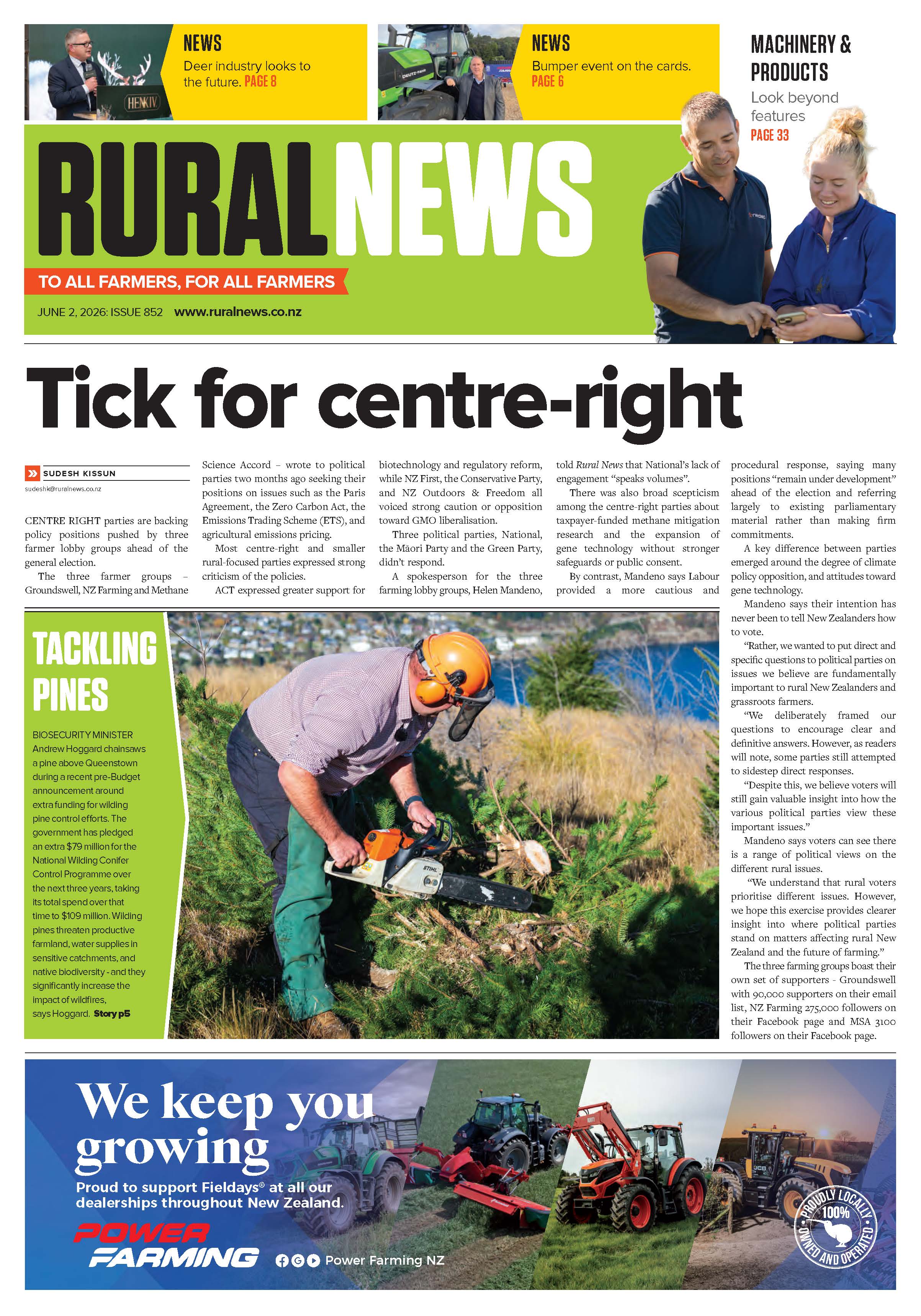
BNZ and Pāmu Launch New Native Forest Revenue Model for New Zealand Landowners
Bank of New Zealand (BNZ) and Pāmu (Landcorp Farming Limited) have developed a new way for landowners to earn revenue from existing native forests.




 increase font size

MAF says the Emissions Trading Scheme, and a generally positive outlook for wood and fibre demand, is behind a 27% increase in exotic forest plantings in the year to April 2011.
Based on reports from commercial forestry nurseries, MAF estimates 60,000ha were planted, of which 48,000ha (80%) were re-plantings.
Nearly half of the estimated new planting was funded through MAF's Afforestation Grant Scheme and the East Coast Forestry Project.
According to the annual National Exotic Forestry Description report, which surveys growers with at least 1000ha planted, about 40,000ha was harvested, on par with the previous year.
However, other sources show an increase in total harvest area for the year, indicating a higher proportion of harvesting and planting by smaller growers not captured by the NEFD survey.
Yield per hectare was up 6% probably due to higher log prices justifying better levels of recovery per tree, and a small increase in average age at harvest of the main species, radiata pine, at 28.6 years, up from 28.4 years.
Meanwhile, statistics reported in MAF's September quarter production and trade update show total forestry export earnings increased NZ$32.7 million or 3% to NZ$1.1 billion in the three months to September 30, taking annual earnings to end of September to $4.6 billion, accounting for 10.1% of total merchandise exports.
Export earnings for logs remained relatively strong in the quarter, rising $NZ77.2m or 25.8% due to strong demand and high log prices. China continues to dominate the export market, taking a record 2.2m cubic metres, a 32.6% increase.
Sawn timber export earnings fell NZ$31.4m or 13.6% with production down 0.113m cubic metres over the quarter due to high log prices, weak domestic demand and a high exchange rate. Wood processors have become more pessimistic about their prospects.
Demand from Japan for wood panel products, though, remains strong following the natural disasters in March 2011.
A half-year update of the annual Situation and Outlook for New Zealand Agriculture and Forestry indicates Chinese demand for New Zealand logs is easing with inventories at record levels and increased competition from other nations.
This, combined with subdued construction activity, had led to a revision down from a NZ$4.69 billion forecast for the year to June 30 2012, to NZ$4.26 billion.
Bank of New Zealand (BNZ) and Pāmu (Landcorp Farming Limited) have developed a new way for landowners to earn revenue from existing native forests.
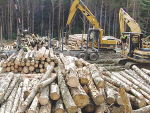
Forestry Minister Todd McClay has today congratulated the winners of the 2026 Growing Native Forests Champions Awards at Fieldays.
The Fieldays Forestry Hub returns to Fieldays in 2026 for the fifth consecutive year, highlighting the important role forestry and wood processing play in supporting New Zealand's economy, environment, and regional communities.
Two forestry companies have been sentenced for road failures that led to the death of Coromandel truck driver Greg Stevens.
Additional reductions to costs for forest owners in the Emissions Trading Scheme Registry (ETS) have been announced by the Government.

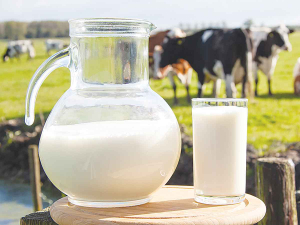
New Zealand dairy farmers are set to be the first in the world to receive access to a new digital physical milk pricing tool that enables them to fix the price for their physical milk.
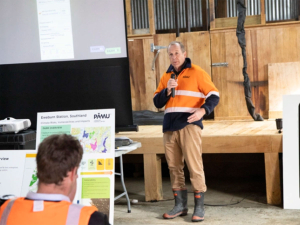
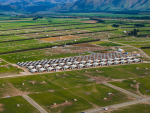
State farmer Pāmu is opening its farm gates this summer in an effort to give the rural sector the opportunity to see how large-scale, multi-system farming is delivering productivity and profitability across New Zealand.
A five-year study has found that the cost of reducing emissions without technology may be significant and unsustainable for Northland dairy farmers.
DairyNZ says Waikato farmers need certainty on Plan Change 1, but they say that certainty must be matched with practical, workable rules and a clear transition that doesn't get ahead of the new resource management system currently under review.
While the Government has moved quickly to make commercial hauliers' lot easier during the current fuel crisis, they appear to be stuck in the creep box when it comes to the agricultural industry.
Waikato farmers have been told that the Government’s new planning system legislation and the region’s Plan Change 1 (PC1) “won’t mesh together very well”.




OPINION: Central Hawke's Bay farmer Mark Warren recently told the Hawke's Bay Times it's time for a conversation about allowing…
OPINION: A nation that relies as heavily as NZ does on functional global shipping lanes will have to do its…