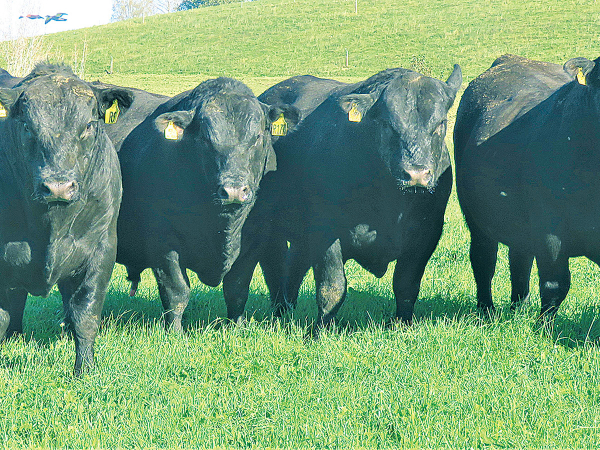
A new beef breeding index is expected to be the talk of the bull sales over the next month or so. Six bull studs from around the country have got together and come up with new indexes for the sector, which they claim reflects what the market wants. David Anderson reports...
A group of Angus bull breeders have developed a new initiative to utilise a world-leading analysis, to not only breed better beef but also do so in a way that focuses directly on efficiency.
Working with NZ agritech business AbacusBio Ltd, they have designed a platform that utilises already measured and recorded economically relevant traits. It then combines these into a set of indexes that not only analyses the attributes of every animal - but presents an index that evaluates efficiency, both financially and environmentally.
The new platform is called 'E-Star' and its' promoters believe it will change the pace and focus of NZ beef industry genetics. The participating Angus Studs who have invested in resourcing the E-Star platform are Hallmark Angus - East Coast; Martin Farming - Nelson; Leefield Station - Marlborough; Sudeley Angus - Banks Peninsula; Fossil Creek Angus - North Otago and Earnscleugh Angus - Central Otago.
The suite of four E-Star indexes are said to relate directly to the production system and markets relevant to the NZ commercial beef industry. This means heifers are retained as replacements and steers and surplus heifers are finished efficiently. This helps to finetune the finished product as well as meeting the specifications of targeted premium branded Angus Beef programmes.
The indexes for Angus attributes such as calving ease, maternal and fertility traits and Terminal or finishing traits are served separately. Added to this is a fourth standalone index that is claimed to be a big step forward for the NZ commercial beef industry.
The Efficiency Index is exactly what it represents. It is a smart set of software that groups together specific beef breeding traits, both maternal and terminal.
A major advantage of the 'E-Star' platform is its simple presentation. Instead of displaying confusing numbers to sift through, a simple star system is presented.
This ranks each index within the population based on a 1 to 5 stars - with 5 stars being in the top 10%. The platform has been called E-STAR because it incorporates a star ranking system that is easy to view and interpret.
The new system has been used successfully by one of the studs in the South Island, which worked with five other studs to enhance and update the platform. They have harnessed recent technology advances, results of progeny tests in both NZ and Australia to help meet the new demands around the beef industry's environmental footprint. By selecting against or culling the animals at the bottom of the Efficiency Index, breeders can raise the profitability and reduce the environmental footprint from their whole herd.
The index promoters say it is more about whole herd dynamics rather than individual animals. They believe the economic benefits from stronger maternal values and better finishing times with higher quality meat outcomes will be an massive benefit for the industry. Early finishing animals will be identified and rewarded by this system. They add that any peer-reviewed new research on other economic traits - such as beef cow fertility and longevity - can also easily be integrated using this technology.
The Four E-Star Indexes
1. Maternal Index: This is a grouping of traits specifically related to the beef cow/calf operation. Desired outcomes include improving fertility and moderating cow size.
2. Terminal Index: An index that highlights those animals which are going to grow fast to suitable carcase weights with high yields and good eating through Intramuscular Fats.
3. Efficiency Index: This index can be used on its own to identify animals which are superior for efficiency. Selecting the most efficient animals can reduce environmental footprint, acting as the best productive proxy for reduced emissions.
4. Heifer Direct: Designed to be a standalone selection tool for ranking bulls as suitable for mating yearling heifers.