Otago Action Group keen to carry on
The Otago-based Bruce District Action Group is transitioning to a self-funded group now that the Red Meat Profit Partnership (RMPP) has ended.




 increase font size
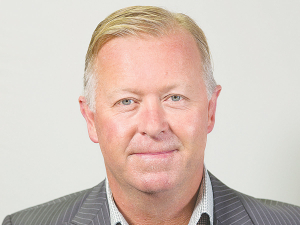
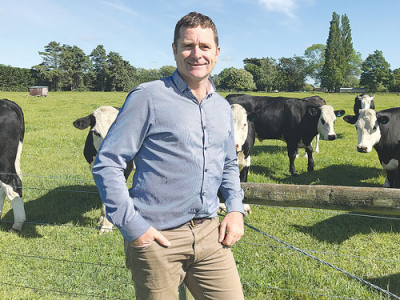 RMPP Action Network programme project manager Brendon Patchett.
The role of project manager for the Red Meat Profit Partnership (RMPP) Action Network programme was too good to ignore, says Brendon Patchett.
“What attracted me was the opportunity to be involved with a well-resourced and focused programme that would make a difference for the agricultural sector,” he said.
Patchett grew up on a small Marlborough farm and has years of experience in the rural sector and IT, which has included developing and rolling out the RMPP Action Network programme.
He first worked as a livestock drafter in Marlborough and North Canterbury, then gained a BCom from Lincoln University, followed by 14 years in IT.
In 2014 he returned to the rural sector in IT, in a business development role with livestock data management firm Agtrac. There he encountered RMPP and the network programme, which he joined last year.
The network is made up of small groups of seven to nine farming businesses; farmers work together with other like-minded farmers and rural professionals to identify ways to improve the performance of their business.
Groups are facilitated by rural professionals and $4000 per participating farm business is available to pay for facilitation support and to bring in relevant subject matter expertise.
RMPP began rolling out the Action Network in late 2017 and 950 farmers are now involved, with 150 regionally spread groups; 89 groups have submitted their plans and have started receiving funding. The goal is to engage with 2550 farmers and to set up 300 groups.
“The network is underpinned by research,” Patchett says. “That informed the development of the model and was tested via a farmer pilot programme.
“The network takes a small group approach with farmers learning from other farmers, supported by other relevant knowledge and expertise.
“This helps farmers increase their confidence to act and make positive changes to their farm business, leading to increased productivity and profitability.”
He says a common focus, structured approaches and the kick-start funding for each business are key.
“Strong facilitation is critical to successfully run groups: 350 rural professionals have been trained to be facilitators, with 74 already approved and working with groups.”
Patchett will lead the design, development and roll-out of the network.
“There’s strong momentum within the network now. We’re seeing an increase in the number of farmer groups registering. There’s also increased understanding and awareness about the network, including how it can be applied in ways that enable farmers to navigate challenges or investigate ideas.”
Backers of the RMPP include Ministry for Primary Industries, Beef + Lamb NZ, six meat companies and two banks.
What is RMPP?
RMPP IS a seven-year Primary Growth Partnership programme working to help the red meat sector increase productivity and profitability.
It has ten funders: Ministry for Primary Industries, ANZ, Alliance, ANZCO, Beef + Lamb NZ, Blue Sky Meats, Greenlea Premier Meats, Progressive Meats, Rabobank and Silver Fern Farms.
RMPP works with farmers and sector businesses to develop, test and introduce information and technology.
The Otago-based Bruce District Action Group is transitioning to a self-funded group now that the Red Meat Profit Partnership (RMPP) has ended.
After seven years, the Red Meat Profit Partnership (RMPP) came to an end on 31 March, yet chair Malcolm Bailey says it's work is "continuous".
Beef + Lamb New Zealand (B+LNZ) has announced changes to the funding approach for Action Groups from 1 April 2021.
A year-long trial has shown that it’s possible to produce a beef patty sustainably across the supply chain in New Zealand.
A new voluntary sustainability and continuous improvement standard developed by the Red Meat Profit Partnership (RMPP) has been piloted by sheep and beef farmers.


Federated Farmers has welcomed new rural policies released by ACT, saying they align closely with its own election priorities.
Rural Contractors NZ says proposed changes to land transport rules for agricultural vehicles are a welcome response by the Government to out of date regulations which have seen members hit with huge fines.
Alliance is calling for final applications for its 2027 Graduate Programme, with applications closing on Sunday 25 October.
Decades piloting planes has ensured vet and farmer David Hayes is focused on safety. So, after a serious accident while welding on farm, he is sharing his experience so others can learn from it.
Canterbury milk processor, Synlait Milk has confirmed Leon Fung as its chief executive officer.
OPINION: Making it easier to collect rainwater and use it to grow crops and livestock is a no brainer.


OPINION: The same mainstream media muppets that brought you Jacindamania in 2017 have been flat out pimping for the Opportunities…
OPINION: Your old mate reckons the atrocious way farmers in the UK are treated by their lords and masters in…




