Fonterra Expands China Foodservice Business with New Anchor Essence Cream
Fonterra is strengthening its foodservice presence in China with the launch of a new cream for professional bakeries at Bakery China 2026 in Shanghai.




 increase font size
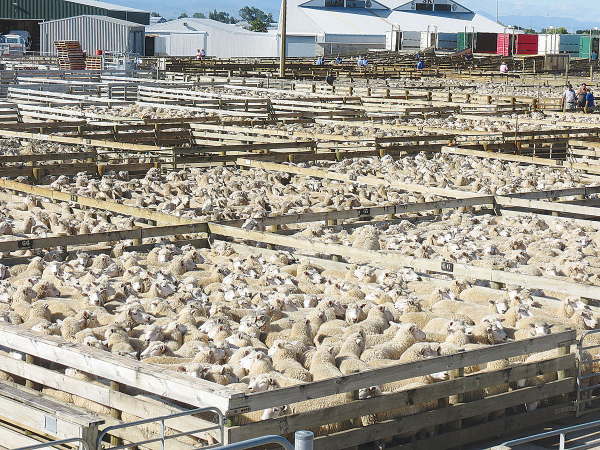 High farm input costs, a slow Chinese recovery and a flood of Australian lamb onto the global market are the main factors contributing to the tough times being faced by NZ’s sheep farmers.
Stubbornly high farm input costs, a slow Chinese recovery and a flood of Australian lamb onto the global market are the main factors contributing to the tough times being faced by NZ's sheep farmers.
This is borne out in the latest Beef + Lamb New Zealand (B+LNZ) Mid-Season Update, which confirms that farmers will have to continue to dig deep to stem what looks like widespread cash losses in the sheep and beef sector for the 23/24 financial year.
It says the outlook for the season has worsened significantly since their forecasts in October, because of Chinese and Australian factors, with the latter's exports of red meat bigger than originally forecast.
The report says an excellent lamb crop last spring has meant there are more lambs to sell, but this cannot compensate for lower per head prices and unavoidably high costs. Farm profits, it says, are forecast to be down 54% to an average of $62,600 per farm - a 67% fall in farm profit from the 2021-22 year. This is the lowest profit level since the 1980s and the Global Financial Crisis.
Sam McIvor, B+LNZ chief executive, says farmers are feeling it with many having already worked hard on cutting costs. He adds that all the indications are they're leaving no stone unturned to find additional savings - especially farmers with relatively high debt levels.
"Certain farm classes, such as high country, hard hill country, and South Island hill country, are hardest hit with profitability due to their heavier reliance on sheep revenue. The East Coast region, still recovering from Cyclone Gabrielle and ongoing wet weather setbacks in 2023, is projected to have the lowest regional profitability."
But the report notes that it's not all bad with beef holding up much better, driven by significant demand out of the US as it rebuilds its herd, post-drought. All beef is forecast to average $5.15 per kgCW for the season, which is 2.9% down on last year, but 2% higher than the five-year average.
Demand for lamb in Europe and the US has also been strong and this is expected to continue for the rest of the season.
Fonterra is strengthening its foodservice presence in China with the launch of a new cream for professional bakeries at Bakery China 2026 in Shanghai.

OPINION: What does the birth rate in China have to do with stock trading? Just ask a2 Milk Company.
Additional tariffs introduced by the Chinese Government last month on beef imports should favour New Zealand farmers and exporters.
One of the most galling aspects of the tariffs whacked on our farm exports to the US is the fact that, now more than ever, US farmers are being propped up by government welfare – a direct result of Trump’s hardline on its trading partners.
China looks set to play a key role in helping the New Zealand wool sector shift away from trading as a commodity supplier.

Forestry Minister Todd McClay has today congratulated the winners of the 2026 Growing Native Forests Champions Awards at Fieldays.

The Government has announced $60,000 to provide one-off grants of $1,000 to each of the 60 New Zealand Young Farmers (NZYF) clubs across the country.
New Zealand’s rural sector has once again demonstrated its generosity, with the second Rural Industry Leaders Dinner, Debate and Auction raising an impressive $400,000 for the Rural Support Trust.
There has been another twist to the Federated Farmers annual election fiasco.
Analysis of decades of research has revealed the implementation of good farming practices plays a critical role in reducing nutrient losses to improve freshwater outcomes.
Yesterday the Government used the opening of Fieldays to announce a major investment, as part of its Land Use Flexibility package, to support a more productive and sustainable future across six sectors including dairy.


OPINION: While we're on the topic of lumberjacks, Biosecurity Minister Andrew Hoggard has no doubt used a chainsaw hundreds of…
OPINION: To a chorus of crying greenies, and not a minute too soon, the Government has moved to put the…