The director of Otago University’s new virtual Centre for Rural Health says there’s no one, single fix to the burgeoning staffing crisis facing the sector.
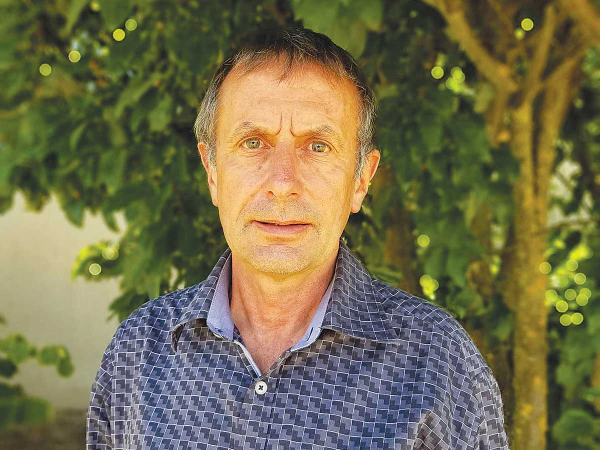
Professor Garry Nixon says the declining rural health workforce is “not a new thing”.
“These are very longstanding issues and they are not confined to New Zealand. These are international issues,” Nixon told Rural News.
He says the sector is aware of what needs to be done, but it’s not a “single intervention, that one part of the pathway, and it’s not simplistic”.
“You’ve got to deal with it from a whole of systems approach right from taking into medical school and other health professional programmes kids who’ve grown up in rural areas, supporting them with longitudinal attachments during their undergraduate years,” Nixon says.
He says that short attachments don’t work for this form of health.
“You’ve really got to be looking at having them there for many months if not an entire year of their training,” he adds.
Nixon says that crucially, the postgraduate pathways have to be provided for medical students across all disciplines.
“When you exit medical school, you’re really only halfway there,” he says. “It’s really at that point to a specialist training programme where you really learn your trade and it’s really important to have rurally-based specialist training programmes.”
“It’s about that whole package, it’s about everything and that’s the strength of this centre because it brings all those parts together rather than just dealing with one short rotation into a rural area at one point during your training.”
The virtual centre opened late last month in Ashburton, bringing together the dispersed rural staff and students from the University of Otago’s Department of General Practice and Rural Health and the Rural Health Academic Centre, Ashburton (RHACA) under one umbrella.
Currently, the department has 46 staff, straddled across both clinical and academic roles, based in 21 rural communities from the Hokianga to Balclutha. Undergraduate students are undertaking their studies in rural sites from Wairoa and Queenstown.
The Centre will act as the University’s rural health unit, with the primary purpose of supporting teaching and research across rural New Zealand.
Nixon, a rural doctor at Dunstan Hospital in Clyde and the centre’s director, describes the new centre as an “evolution”.
“When it comes to rural health, I don’t think any one physical site is going to have the critical mass to achieve what you need to achieve in the space, so this is a way of bringing it all together,” he says.
Nixon says the Centre allows staff and students from multiple sites working in similar situations but in different locations to “get to where we need to get”.
“Rural health is no different from any other specialty. It needs its academic activity to support it, to provide the specialist education and training, to provide the research and to provide the leadership which comes out of the senior academic posts to advance it as a discipline,” he says.
“So, it’s really just providing that same level of support that the university provides to other disciplines,” he concludes.