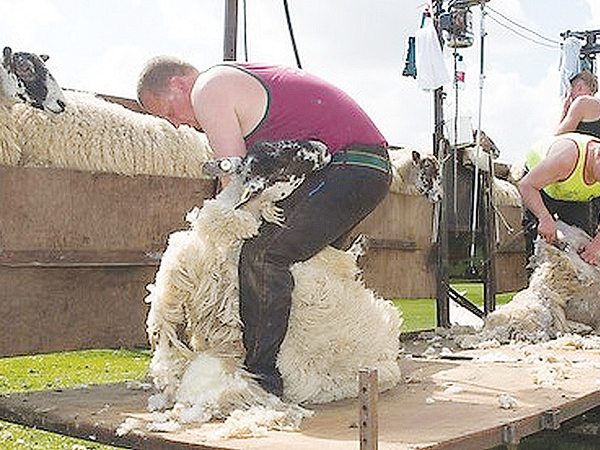
Much like New Zealand contractors who need nothern hemisphere operators to help with the grass, maize and cereal harvests, the United Kingdom is in need of those with prowess on the handpiece to help take the fleeces off that country's 15 million sheep.
The National Association of Agricultural Contractors (NAAC) has recently announced that international sheep shearers have been granted a special concession to enter the UK this year.
Since 2011, the NAAC says it has worked closely with the Home Office to develop a scheme to encourage non-visa national shearers from overseas - particularly from New Zealand and Australia - to come for a short, limited period to ensure that sheep are shorn on time.
"We are relieved that the concession has been extended as we expect shearers to enter the UK within days," says NAAC chief executive Jill Hewitt.
"We have relied on the input of overseas shearers to ensure that sheep can be shorn within the necessary time scale and to high animal welfare standards. It is a relief that post-Covid we can now welcome back our team of overseas shearers to support UK contractors and farmers."
Non-visa nationals will be able to travel to the UK, between 1 April and 30 June and will only be allowed to stay for a three-month maximum period. This means they would be required to leave the UK by 30 September.
Overseas shearers arriving in the UK in 2023 must satisfy an immigration officer they are there temporarily to be employed as a sheep shearer. The NAAC says it can assist its members with the necessary paperwork to smooth the entry process and is requesting that it be notified of all shearers visiting the UK to provide rapid assistance if any issues arise at customs.
Specific entry requirements include that the applicant is genuinely seeking entry to undertake employment or provide services as a sheep shearer. They must also supply an appropriate contract of employment and be able to maintain and accommodate themselves without recourse to public funds.
www.naac.co.uk