Let Farmers Decide What They Farm
OPINION: Well, the silly season is upon us and all us politicians are running around shaking babies and kissing hands, or maybe the other way around.




 increase font size
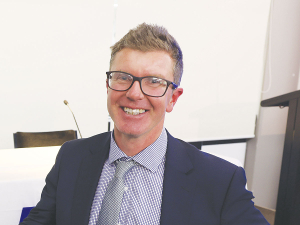
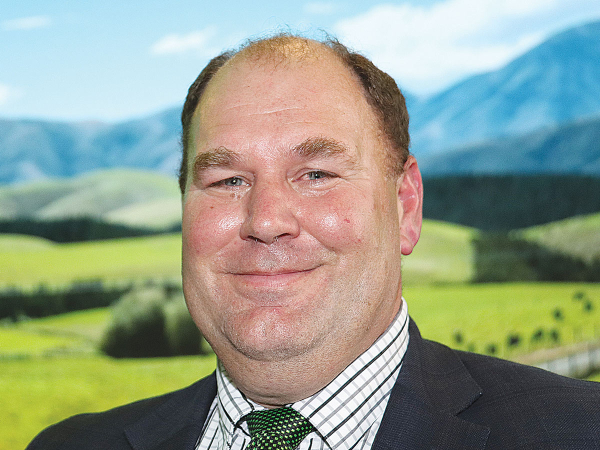 Biosecurity Minister Andrew Hoggard.
Biosecurity Minister Andrew Hoggard says that events over the last few weeks have highlighted the importance of a strong biosecurity system.
He says staff at the border are increasingly vigilant following confirmation from German authorities of the country’s first outbreak of foot and mouth disease (FMD) in nearly 40 years on Friday in a herd of water buffalo outside Berlin.
“New Zealand recognises the European Union’s protocols to manage FMD are in line with international standards and equivalent to New Zealand’s,” Hoggard says.
He says German authorities have notified the World Organisation for Animal Health and have implemented appropriate measures to manage the risks, including a restricted zone for animals and animal products as well as biosecurity measures, movement controls, the destruction of affected animals and products, disinfection, and surveillance.
“This is why we take biosecurity very seriously here in New Zealand,” Hoggard says.
This summer has proven a busy one for Biosecurity New Zealand staff.
In December, a single case of high pathogenicity avian influenza on an Otago poultry farm led to decontamination efforts which are still continuing.
This month has seen the discovery of a fruit fly in South Auckland where biosecurity controls remain in place.
“It’s a good reminder for all New Zealanders about how vital biosecurity is to us,” Hoggard says. “Incursions of pests and diseases don’t take a break and that’s why our biosecurity system doesn’t sleep.”
At this stage there are no concerns regarding products imported into New Zealand from Germany.
OPINION: Well, the silly season is upon us and all us politicians are running around shaking babies and kissing hands, or maybe the other way around.
Bovine Viral Diarrhoea (BVD) is sometimes viewed as a dairy industry issue, but the reality is that the disease can have serious consequences for beef breeding herds as well.
It was billed as a chance for all the political parties to woo the rural vote, but question marks hang over just how effective this was.
Election years are always a concerning time for farmers, according to DairyNZ chair Tracy Brown.
There's been widespread support from the primary sector for the Government's announcement on changes to freshwater farm plans that come under the Natural Environment Bill, which is now set to replace the existing RMA.


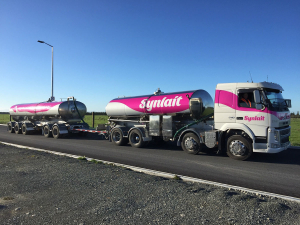
Synlait has swung to second-half profit as operations stabilise, but the dairy processor still posted a $75.4m annual loss.
LIC shareholders have elected a new North Island representative to the co-operative's Board, along with five representatives to its Shareholder Reference Group (SRG), following the company's Annual Meeting held in Invercargill.
Farmers across parts of Southland and South Otago are continuing to deal with difficult conditions after a prolonged run of wet weather, with pressure building around feed supply, stock management, pasture damage, farm infrastructure and everyday workloads.
Federated Farmers says it welcomes Labour's commitment to reviewing the Sharemilking Agreements Act, calling on other major parties to do the same.
For Canterbury dairy farmers Sian Meijer and Rick Wobben, wearable technology has become one of their most valuable on-farm tools - helping manage 1850 cows across an expansive, high-performing dairy operation while improving efficiency, mating outcomes and day-to-day decision making.
Fonterra has unveiled its annual results for the 2026 financial year, posting $27 billion in revenue and close to $20 billion returned to New Zealand farmer owners and unit holders.



OPINION: The same mainstream media muppets that brought you Jacindamania in 2017 have been flat out pimping for the Opportunities…
OPINION: Your old mate reckons the atrocious way farmers in the UK are treated by their lords and masters in…




