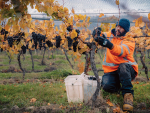
SWNZ Strengthens People Pillar for Global Markets
With ethical employment practices a "hot topic" in key markets, Sustainable Winegrowing New Zealand (SWNZ) is strengthening its People Pillar.




 increase font size
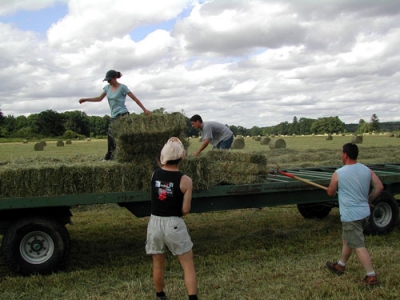
Whether it be feeding the calves after school or docking lambs, working on the family farm is a quintessential rural New Zealand right of passage for many kiwi kids.
In addition to helping the family, it is a great way to learn practical skills for a future career in the industry, while saving a bit of pocket money.
For farming parents it is easy to see the children as a ready source of labour for love, however it is not always simple says Crowe Horwath agri tax expert Tony Marshall, himself a former family farm child employee.
“We may be dealing with family, but there are certain rules that need to be followed when it comes to paying your children for work undertaken on the family farm”.
“In the first instance PAYE must be deducted from any wages paid to children, just like any other employee,” says Marshall.
Another key point is around ensuring the wages paid are reasonable for the work undertaken. Marshall says this means that the amount paid cannot be an arbitrary sum, without due consideration of the work being undertaken.
Parents need to be aware that the IRD can look into payments in this regard. “They have the ability to deem any payment made as ‘excessive’ and reallocate the wages paid for tax purposes,” says Marshall.
Marshall notes that when considering whether an amount paid is excessive, the IRD will look at the nature of the services performed, the knowledge and skill required to carry out the services, the amount that an independent employer would pay for similar services, and the amount that would be paid to an arms-length employee undertaking similar duties.
“Basically you can’t simply pay children a wage from the farm account to obtain a tax advantage from income splitting or to support them through tertiary education when they are not actually performing work on the farm,” he says.
“If farmers want to financially support their tertiary student children living away from home, they can consider making distributions from their trusts. This can have the same tax effect, however, they need to be mindful about beneficiary rights.”
Marshall also points to a couple of other aspects that need to be taken into consideration, “It is unrealistic to claim a deduction for payments made to very young children because they are unlikely to be able to perform any useful work,” he says.
“Nor will jobs that could reasonably be considered a normal household chore be considered deductible.”
The tax rules are not the only thing you will need to consider, says Marshall.
“Farming parents also need to be mindful of their obligations under the Employment Relations Act and Health and Safety legislation. These obligations include the provision of a written employment agreement, the payment of the minimum wage (if over 16), holiday pay and various record keeping requirements.”
Marshall concludes, “While they may be your children, once they are being paid for work on the family farm they must be treated as an employee.”
With ethical employment practices a "hot topic" in key markets, Sustainable Winegrowing New Zealand (SWNZ) is strengthening its People Pillar.

OPINION: Farmers have been clear: it is getting harder, not easier, to find and keep good people.
Building on the success of last year's events, the opportunity to attend People Expos is back for 2025, offering farmers the chance to be inspired and gain more tips and insights for their toolkits to support their people on farm.
Historically payroll software was written for commercial businesses where everything was relatively stock standard.
With a 12-year history of recruiting specialised operators from overseas to service the agricultural contracting industry, Hanzon Jobs typically brings in around 200 people to New Zealand each year from the UK and Ireland.


Federated Farmers says it welcomes Labour's commitment to reviewing the Sharemilking Agreements Act, calling on other major parties to do the same.
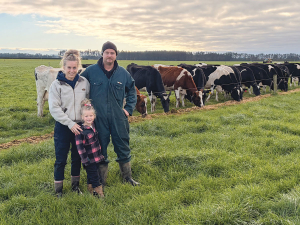
For Canterbury dairy farmers Sian Meijer and Rick Wobben, wearable technology has become one of their most valuable on-farm tools - helping manage 1850 cows across an expansive, high-performing dairy operation while improving efficiency, mating outcomes and day-to-day decision making.
Fonterra has unveiled its annual results for the 2026 financial year, posting $27 billion in revenue and close to $20 billion returned to New Zealand farmer owners and unit holders.
The first major update to the Dairy Cattle Code of Welfare in more than a decade has been released, marking what DairyNZ describes as an important step in ensuring animal welfare standards continue to evolve alongside scientific evidence and on-farm realities.
Ravensdown shareholders have elected Jane Montgomery and Kate Acland to the Ravensdown Board for three-year terms, following a closely contested director election.
Federated Farmers says new legislation replacing the Resource Management Act will cut red tape, unlock investment and help grow New Zealand's export-led economy, after the Planning Bill and Natural Environment Bill passed their third reading in Parliament yesterday.





OPINION: The same mainstream media muppets that brought you Jacindamania in 2017 have been flat out pimping for the Opportunities…
OPINION: Your old mate reckons the atrocious way farmers in the UK are treated by their lords and masters in…




