Bird Flu: Keep Distance, Wash Hands, Report It
OPINION: It's a tough pill to swallow that bird flu (avian influenza) has finally arrived in New Zealand. This is a moment many of us have hoped would never come.




 increase font size
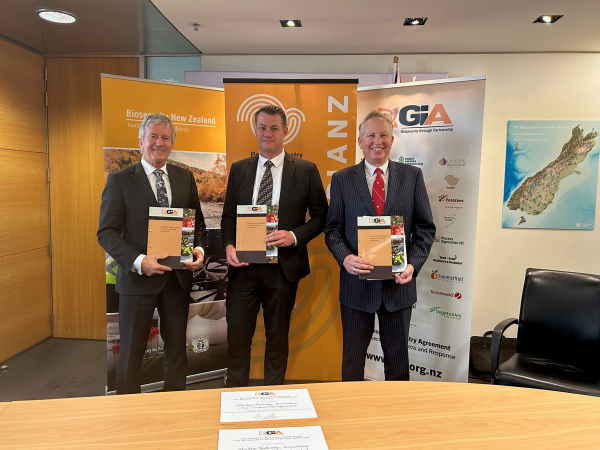 PIANZ signs the GIA Deed – from left to right Hon Damien O’Connor (Minister for Biosecurity), Egbert Segers (Chair, PIANZ) and Michael Brooks (Executive Director, PIANZ).
The Poultry Industry Association of New Zealand (PIANZ) is the latest industry group to sign up to the Government Industry Agreement for Biosecurity Readiness and Response (GIA).
PIANZ represents the interests of approximately 99% of poultry meat producers in New Zealand.
In a signing ceremony yesterday (21 June), attended by Biosecurity Minister Damien O’Connor and senior representatives from the Ministry for Primary Industries (MPI), PIANZ joins 23 other industry sectors that have agreed to work with the Government, and each other, to combat the threat of an incursion of a pest or disease significantly impacting New Zealand’s primary industries.
GIA chair, Dave Harrison, says PIANZ’s decision to join the partnership is welcomed.
“The poultry meat sector is a significant player in New Zealand’s food and fibre sector and an important contributor to the country's overall economic wellbeing,” Harrison says. “It is great that the PIANZ has recognised the benefits of working with other GIA partners to improve biosecurity outcomes,” he says.
Biosecurity New Zealand deputy director Stuart Anderson says he welcomes PIANZ joining the partnership.
“Biosecurity in New Zealand is everybody’s responsibility,” he says.
“We can only deliver a strong, secure biosecurity system in close partnership with industry and other partners. I’m really pleased that the poultry sector has decided to join with us in the GIA, and I look forward to working closely with the sector to improve our biosecurity readiness.”
PIANZ chair, Egbert Segers, says biosecurity is fundamental to the poultry industry as it secures the sector’s reputation for producing safe, healthy, and high-quality products.
“A large-scale biosecurity incursion of a serious bird disease, such as avian influenza or Newcastle disease, could devastate the poultry meat sector,” Segers says.
“Joining GIA to work with the Government on our industry’s biosecurity risks is a fundamental component of our goal of remaining a trusted, economic, and safe source of food for consumers while meeting or exceeding the high standards imposed by regulatory bodies,” he says. “Our major poultry disease-free status is important to our international standing in world poultry.”
“PIANZ is committed to maintaining and improving biosecurity readiness and response standards by working in partnership with the Government and other primary industries,” Segers says.
OPINION: It's a tough pill to swallow that bird flu (avian influenza) has finally arrived in New Zealand. This is a moment many of us have hoped would never come.

The head of the Ministry for Primary Industries (MPI) biosecurity operation, Stuart Anderson, has defended the cost and the need for a Plant Healht and Environment Laboratory (PHEL) being built in Auckland.
The Government has struck a deal with New Zealand's poultry industry, agreeing how they will jointly prepare for and respond to exotic poultry diseases, including any possible outbreak of high pathogenicity avian influenza (HPAI).
Biosecurity New Zealand says continued testing and monitoring shows no signs of avian influenza outside of Mainland Poultry’s Hillgrove, Otago farm.
Biosecurity New Zealand says test results to date from a small free-range layer chicken farm near Dunedin are negative for avian influenza.


Now in its fourth year, the 2026 Fencing Industry Awards, formed part of the proceedings of the FCANZ Conference, held in Nelson during August.
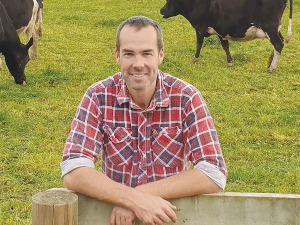
DairyNZ deputy chair Cameron Henderson has been re-appointed unopposed for another term.
OPINION: The stats speak for themselves.
Farms across the upper North Island are trialling different pasture mixes as part of a research programme that aims to build greater resilience into farming systems.
Election years are always a concerning time for farmers, according to DairyNZ chair Tracy Brown.
The Ballance Farm Environment Awards are coming to the West Coast of the South Island.


OPINION: The same mainstream media muppets that brought you Jacindamania in 2017 have been flat out pimping for the Opportunities…
OPINION: Your old mate reckons the atrocious way farmers in the UK are treated by their lords and masters in…