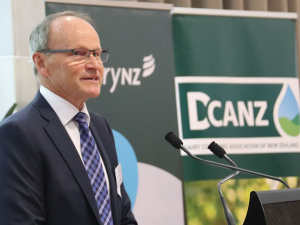
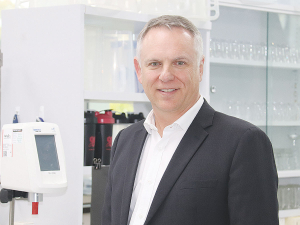
Wills last week told the Foundation for Arable Research conference at Hamilton that 873,000ha has been converted to lifestyle blocks.
"That loss of our best farmland represents half of all the land in dairy production, 873 [times the area of] James Cameron's land buy or just under two complete Aucklands.
"While Federated Farmers wouldn't be happy about limiting the rights of anyone to buy or sell the land they legally own, it raises important questions about how dense our cities and towns ought to be."
Wills points out the number of lifestyle blocks (175,000) is three times the number of agribusinesses and six times the pastoral farming businesses.
"I can't help wondering if subdivision has played a role in driving up the cost of rural land. Instead of politicians conjuring up images of rich foreigners squeezing out young farmers, it may all come down to New Zealand building outwards than upwards.
It is this that arguably poses the single biggest threat to sustainability of New Zealand agriculture....the loss of our best class-one land."
ETS has attracted an application to the OIO to buy Taranaki sheep and beef farms for conversion to carbon forestry.
Retail prices of milk, meat and bread may hog headlines but the ETS causes hard-working mums, dads, businesses and farmers to pay more for fuel, electricity and – from this year – industrial gases, Wills points out.
"The ETS financially rewards domestic and foreign carbon foresters in a 'cash for Kyoto-compliant trees' arrangement. The risk is we're losing productive carbon farmland instead of marginal country to its financial incentives."
Converting to trees also impacts communities, he says.
"Each farm is a home and instead of farmers buying what they need locally and their children going to local schools, that's exchanged for occasional maintenance by a forestry gang."
Wills says subdivision of best quality farmland near urban areas, with incentives to plant trees on hill country, is putting the squeeze on our pastoral farm system.